GRACEFUL
Sixth Form youngsters celebrate as they deliver excellent results across the United Kingdom boroughs
by Chinyere Nwakanma/Graceful online Team
Thursday 13/08/2026 21:01 P.M BST 10mins

Preparing for exams can be daunting
There has been celebrations across United Kingdom boroughs since yesterday as the youngsters delivered excellent GCSE results with many achieving the A grades to the delight of many anxious parents. There have been criticisms of the 18year olds , who were deemed not to be in either education nor at work (NEETS).But with the record level entrance into the Universities, they have shown that they can be excellent scholars.These results came as great news to many anxious parents and teachers as the teenagers have secured places at the best Universities in the United Kingdom , setting a positive precedence for those coming behind them.The UCAS website points to the fact that there are still more places available for the students waiting to get new places .There has been reports across tabloids that the young Royal James -The Earl of Wessex , the son of Prince Edward and Duchess Sophie will be studying Rural Land & Property Management at the Royal Agricultural University, an intriguing departure from the rest of his family. Across boroughs the teenagers have been showing their excellent results and what they have been able to achieve with the books to many who are delighted and full of admiration of their resilience,excellence and academic brilliance.It could be recalled that this set of youngsters are among those disturbed by the COVID 19 outbreak , as they were in their early years when that happened,but through hard work and resilience they have been able to overcome the impact.Through hard work, determination,hope and resilience, young people from across the United Kingdom have secured places at leading universities, apprenticeships, and training programmes. This shift from last weeks news , means that they won't be categorised as NEETS as they have shown that they can be at work and education through their results. Many of their colleagues who have not stepped up to find jobs or trainings will be challenged to either get some jobs or go for further education before the end of this year.But for the anxious parents ,who have spent years of serious hard work to keep the kids up and studying,this results came as great news and big relief as the teenagers prepare for University life.
How the kids performed in some London boroughs
Barking and Dagenham
From what we are hearing ,Barking and Dagenham students have achieved some of the highest ever A-Level grades in the borough's history bringing joy to parents and the borough.According to reports just under 55 per cent of grades achieved were A* to B, just under the national average. This has been seen as a seven per cent increase on results achieved in 2024. A* to B grades are the gold standard of achievement and support pupils' entry into the highest-level courses and universities A*-C grade attainment was also high and above the English national average. Students taking vocational qualifications continued to achieve very highly, with the boroughwide average grade now a Distinction.This is a good news to many as some of the students from U.K 's underperforming boroughs have given it their best shots this year hence the great results.
REDBRIDGE
According to what we are hearing ,the same trend of excellent achievements, was seen in Redbridge council where Cllr Lloyd Duddridge, the cabinet member for children, young people and education, visited Valentine's High School today and spoke to the students about their results.
The Five Borough's in London that have the best results
According to what we are hearing all the boroughs delivered excellent results with these five boroughs doing better than others
The affluent Richmond upon Thames leads London with 48.7% of A-level entries receiving A or A* grades .
Kingston upon Thames came second place in London with 45.3% getting the top marks.
Sutton comes third in London with 44.5% of exam entries achieving high grades, which was attributed to good school infrastructures.
Southwark came fourth as inner London's highest performer at 43.8%, with its active cultural hubs with the students getting exceptional sixth-form results.
Newham council known for producing highly academic and excellent brilliant students at the universities came tops at fifth in London, with its 43.2% top grades,highlighting the excellence of its exceptionally performing colleges.


Sixth form students spent nights of studies to get such excellent results and the teenagers are being applauded for their resilience and for doing excellently well.People do get caught in between feeling sleepy while doing serious studies ,but many of the kids stood up to study and it reflected in their results.
GRACEFUL
The Top Contenders for the most liked Vintage Cars
by Chinyere Nwakanma Revised 30/07/2026 BST 5mins

When I travel around the country ,I see so many people still riding their old vintage cars.They look stronger,well built but larger.I look back to the years when I was young and one of our family friends used to come in a small beetle car.For us then as kids it was a small little car that does its job,but for the elderly then it was a symbol of wealth and class.Yes the professor drives around in his beetle showing what he has earned for all his years of studies.He was just a brilliant successful man.But looking at his beetle car right now it has become obsoelete and it is hard to find it around the streets of London.I like cars because it takes me fast and easier to where I am going to.For the younger people ,their first pay check goes to the purchase of a trendy car.And they go for the trendy recent car because young people flow with the times.In a world where we wake up to see better versions of everything,it is hard to appreciate what we have now if we did not see the older versions.
What are the top contenders for the most liked vintage cars?
Austin Healy
The British Monte Carlo Rally winner Donald Mitchell Healey founded the Donald Healey Motor Company in 1945 and the car was loved by many people. Many Americans loved the car and the car was used by so many legendary movie.
1 JAGUAR-E TYPE
The new Jaguar type 00 GT will soon be unveiled but what do we know about the old ones. The Jaguar –E type was famously called the most beautiful car made by Enzo Ferrari. People need to see the older versions to appreciate the shift in technology to enable them to be grateful for what they hav

2 MGB
This is an affordable, and easy-to-maintain British made car that many people who like antique cars like to drive.

3 FORD MUSTANG
The Ford Mustang is an American made car A true American car liked because of its V8 rumble ,used by many movies stars and can be seen in old movies seen as a symbol of status and wealth by society.

4 PORSCHE 911
The early models of Porsche 911 which are the original air-cooled 911s are loved for their beautiful built and engaging driving dynamics.
GRACEFUL
The Reasons why it is good to build business portfolios by making long term investments that will take one through retirement.
by Chinyere Nwakanma Thursday 30/07/2026 BST 10mins
Courtesy Graceful-Businesses like plants grow through the years
Life flies speedily, but it is good to start on time to think of retirement, because raising kids can take time, toll and resources on people as they grabble with paying through financial expenses during potty trainings, nappy changing times, nursery rhyme days, primary school days, secondary school days and the days of acquiring skills for life through education and finally settling down. But by the time all these are done, you will see that you are nearing retirement as a parent and have nothing left for you, not even the energy to go to work again. And raising kids is about using up your earnings and energy because you need to spend to bring up people. Even when other people are helping you, you will still spend the little that you have on the basics for everyone you are bringing up. But the best investment people can make is in themselves, their kids, and family because there will be a time your friends will move on to do other things and also raise their own families and you will find out that everyone is now very busy doing their own things. Raising kids who become adults with good skills, job progression and well earning , is the best investment one can make before retirement as you will have people to ask for help, when you are immobile and tired . I’ve seen many of my friends having their kids doing beautiful things for them like organising birthday parties and inviting us to come, buying their parents bigger houses, clothes and paying for them to go on holidays , just to show appreciation to them for what they did for them. But people who do not see family as an investment need to work hard for their retirements. Building a business portfolio that matures towards retirement is worth thinking about. Little seeds of investments ,sown on fertile soils do grow into gigantic trees of businesses over the years These are businesses that take more than twenty years ,before they will start yielding earnings. For the younger people wearing expensive clothes are always on the menu, but investing while young is the key to staying relaxed at old age. For people who like getting their returns immediately ,it is good to do businesses that are for easy and early returns, but long term investments make most people wealthy. If you do not have capital to start a business ,it is better to start small. Many people who started their businesses in one room did end up in multiple locations across the globe ,because they were diligent and were serious in setting goals ,that will help them to succeed even though their businesses were small. Starting little investments that grow through years is a concept that is good for people who want to retire happily, because when the people around you have their own families ,sometimes they have their own issues to sort out and you may have no one to always call up to help you out when you are financially down. When people are young it is good to invest for the rainy days. Things change in so many countries and no one can predict what will happen next. It is not always wise to just depend on ones daily work or state pensions for your retirement,because you may not know what will happen the next day. I had these group of women that started investments with few dollars ,they did their businesses over the years and are now millionaires’. They are helping other women to start investing using ten pounds by buying shares from their company.They are teaching women how to invest in stocks. These are businesses that yield great interests if left for years. When people are young, they want to buy expensive clothes and shoes, but it is wiser to use part of that money to invest on shares. There is actually no one to impress in this life living in houses that you cannot afford, buying clothes and shoes that you cannot pay for, living on excessive credit card bills that damages your financial life and buying cars that one cannot maintain. When people are young they are with crowds of friends who buy the same things as them, but when they get older they will start seeing the wisdom that they would have invested their money where it matters but it will be too late by then. Many people think that they need millions to start investing. To be in investments work,save and invest your salary over the years. Saving and living frugal and investing are the secrets to having a sustainable financial balance in life.Cutting ones coat in business means investing in what you can afford and if you want to borrow to invest more,first look at your future profits and expenses to see if they can sustain your personal life and allow your business to thrive so that you, do not enter into financial problems that will lead to future ruins. It is better to invest in what you can afford and allow the businesses to grow mature and enlarge into something big.Then when your profits are much you can start spending on luxury good.It is unwise to use ones business capital to invest on luxury goods and luxury lifestyle. Do not start your businesses with borrowed monies that you will need high interest rates to pay up or live a luxury lifestyle on loans, credit cards and borrowed assets that keep you drained every month leading to financial ruins during retirement. Many people became sick on retiring , because of the hassles from creditors bothering them to come and pay what they borrowed while young and working. Living on borrowed wealth is not sustainable and comes at some costs especially at old age and retirement when one cannot work anymore but have very large debts to pay off .
Businesses that yield over the years
Businesses that generate long-term profits through continuous investments includes real estate, technology and financial services.
Real Estate
Many of the world richest people have property portfolios running in millions, because no matter how difficult the economies are people will keep living in homes. Investing in real estate means buy properties that are not costly and keeping them for years .Some properties people bought for thousands latter appreciated into millions in values so it is a good idea to invest in the future by buying properties rather than renting properties. Many people have saved up as teenagers while living with their parents to buy their first properties and resold the properties later in life. Owning residential or commercial normally often gives, on average, a high, consistent return over time, as property values and rents generally appreciate.
Technology
Companies such as Apple and Microsoft show everyone how investing in software and tech infrastructures yield big returns, with the US software industry predicted to reach over $409 billion by 2030.
Financial markets
Investing in corporate bonds, stocks, shares and financial consulting have been found to yield consistent long-term income, which do continue even after retirements. Such investments can be inherited by ones off springs. The wisdom behind long term investing is to be able to transfer wealth without so much suffering because sometimes people have to go without good clothes shoes and handbags just to keep something for the future. It is good to meet ones bankers regarding in investing in ISA ‘s,shares , bonds and retirement accounts. But whatever financial investments people are making it is good to ask questions and make proper investigations to know what one is going into.
Rules for long term investing
Know the risks that are involved in what you are investing in.Consulting ones financial advisor will safeguard you from investing wrongly and losing your business funds.They will take you through every investment and show you the risks involved since they are more knowledgeable than you and they can tell you the pros and cons of investing in any product. Sometimes we hear that people have lost their investments over years, because they did not know the other risks that come from what they are putting their monies in. It is better to build investments that involve lower risks.
Check Stock Values
Before investing on stocks check the financial markets and the value of stock owners before investing in a company.
Pick a strategy you can stay with
When investing you need a strategy to sustain your investments and you need to stick with that method until you succeed.
Diversify your investments
The best strategies to sustaining businesses is to diversify ones investments. Many do invest in businesses that give them immediate profits to spend daily while selling other things making it possible for them to have good income streams coming in.
GRACEFUL
Chinyere Nwakanma lauded for her contributions across the globe as she becomes an honorary fellow of the Euroknowlegde institute and Richmond college United Kingdom
by Graceful Online Team
Revised Saturday 16:55 25/07/2026 P.M BST 5mins
Among other honorees ,business men , business women,educators and stakeholders in the world of academia and business from around the world , Chinyere Nwakanma was among those lauded today the 17/07/2026 at One Great George Street, Westminster, London SW1P 3AA, United Kingdom for their various contributions to society in different sectors of life .She was honoured as a fellow of the Euro knowledge institute and Richmond College U.K for her works in promoting literacy, innovation, excellence ,hope and compassion through her books and magazines. There was a loud ovation as she stood up as a recipient of the much coveted fellow honours. In attendance were former ambassadors, business and education leaders, ministers from different countries of the world, who were given awards for their contributions in helping humanity. Most of the speakers spoke about compassion as the bedrock to making substantial impact and the place of influence and purpose in the life of a business leader.There were several business leaders who received several awards and were speakers at the eventful occasion. Dr. Lady Waynett Peters who received a doctorate honours , spoke extensively on honorees being impactful and working as people of purpose. She told the audience that the reasons why we are all on earth is to help one another .The speakers encouraged everyone honoured to continue to be a force for change across the globe by making meaningful contributions that will help to alleviate the problems of others and to inculcate hope in everything they are doing. According to the Euro knowledge institute the occasion celebrated exceptional individuals whose leadership, innovation, service, and contributions have made significant impacts within their professions, communities, and the societies at large. The ceremony brought together an esteemed gathering of international leaders, academics, entrepreneurs, and changemakers for an afternoon of celebration, reflection, and networking. The award recipients were reminded of the need for them to continue being impactful , being helpful agents of hope to their societies across the globe through their endeavours.

©Graceful/ Chinyere Nwakanma -Lauded by Euroknowledge institute and Richmond college
Chinyere taking the fellowship
How the long haul drivers are driving logistics to excellence
by Chinyere Nwakanma
Tuesday 14/07/2026 15:40 BST 10mins
Driving logistics around the world
The distribution chains are the major part of every production company and the distributors and wholesalers know that with a call off work from the drivers, goods cannot be sent to the distribution chain warehouses and to the consumers. For those in perishable goods businesses , the trucks are with cold facilities to keep the goods fresh. Distribution chain drivers are the men working tirelessly to see that we drink milk ,eat fresh fish and meat, eat fresh fruits and vegetables and eat bread every morning. Most times we simply walk to the supermarket shelves to buy loaves , but some people are bringing the loaves to the warehouses and while we are simply sleeping, they are delivering goods at the supermarkets like Tesco, Asda, Walmart and the other retail shops. Sometimes I think about the long haul drivers that are making sure that when we order things from shops like Amazon and Walmart with next day deliveries we get our goods instantly. They are extraordinary people since purchased items get to our homes with unexplainable speed. They are some of the amazing people, that make life easy for people around the world.Many of them hardly sleep, but are always on the move to make sure that the distribution and supply chains around the world are moving fast and perfect. When some people see them in the industries, moving large scary vehicles they wonder the stuff they are made of that they do not find the overhauling lorries scary.
What does the drivers in the distribution chains do?
The drivers in the distribution chains are driving logistics and sales to instant success.
Drivers in distribution chains are the people behind every company's logistics success, physically moving goods between warehouses, distribution centres, large supermarkets and small retail stores. They make sure that the supply chain for each product is working properly and most times perfect as goods are daily delivered to households in every part of the country with people waiting at doors to pick their purchased items. They navigate long haul routes at night, making sure that the goods are properly off loaded on ground . They make sure all the goods are delivered on time by navigating difficult routes, managing cargo loads, and meeting strict delivery schedules.
Their major jobs include:
Driving heavy goods vehicles (HGVs),trucks,tankers, vans, in and out of industries with precision while adhering to strict traffic laws and road safety standards outside.
They sometimes do the loading and offloading of goods which are sometimes very heavy.They work with precision ,always making sure that there are no destroyed or damaged goods
They carry inventory papers in the industries with office staff, making sure that the delivery papers are correctly done and up to date at all times. They help in counting the number of boxes loaded into the vehicles making sure that the products and quantities are delivered correctly. They take the proof of delivery back to the offices and work round the clock to make sure that the logistics departments of industries are doing well.
They travel inside traffic and adverse weather conditions, and often use GPS software to find the most efficient , intricate and even hidden paths.
They perform pre-trip and post-trip inspections of their vehicles on ground in the factories, before every trip to ensure that the vehicles they are driving are roadworthy and complies with transport regulations.They are some of the most dedicated and dutiful staff you can find in industries.They report problems with their vehicles to the engineers and are trained to be very meticulous at their jobs.
Drivers are vital to the success of the chain distribution of goods
GRACEFUL
How the safe storage companies are helping so many people to arrange their spaces and keep their valuables safe
by Chinyere Nwakanma
Monday 13/07/2026 15:37 BMT P.M 5mins
Large moving trucks
Most people living in the world cities might have seen that sometimes they need to move from bigger spaces to smaller spaces or vice versa and they constantly need extra storage spaces to keep their valuables and luggage. This also applies to companies that are moving large equipment and goods into larger secure storage places and this is where the safe storage companies help them. Storing people’s valuables for them is a great good business, that requires the presence of very honest staff who can be entrusted with people’s valuables and they are sure that they will not lose the things given to them to keep safe. It is a business that requires just an open space, contracts and insurance for the vital items that the companies are keeping for people. Many people who get stranded in the large cities normally move their household goods from the storage spaces to their homes making it a great business that serves people that are living in smaller spaces in the cities. Safe storage companies help both households and businesses by providing flexible, secure, and cost-effective spaces to solve spatial constraints and streamline logistics. They offer cheap flexible payments that meet individual needs.And they do help people to keep their documents safe for very long time. They offer accessible locations to declutter homes, securely scale operations, and manage inventories for companies without committing to expensive, long-term commercial property leases.
When do people need the services of the storage giants?
These happen when people are moving homes due to renovations
The storage companies provide temporary, safe holding spaces for items such as television, bags of clothes, furniture and personal items when people need to move their homes fast. They help us to keep our living spaces clean without cluttering so much in our daily living spaces, storing our seasonal holiday decorations, storing excess company equipment, holiday decorations, or keeping our family heir looms safe. The storages are safe and secure. The safe storage spaces have electronic gates, daily CCTV monitoring equipment, high powered devices to alert the security guards of break ins, secure individual boxes for each customers.
How the storage businesses are useful to other businesses
People in retail and e-commerce know the values of these storage units especially for people that are running their online businesses. They are used for off-site inventory management and mini-distribution hubs where business owners do store stock, process their orders, and even handle returns of their goods. Warehouses serve as offices for companies that produce physical goods as they provide large spaces where cars and even lorries can enter easily. Some companies need trucks to move their goods and so large warehouses and storage spaces are great for them to shift their already produced goods from the company sites to the distribution networks. The storages are cost effective as they will give storage units based on your inventory size and your storage space need. And they are very cost effective because you can take the cheapest and affordable spaces to store you goods. Businesses get spaces to store their inventories coming each week to pick sold goods and ship out to the owners. Tradesmen, lawyers, and accountants do get secure places to store sensitive file, equipment or freeing up office spaces for the running of their business.
GRACEFUL
The Reasons why robust funding, scholarships and grants are needed by the higher colleges and Universities for researches and to help the brightest students in need.
by Chinyere Nwakanma
Sunday 12/07/2026 16:05 P.M BST 10mins
Canterbury Church University United Kingdom
More funding for colleges and the universities is essential to the world, because it serves as a catalyst to the national economic growth of the nations , helps studies in complex innovation courses such as the medical science studies, engineering, computer science studies and the technological researches and work across the academia in different nations. Higher education institutions globally and particularly in the United Kingdom face unprecedented funding problems as universities and higher colleges grapple to keep up with the struggles to find enough cash for their day to day running, leading to the closures of some faculties deemed not to be having enough students or the students not making enough money working in their areas of expertise after graduating. Of recently the University of Hertfordshire announced plans to suspend the intake of new scholars and close its undergraduate English literature courses due to continuous low enrolment into the courses. Other Universities in the United Kingdom such as Canterbury Christ Church University stopped their literature departments with Sheffield Hallam University combining English literature with other broader studies .These shut downs of these departments have led scholars and stakeholders promoting literature to be worried about the future of literary studies at the Universities. The freezing of tuition fees combined with high inflation and cuts to government research grants, have severely affected the operating budgets of many Universities leading to the losses of the most brilliant and brightest scholars who could not complete their degrees from academia due to lack of help as a result of underfunding. Increased funding and government grants for innovation and researches will lead to the sustenance of the different faculties in the Universities across the world especially in the United Kingdom. Without funding many scholars and their researches will be cut off. There have been histories of abandoned research works started by scholars who left the academia frustrated by the underfunding to do other jobs, while the lack of funding for those in the poorer countries of the world, have led to shortages of staff with no skills for the industries , hospitals and schools in those countries affected as graduates work in low paid capacities in factories and other places leading to frustrations about the fees they paid to get their University education.Many end up discouraging others from getting the education and vital skills needed to survive in this complex world.They forget that ignorance is the bane of the world societies as they discourage the youngsters from going to the Universities or higher colleges to learn how to interact with the world.Many people did lose vital skills gained through years of serious studies because they could not find work in their areas of expertise . They are the ones discouraging the youngsters from pursuing knowledge at the University and advanced college levels , because they feel that they did not get good value for the monies they spent at the Universities .But many watching these trends know that knowledge is power and there is need to create more jobs in every sector of life in all nations.The lack of speedy results in finding solutions to the world worst medical problems through science, technology and medical researches has always been there with little momentum in finding solutions to mankind’s problems scaled back by under funding.This has led to low life expectancy in the poorer countries with lack of insights on how to manage diseases as they are poor with no technology, not much knowledge in complex studies and they lack funding to manage complex diseases. How are Universities and higher colleges helping the nations across the world ?-
Through their contributions towards national wealth creation
Previous researches have found that for every pound or dollar invested in joint university researches and educational developmental studies,they generate approximately seven to eight pounds of net gross value added to the collective economy of a country and when multiplied with individual contributions across the country, that generates massive GDP growth for all the countries that are investing in the scholars.The engineers and doctors are assets to all nations , as it is difficult to find many people majoring in the engineering and medical courses at degree levels, as these are complex and intricate studies , that require so many years of studies and large funding needs for scholars studying them making many people to shy away from such studies during enrolment at the Universities and higher colleges.But studies show that the doctors,nurses,teachers,architects,accountants and all the people in the highly skilled jobs contribute more to nation building and their trainings require complex studies that few people can undertake successfully.
Successful scholars are supporting industries by using their skills
National growth across nations is connected to the higher colleges and the Universities and these include delivering government strategies across continents as governments depend on opinion polls from students and researchers to make many of their policies.And most of the policy makers across nations are people with expertise in the areas they are handling.New researches in science and technology lead to new inventions without which world economies will be stagnated as growth means that more products are made sold,taxes are paid and people remain healthy because they are well looked after.Where people are not healthy as a result of ill health few people will be working and many factories will be closed down.Most of the people working in the industries are skilled and unskilled people who without skills and education will not be at work and without them there will be gaps and shortages of skills leading to shortages of workers and this affects every national GDP. Underfunding of the universities and colleges will lead to fewer graduates,fewer researches and fewer workers in the future.And the shortages of engineers in industries ,doctors in the hospitals, teachers in the schools in the United Kingdom has been identified as a major national problem affecting innovation,skills and excellence in the country .
The Creation of new jobs and businesses through fresh start ups
The world higher education sector directly contributes billions to national economies and gives thousands of jobs both inside and outside of the higher colleges and Universities. Most new start ups were started by scholars who found inspiration at the Universities while doing research projects. Many of these start ups latter became the big corporations and businesses that are employing many people around the world.Millions of well trained teachers and professors have found lasting, stable and well paying jobs with many working in school offices as clerical and management workers.The scientists and researchers are the brains behind the new innovations in science ,technology, engineering and medicine.History does reckon that cures for different diseases including COVID 19 was found by the researchers at the Universities who were given enough funding to do their jobs.Major findings in biology, advanced engineering, medicine and technology rely on a foundation of public funding from governments and pharmaceutical companies have been known to support research in medical schools across the globes.
Lack of long term funding for the Universities for the training of medical and dental graduates has been found to be responsible for the shortages of skills in these areas especially in the United Kingdom. These areas require patience for the scholars to complete their studies and get the needed skills and the courses are done in longer years, with sometimes changes to the scholar's circumstances before their graduations.
Lack of Subsidies from foreign scholars
It is a well known fact that in the United Kingdom,U.S.A and the advanced countries universities have had to use surplus cash from the international student’s tuition fees to cover severe funding shortfalls in expensive, lab-based STEM courses, but lack of sustenance means that some of the scholars do drop out because of no funding , when family circumstances change as many of them who lost their parents were forced to return to their home countries , as they have no means of sustenance after the death of those paying their school fees.
Many of the foreign scholars has been found to move away , if they have no visas to continue with their studies leading to the losses of the contributions they are making in subsidising the money needed for academic funding and their future contributions as specialists in their areas of studies after graduating. And the universities, the professors and the scholars find this very frustrating.
The Future impact of underfunding in higher education across the globe
Without structural funding reforms that look at things differently , universities will be pushed to take drastic measures to keep funding scholarly initiatives to keep staff at work and the scholars in the classrooms . The results of shortage of funding has been found to be responsible for situations like staff being made redundant even when they are still needed or willing to work ,some courses or faculties being shut down with some universities merged with others against their own wills as seen in some of the United Kingdom Universities, leading to shortages of occupations and lack of skilled people across the globe with the hospitals mostly affected by the lack of nurses ,doctors and health consultants to handle the world most perilous diseases, causing early deaths ,mental health problems and disabilities around the globe.In as much as nations are struggling to cope with the maintenance of their different higher colleges or University departments , the education sectors ,health sectors and the industrial sectors of nations need to be given top priorities in funding as they determine the health and wealth of the different nations.The younger people need to be in schools with good support and they need to be in good health,complete their education properly and go on to work to keep the cycles going as their parents age and become tired of the cycles of work and constant movements. Without the youngsters taking over from where their parents stopped , there will be crisis in the countries that will be affected in the future.If the youngsters are not in education or work and are without certificates or the needed skills to work,they will become societal burdens added to their parents who have joined or will latter join the aging populations in the near future around the world. Universities need more money to support staff ,students and scholarly researches and other scholarly initiatives being made to keep the world going.If nations do not act fast, in few years time the shortages of manpower in the highly skilled areas of health, education, science, technology, architecture and engineering will be so severe than before and this will lead to more poverty, early deaths, shortages of manpower and infrastructures , lowering the living standards of people across the world. The nations that will be affected will become poorer and this might lead to more crimes and diseases, the depletion of infrastructures as there will be no structural engineers, builders and architects to build new homes because of manpower shortages, housing problems and general difficulties to the world populace ,which may not be good for the world and the GDP of the different world nations.
University researches are vital to human survival
All images are for illustration only
Graceful
How innovations have made life simple and better for everyone
by Chinyere Nwakanma
Saturday 11/07/2026 BST A:M 10mins
From the time when we were born till now, there have been lots of changes in the way we are living. And in recent years there have been rapid developments in science and technology, that have brought rapid changes in the way people interact and do things. There have been so much advancements in technology that the younger generation now see the things we used to fancy as old. Life has changed from the time when we used the brick phones to the smart phones of today, if not for the thinking minds of the innovators we would not be on zoom meetings or be communicating easily with our distant cousins living in faraway countries. It is beautiful to see the faces of people who time will not permit us to visit, but looking at them on our screens give us the comfort to know that things are changing fast courtesy of the new innovations. Yes, we have moved on from the time when we used to have the bulky televisions, when we hired four men to help us to move our televisions from Oxford to London while spending more on delivery. By then people get into hospitals sick after moving homes because everything including your mobile phones are bulky and one can get hurt lifting things.The way we communicate have moved from simple brick phones to the new smart mobile phones with better features .Did innovations make our lives easy? the answer is yes of course from travelling to Newcastle, to dropping off parcels at the parcel shops, to cooking in the kitchen, recent innovations have made life simpler for everyone. We simply send our mails through the very efficient courier services without spending so much time, thanks to companies like Evri, Royal mail and Yodel. The consumers are looking for new ways to make their living spaces better, without having very large televisions or other bulky gadgets in their homes. New products like the LG Signature OLED take on little space and the subtly attractive TV: a transparent 77-inch screen is world-class. The TV’s Always-On-Display feature can display ever-changing artwork, or you can turn it off to simply look like a pane of glass. You can connect your cable or TV aerial wirelessly using LG’s Zero Connect Box. This is one of the new innovations that make watching television simple and less burdensome especially for the elderly. New inventions like AImeans that people can do large amounts of projects and researches without doing so much work. People can produce short movies andcreate different concepts out of one topic. The use of booking apps for taxis, restaurants and holidays is a new invention that was not there before now, making it easy to get bookings done very fast. The use of sites like google, yahoo and you tube, means that one can have access to lots of information at a very short time and even see what others are doing through their personal television channels on youtube. One can have access to music and get entertained, while sitting on their sofas through youtube and even see what ones friends are doing in New Zealand on Facebook. Zoom meetings means that travelling for long distance meetings within short periods of time is becoming history. Innovations keep making life easier and better. The new slim line computer laptops means that one can carry their laptops and even do projects while travelling, without carrying a heavy item along. Having Amazon kindle devices mean that we can read our magazine articles and books from one electronic means while in the bus travelling to Euston station. Things have changed over the years since we were kids and life is getting easier because of new innovations and technology. And it is amazing how the world has become a global village, as the ways we communicate have changed because of facebook, Tiktok, linkdn ,twitter and other social media outlets. And we are looking forward to seeing more products from the innovators.
GRACEFUL
Science and Technology
The Rise of Remote Work Technologies
How Advancement in Tech is Reshaping Our Work Lives and Personal Connections
by Graceful online Team
Friday 10/07/2026 23/07/2026 BST PM 10mins
In a world where office walls once defined our professional lives, a quiet revolution has been unfolding. The rise of remote work technologies has not only shifted how we work, but also how we live, connect, and thrive. These advancements have broken down barriers, allowing us to collaborate across continents, maintain relationships with loved ones from afar and create new rhythms for work-life balance. As screens replace conference rooms and virtual chats bridge physical distances, our workspaces are no longer defined by a single address. Instead, they are wherever we choose to be but with this newfound freedom comes a deeper question: The way technology reshapes the way we work and bond, are we becoming more connected or drifting further apart?
Benefits and The Emotional challenges that Remote Work Technologies bring to our professional and personal lives, giving this article a well-rounded, heartfelt approach.
From Formal setting to House spaces: The New Definition of the Workplace
The workplace as we once knew it has been transformed. Offices with desks and meeting rooms have given way to digital hubs where work is done anywhere at any time. How have cloud-based technologies and collaboration tools like Zoom, Microsoft Teams, and Slack replaced traditional workspaces and redefined what it means to "go to work"? The days of clocking in at a physical office, navigating cubicles, and sitting in hours-long meetings are fading into the past. Today, the workplace lives in the cloud. Desks and boardrooms have been replaced by virtual spaces, and the daily grind of commuting has given way to the comfort of working from home—or wherever life takes you. Cloud-based technologies like Zoom, Microsoft Teams, and Slack have revolutionized how we connect, collaborate, and share ideas, completely reshaping what it means to "go to work. "This shift has brought a kind of freedom many never imagined possible. No longer confined to an office building, we now have the power to attend multiple meetings day with a click, jumping from conversation to conversation, without the need to step outside our doors. There's no rush to the airport for a flight, no train schedules to juggle, no traffic jams to battle—just the simple convenience of logging in from your laptop and at home .The once overwhelming task of coordinating across teams, locations, and time zones is now done effortlessly with digital tools that make distance feel irrelevant. The beauty of this new reality is not just the time saved, but the comfort it brings. You can attend a critical meeting with a global team, then pause to catch your breath, for a while.
It's the blend of productivity and peace, the ability to work smarter, not harder.
This transformation has allowed people to reclaim their time and energy, giving them more flexibility to focus on what truly matters—whether that’s being more present with loved ones, having the space to think creatively, or just experience the joy of working in an environment that feels like home. The rise of cloud-based work tools is more than just an evolution of technology; it’s a gateway to a more balanced and fulfilling professional lifestyle.
Freedom at a Cost: Balancing Flexibility:
Remote work offers the ultimate freedom — flexible hours, no commute, and the ability to work from anywhere. But with this flexibility, many are discovering an unintended side effect: a sense of isolation. How can technology foster real human connection when physical distance becomes the norm? The allure of remote work lies in its promise of freedom—no more rigid office hours or long commutes, and the ability to work from anywhere, whether it’s your cosy living room, a café, or even at a beach life. But as liberating as this can be, it often comes with a hidden cost: the feeling of isolation. For many, the lack of face-to-face interaction with colleagues creates a sense of disconnection. Gone are the casual hallway conversations, shared lunches, and the spontaneous collaboration that once happened in physical office spaces. Instead, we find ourselves behind screens, communicating through texts, emails, and video calls.While technology has made it possible to work remotely, it has also amplified the distances between us. Many are left craving the human connections that made the workday feel alive and more interesting. Yet, technology also holds the potential to bring us closer in this era of remote work. Video conferencing platforms like Zoom and Microsoft Teams, when used thoughtfully, can foster genuine interactions. Virtual coffee breaks, team-building activities, and even informal chat channels can recreate the social fabric of the workplace. It's not just about work—it’s about making space for the laughter, the shared frustrations, and the small moments that build trust and normal relationships in a work environment.At the same time, leveraging collaboration tools like Slack and Trello can help keep teams aligned, encouraging transparency and open communication. While digital interactions may never fully replace the warmth of in-person connections, they can bridge the gap, allowing us to create meaningful, authentic relationships even when physical distance keeps us apart.In this new world, balancing flexibility with connection is the key—learning to harness the power of technology not just for productivity, but for preserving our shared humanity.
GRACEFUL
INNOVATIONS
The Rise of AI Automation and Human Workflows
As AI and automation become integral parts of the workplace, technology is not just enabling remote work but also transforming the workforce. How are AI-driven tools supporting and, at times, replacing traditional human tasks, and what does this mean for the future of jobs?As artificial intelligence (AI) and automation continue to transform the workplace, we are witnessing a profound shift in how work is done. What was once the realm of humans—tasks requiring problem-solving, communication, and decision-making—is increasingly shared with AI-driven tools. These digital colleagues are no longer just assistants in many cases, they are taking over traditional human tasks, changing the very structured workforce. The future lies in embracing a partnership between humans and machines. AI can’t replace the empathy, creativity, and emotional intelligence that only humans possess. By working alongside AI, we can unlock new potential, focusing on what we do best—thinking, innovating, and connecting with each other. It’s not about choosing between AI and humans, but rather about evolving together for a more balanced, efficient, and emotionally intelligent workplace.
Family and Friends in the Age of Remote Work: Strengthening or Straining Connections?
While remote work may allow more time at home, it's not always a solution for work-life balance. Has the constant presence of work — through smartphones and laptops — blurred the lines between professional duties and personal time.
The Trade-offs
In our quest for convenience, we sometimes find ourselves trading the nuances of in-person interactions for the sterile efficiency of screens. The laughter that ripples through a room, the glances, the shared silences—these are the elements that breathe life into our relationships. Yet, behind the safety of our screens, conversations can feel superficial, our emotions dulled by distance. Are we losing the very essence of what it means to connect with one another?
Navigating the New Landscape
How do we navigate this evolving landscape while preserving genuine human relationships? It begins with intention. We must prioritise quality over quantity in our digital interactions.Instead of letting the screen become a barrier, we can use it as a bridge—one that brings us closer when physical distances separate us. Scheduling regular video calls with friends, participating in virtual game nights, or even organising watch parties can transform our digital experiences from fleeting exchanges into meaningful moments. Moreover, we can infuse our virtual interactions with authenticity. Share your thoughts, your laughter, and your vulnerabilities. Be present in the moment. Use the technology at our disposal not just to communicate, but to connect on a deeper level.
The Power of Presence
As we move forward, let us also remember the power of presence.While technology offers incredible tools for connection, it should not replace our commitment to face-to-face interactions whenever possible. Making time for coffee outings, strolls in the park, or simple get-togethers can rekindle the warmth in the offices. It’s in these shared experiences, in the spontaneous laughter and heartfelt conversations, that we will truly thrive.
A Global Team at Your Fingertips: The Opportunities and Challenges of a Borderless Workforce.
Remote work technologies have unlocked the potential for a truly global workforce. Teams spread across continents can collaborate effortlessly. But managing time zones, cultural differences, and communication styles requires careful attention. What are the benefits, and where are the challenges of building a cohesive, borderless team?
In today’s interconnected world, remote work technologies have opened the door to a vibrant, global workforce. Imagine a team where diverse voices come together from different corners of the planet, each contributing unique perspective skills.This is not just a dream; it’s a reality that many organisations are embracing. Yet, as we celebrate this borderless collaboration we must also confront the emotional and practical challenges that accompany it.
The Benefits: A Tapestry of Talent
The most profound advantage of a global team is the wealth of talents at your fingertips. You can handpick the best minds, regardless of their location. This diversity fuels creativity and innovation, driving projects into directions you might never have imagined. Each team member brings their culture, experiences, and worldviews, enriching discussions and problem-solving efforts. Moreover, a global workforce means that work can continue around the clock. While one team is winding down for the day ,another is just starting .
The Challenges: Navigating the Divide
However, the beauty having a global team comes with its own set of challenges. One of the most significant hurdle is the complexity of time zones. Scheduling meetings can feel like a puzzle with missing pieces, leaving some team members waking up early or staying late just to connect. This imbalance can lead to frustration or isolation, as those who always adjust their schedules may feel their sacrifices go unnoticed. Cultural differences also present both opportunities and challenges. While a rich tapestry of backgrounds can lead to creativity, misunderstandings can arise. Communication styles vary—some cultures value directness, while others may prioritise harmony and subtlety. Navigating these nuances requires sensitivity and an open heart, as well as a commitment to fostering an inclusive environment where everyone feels heard and valued.
iii Building a Cohesive Team: The Heart of Connection
To transform these challenges into strengths, leaders must prioritise connection. Creating opportunities for informal interactions can bridge the emotional gap that distance often creates. Virtual coffee breaks, team-building activities, and collaborative brainstorming sessions can help foster relationships that go beyond mere tasks. Encouraging open communications is equally vital. Establishing clear channels where team members feel safe to express their thoughts and feelings can cultivate trust and understanding. Regular check-ins can help gauge the team's emotional well-being, allowing for adjustments before small issues become larger ones.
Conclusion: Embracing the Journey
Building a borderless team is a journey filled with both rewards and obstacles. As we navigate this new landscape, it’s essential to embrace the emotional aspects of teamwork—recognising that behind every email and video call are individuals with their own stories, dreams, and challenges. By fostering a culture of empathy, respect, and collaboration, we can unlock the full potential of a global workforce, creating not just a team, but a community that transcends borders. Together, we can celebrate our differences.
GRACEFUL
How the Silicon Valley area of U.S.A became a hub for tech entrepreneurs and what they have achieved with the companies
by Chinyere Nwakanma
Wednesday 08/07/2026 14:10 BST 10mins
What Is Silicon Valley?
The name Silicon Valley was first used in the early 1970s, because of the region's link to the silicon transistor, which is used in all modern microprocessors. The South of the San Francisco Bay Area in California is famous for being home to world class companies in science and technology that have their headquarters there.
Silicon Valley is a global hub for innovations in technology with hundreds of companies and many prestigious universities located there. It is known for wealth creation,finding new concepts in science and technology and having the best technology minds working in the city.Silicon Valley became the global powerhouse of AI by combining decades of established tech infrastructure with unprecedented capital and top-tier research. Their ability to take over the world of tech by storm was as a result of the making of the Transformer architecture at Google and the launch of ChatGPT by OpenAI, leveraging the region's unique concentration of innovation, global talent sourcing , excellence and venture capital.The region’s rise to AI supremacy is as a result of only a few things that make them to be at an advantage point over other world tech regions:These advantage points include
The Presence of enormous talent
Being close to world-class institutions like Stanford University and UC Berkeley makes Silicon valley to find it easy to employ graduates in engineering and computer science , helping the growth of local giants like Meta and upcoming labs like Anthropic.
Global venture capital and funding
The Silicon Valley attracts the lion's share of global venture funding—drawing billions annually—which allows founders to take massive, high-risk bets on the new computer-heavy AI research going on at Silicon valley.
Historical Infrastructure
Silicon valley companies have been building on decades of microchip and software innovation, the area easily pivoted to train and deploy massive data centre workloads and AI-native start ups and they have been successful at creating AI models and massive ideas used by the world of computers.
AI breakthrough
The foundation of modern generative AI was a revolution in science and technology that came up when researchers published the Transformer framework, shifting the AI landscape from research to commercial ventures creating vibrant economies across the world. And all these started through researches done in areas such as Silicon valley.
What has been achieved by the Silicon Valley tech giants?
As the world gets advanced in science,technology and innovation with new ideas to make life better for everyone, many people do not know that many of the giant companies had their start ups at Silicon values and grew the wealth of nations by providing services to make life better for all.The combined wealth of the U.S.A is as a result of the inputs from the tech giants at Silicon valley.All the notable names in the Business world such as Amazon, Ebay,Twitter ,Facebook started and expanded their businesses at Silicon valley.The country made billions from these tech giants ,with jobs created across the globe with new infrastructures built to house their companies across the globe by companies like Amazon making global contributions that have made life easy for many while raking in billions in profits.They are the companies exporting technology across the globe. Growth during this period of time was speeded up by the emergence of venture capital on Sand Hill Road started with Kleiner Perkins and Sequoia Capital in 1972; the availability of venture capital brought growth to the country with $1.3 billion IPO made by Apple Computer as of December 1980.U.S.A became more wealthy in that era due to the growth brought through wealth creation through innovation and job creation drawing the best brain from around the world to the country.The country became a global power house and wealth creator for the world through the investments and awareness about the new technologies created by these tech giants.They inspired lots of other young people from the Universities across the world to do more researches leading to the creation of new science , technology and AI companies in the continents of Asia like China and India,across Europe, in the United Kingdom, Africa, Australia and New Zealand.People saw the impact of their works across the world and many were inspired to do newer things to contribute to wealth creation in their own countries.What other things have been done at the industries and research centres at Silicon valley
1939:The audio Oscillator was patented by William Hewlett and David Packard and that was the foundation for the Hewlett-Packard company.
What they did was to start a world class company that served the world by supplying computer products used in schools hospitals, governments and homes.
1940s: Bell labs invented the first working transistor championed by the innovative works of William Shockley, John Bardeen, and Walter H. Brattain .
1951: Stanford Research Park was established as a partnership between Stanford University and the City of Palo Alto, by Ted Terman providing a base for operations for the military and commercial technological innovations for companies such as Xerox, Hewlett Packard and Lockheed.
1955: It was this year that William Shockley started his own company , Shockley Semiconductor Laboratory, in Mountain View.
1957: Many of Shockley’s employees resigned and opened their own competing firm-the Fairchild Semiconductor.Intel and AMD with other companies were opened by the Fairchild employees creating multiple companies and investments was good for the country as many people were employed and millions were made from around the world through the new products.
1958 to 1960: Robert Noyce and Jack Kilby found out through scientific research that all parts of a circuit, including the transistor, can be created using the silicon. Their discoveries led to the integrated circuit made from silicon being used in all microprocessors today,which was a great leap for the world of technology.
1961: Former Fairchild backer Arthur Rock founded Davis & Rock, considered the nation's first venture capital firm, giving rise to a new type of investment industry in that year
1969: The Arpanet computer network was founded with four nodes, including one at Stanford University. Arpanet is the foundation for the internet
1971: Journalist Don Hoefler publishes a three-part report on the rise of technological development in the region in Electronic News, titled "Silicon Valley, U.S.A." .
1970s: The famous tech giants Atari, Apple, Microsoft, and Oracle were founded.
1980s:The famous companies Cisco,Adobe , Sun Microsystems, were founded.
1990s: The technological giants Netflix, Google Netscape,Amazon,Google, Yahoo,PayPal were founded.
2000 to 2010s: During these years industrial and technological giants such as Twitter, Meta and Uber were founded.
Having read all of these , one maybe able to see the reasons why young people flock to the area to find jobs,work,get job experiences and start their own companies , helping to create more work opportunities for others and wealth for the U.S.A and the other countries of the world.
GRACEFUL
Innovation and Excellence
Reset Connect Expo 2026 ends with cheers amidst the scorching heat in London that kept some regular attendees away.
by Graceful Online Team
Sunday 05/07/2026 13:18PM BST 5mins
The Reset connect yearly expo 2026 have ended in London with so many companies with interest in sustainable energy, green houses,net zero, climate change and global warming in attendance with the scorching heat in United Kingdom bringing home the arguments they are making for sustainable energy and the use of solar panels in our homes.After the scorching heat of last week , many people who didnot give any thought to the issues sorrounding sustainable energy are in deep thoughts and many people are realising that the people drumming up support for the conference yearly are in the right place. The companies making solar panels and drumming up support for net zero and the use of solar energy have been able to remove green gas emissions from the cities of the world, where their products are being used but stakeholders in this subject ,the academics and the companies know that much need to be done as the world wakes up to unusual intensive high temperatures in cities like London and Manchester, known for their moderate weather and cold temperatures even during summer time.With notable companies like KPMG and others in attendance the Reset connect organisers continue to bring knowledgeable people to speak to the yearly attendees about the concept of Net Zero and the need for people to use energy efficient products in their homes that can curtail green gas emissions. Stakeholders are looking forward to Reset connect 2027 to hear more, as Londoners brace for the new hotter summer temperatures and find ways to live with it , until more solutions are found by the industries, researchers and scientists that are making new products to help the world.
Reset Connect 2027 with Key Event Details
Reset Connect North Dates: March 2–3, 2027
-
Location: Royal Armouries, Leeds
-
Focus: The focus of the the North's future expo will be innovation, clean energy, and decarbonisation opportunities to empower regional businesses and the £25 billion low-carbon economy.
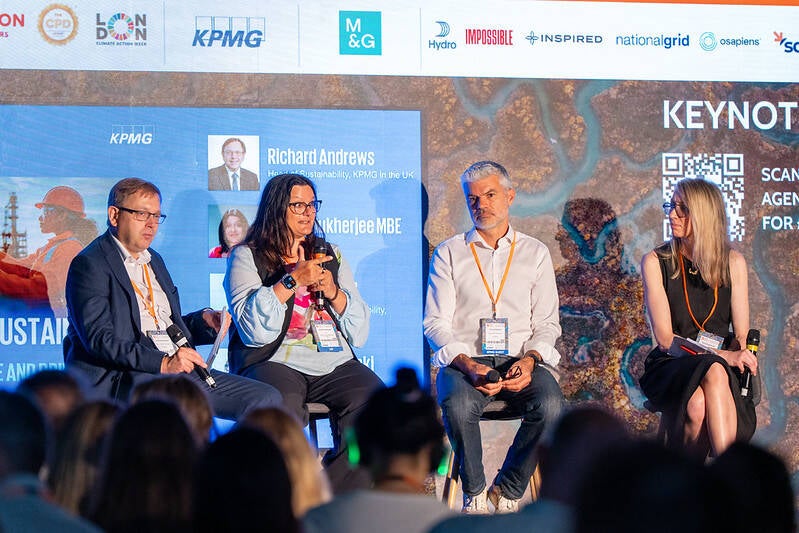
Keynote speaker from KPMG in atendance -Reset Connect 2026


Reset Connect 2026-Net Zero on the agenda
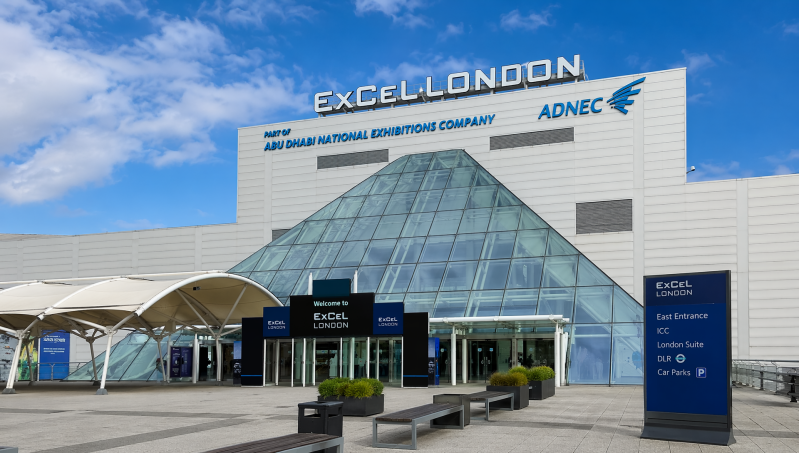
The Reset connect Expo 2026 returns to the Excel Centre London this week from 23rd to 24th June 2026
by Graceful online Team
Sunday 21/06/2026 19:59 P.M BST
Reset Connect London will be taking place at the Excel London from 23-24 .It is the UK’s award-winning sustainability ecosystem, climate tech and green investment event, and the beginning of London climate action week.
The event is supported by KPMG as the event's headline sponsor and London & Partners as strategic partner, the event will be bringing together 7,500+ sustainability, energy, finance and policy professionals to find out practical solutions, advance net zero strategies and open up sustainable investment opportunities for the visiting and exhibiting companies.
Across the two days, business leaders, investors, policymakers, start-ups and scale-ups will connect through networking, expert-led conference sessions and new innovations will be shown.Companies will be sharing insights, forging partnerships that will help the world to accelerate the commercial transition to a low-carbon economy.This exhibition is where industry sector leaders will drive measurable impact, accelerate decarbonisation and scale sustainable innovation.
GRACEFUL
Awakening the Heart of a Nation:
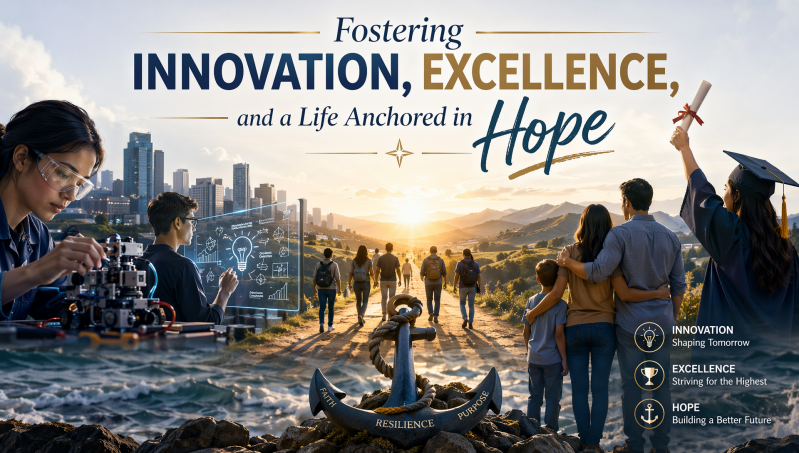
Fostering Innovation, Excellence, and a Life Anchored in Hope
Revised Saturday 13/06/2026 01:54 P.M BST
Courtesy -Graceful
In a world characterised by rapid changes and relentless challenges, the quest for innovation and excellence has become more crucial than ever. The global landscape is marked by unprecedented advancements in technology, science, and the arts, yet alongside these strides, we face significant social, economic, and environmental hurdles. The key to navigating these complexities lies in fostering a lifestyle rooted in hope, inspiring individuals and communities to rise above adversity, innovate fearlessly, and strive for excellence. This journey begins with the collective awakening of a nation's spirit, driven by a shared vision of a brighter, more prosperous future.
The Power of Hope
Hope is a powerful catalyst for change. It is the spark that ignites dreams and fuels the perseverance needed to achieve them. When a nation embraces hope as a foundational principle, it transforms the mindset of its people. Hope empowers individuals to envision possibilities beyond their current circumstances, driving them to take bold steps towards innovation and excellence. It fosters resilience, encouraging people to overcome obstacles and setbacks with renewed determination.
Hope is not a passive sentiment; it is an active force that propels us forward. It encourages us to ask, "What if?" and "Why not?" It challenges us to think creatively and explore new horizons. In a nation inspired by hope, every individual becomes a potential innovator, contributing to a collective effort to improve society.
Innovation: The Engine of Progress
Innovation is the heartbeat of progress. It is the process of turning imaginative ideas into reality, creating solutions that enhance the quality of life. Innovation is not limited to technological advancements; it encompasses breakthroughs in healthcare, education, environmental sustainability, and social equity. When a nation prioritises innovation, it fosters an environment where creativity thrives, and new ideas are valued and nurtured.
To cultivate a culture of innovation, we must first create a supportive ecosystem.
This involves investing in education and research, promoting collaboration between the public and private sectors, and encouraging entrepreneurial endeavours. It also requires a willingness to take risks and embrace failure as a learning opportunity. An innovative nation is one that celebrates curiosity and empowers its citizens to explore the unknown. One inspiring example of national innovation state is Estonia, a small Baltic nation that has transformed itself into a digital powerhouse. After gaining independence from the Soviet Union in 1991, Estonia faced significant economic challenges. However, the nation embraced a forward-thinking approach, investing heavily in digital infrastructure and education. Today, Estonia is a global leader in e-governance, cybersecurity, and digital innovation, demonstrating how a commitment to innovation can drive national success.
Excellence: The Pursuit of Perfection
Excellence is the relentless pursuit of perfection. It is the standard by which we measure the quality of our efforts and achievements. A nation that aspires to excellence sets high expectations for its citizens, encouraging them to strive for the best in every endeavour. Excellence is not an endpoint but a continuous journey of improvement and growth.The pursuit of excellence begins with a strong work ethic and a commitment to lifelong learning. It involves setting ambitious goals and working diligently to achieve them. Excellence also requires integrity, discipline, and a willingness to go the extra mile. It is about doing the right thing, even when no one is watching, and taking pride in one's work.
Inspiring a nation to pursue excellence involves celebrating achievements and recognizing the efforts of those who go above and beyond. It requires creating opportunities for personal and professional development, fostering a culture of mentorship and support, and providing the resources needed to succeed. By nurturing a mindset of excellence, we empower individuals to reach their full potential and contribute to the greater good.
Education: The Foundation of Hope, Innovation, and Excellence
Education is the cornerstone of a hopeful, innovative, and excellent society. It equips individuals with the knowledge and skills needed to navigate an ever-changing world. An education system that prioritises critical thinking, creativity, and problem-solving prepares students to become future leaders.
To inspire a nation, we must invest in quality education for all. This means providing equal access to learning opportunities, regardless of socioeconomic background. It involves updating curricula to reflect current realities and future needs, integrating technology into the classroom, and fostering a love of learning from an early age.Moreover, education should not be confined to formal institutions. Lifelong learning opportunities, such as vocational training, online courses, and community workshops, are essential for continuous personal and professional development. By promoting a culture of learning, we ensure that individuals are equipped to adapt and thrive in a rapidly evolving world.Finland's education system is often cited as a model of excellence. With a focus on student well-being, personalised learning, and teacher autonomy, Finland has consistently ranked among the top education systems globally. The nation's commitment to education reflects its belief in the potential of every individual to contribute to society's progress.
Community and Collaboration: Building a Supportive Network
No nation can achieve greatness in isolation. The collective effort of individuals, communities, and institutions is essential for driving innovation and excellence. Collaboration fosters the exchange of ideas, resources, and expertise, enabling us to tackle complex challenges more effectively.Building a supportive network involves creating platforms for collaboration and dialogue. This can take the form of public-private partnerships, community organizations, and professional networks. By working together, we can leverage our collective strengths and create synergies that propel us towards common goals.A powerful example of community-driven innovation is the "Maker Movement." Originating in the early 2000s, this grassroots initiative encourages individuals to create, invent, and learn through hands-on projects. Maker spaces—community workshops equipped with tools and resources—have sprung up around the world, providing a collaborative environment for inventors, artists, and entrepreneurs. The Maker Movement exemplifies how community support and shared resources can drive creativity and innovation.
Leadership: Guiding the Nation Towards a Brighter Future
Effective leadership is crucial for inspiring a nation. Leaders set the vision, create the framework for action, and motivate individuals to work towards common goals. They embody the values of hope, innovation, and excellence, serving as role models for others to follow.Leaders at all levels—from government officials to community organizers to business executives—play a vital role in shaping a nation's trajectory. They must be forward-thinking, resilient, and empathetic, capable of making tough decisions while keeping the well-being of their people at heart. By fostering an inclusive and participatory approach to leadership, we ensure that diverse perspectives are considered, and everyone feels empowered to contribute.New Zealand's former Prime Minister Jacinda Ardern has been widely praised for her compassionate and inclusive leadership. Her handling of crises, including the Christchurch mosque shootings and the COVID-19 pandemic, has demonstrated a commitment to unity, empathy, and decisive action. Ardern's leadership style has inspired many, showing how hope, innovation, and excellence can be embodied in governance.
Resilience: Overcoming Adversity with Hope
Resilience is the ability to bounce back from adversity and emerge stronger. In a rapidly changing world, resilience is essential for individuals and nations alike. It involves adapting to new circumstances, learning from failures, and maintaining a positive outlook despite challenges.Building resilience requires a proactive approach. This involves anticipating potential risks, preparing for uncertainties, and developing coping strategies. It also means fostering a supportive environment where individuals feel safe to take risks and learn from their experiences.Japan's recovery from the devastating 2011 earthquake and tsunami is a testament to national resilience. The country's rapid reconstruction efforts, driven by a strong sense of community and solidarity, have demonstrated the power of hope and collective action in overcoming adversity. Japan's ability to rebuild and innovate in the face of disaster serves as an inspiring example of resilience.
Sustainability: Innovating for a Better Future
Sustainability is the intersection of innovation and responsibility. As we strive for progress, we must ensure that our actions do not compromise the well-being of future generations. Sustainable practices involve balancing economic growth with environmental stewardship and social equity.Innovation plays a critical role in achieving sustainability. From renewable energy solutions to sustainable agriculture practices, technological advancements are key to addressing global challenges such as climate change and resource depletion. By prioritizing sustainable innovation, we can create a more resilient and equitable world.Denmark's commitment to sustainability is evident in its ambitious goals for renewable energy and green technology. The country's investments in wind energy and sustainable urban planning have positioned it as a global leader in environmental innovation. Denmark's success demonstrates how a focus on sustainability can drive both economic growth and environmental preservation.
Empowering the Next Generation: Nurturing Future Innovators
The future belongs to the next generation, and it is our responsibility to equip them with the tools and inspiration they need to lead. Empowering young people involves providing them with quality education, mentorship, and opportunities to explore their interests and talentsEncouraging youth participation in innovation and problem-solving initiatives can ignite their passion for creating positive change. Programs such as science fairs, coding camps, and entrepreneurship competitions provide platforms for young minds to showcase their ideas and develop their skills.One inspiring initiative is the FIRST Robotics Competition, which challenges students to design, build, and program robots to compete in a series of tasks. This global competition fosters creativity, teamwork, and technical skills, inspiring thousands of young people to pursue careers in STEM fields. By investing in the next generation, we ensure a continuous pipeline of innovators and leaders.
The Spirit of Hope: Stories of Transformation
To truly understand the power of hope in inspiring a nation, we can look to the countless stories of individuals who have overcome immense odds, driven by the belief in a better future. These stories are not just anecdotes; they are testaments to the transformative power of hope.Consider Malala Yousafzai, who, despite facing life-threatening violence, continued to advocate for girls' education. Her unwavering hope for a world where every girl has the right to learn has inspired millions and led to global movements for educational equality. Malala's story is a powerful reminder that hope can drive us to achieve the seemingly impossible.Similarly, the story of Elon Musk exemplifies how hope and vision can lead to ground breaking innovations. From facing repeated failures with SpaceX rockets to the near-bankruptcy of Tesla, Musk's resilience and unyielding hope in a sustainable future have revolutionized the space industry and electric vehicles. His journey underscores that hope is not just a feeling but a force that propels us to push boundaries and redefine possibilities.
The Ripple Effect: Hope in Everyday Life
Hope is not confined to the extraordinary; it permeates everyday life and has the power to create a ripple effect. When individuals embrace hope, it influences their actions, relationships, and communities. This ripple effect can transform a society, one person at a time.Think of the teacher who goes the extra mile to ensure that every student feels valued and capable of achieving greatness. Their hope for their students' success can ignite a passion for learning and instil confidence in young minds. Consider the healthcare worker who, despite the challenges of their profession, remains committed to providing compassionate care. Their hope for healing and well-being brings comfort and strength to those in need.Hope is also evident in the countless volunteers who dedicate their time to helping others. From organizing food drives to mentoring at-risk youth, their actions are driven by a hope for a more just and caring society. These everyday acts of kindness and dedication create a foundation of support and solidarity, fostering a sense of community and shared purpose.
Innovation for Social Good: Beyond Technology
While technological innovation often captures headlines, some of the most profound innovations address social and humanitarian needs. These innovations are driven by a hope for a more equitable and compassionate world.One such example is the work of Dr. Paul Farmer, co-founder of Partners in Health. Farmer's vision of bringing high-quality healthcare to the world's poorest communities has led to significant improvements in global health. His innovative approach to healthcare delivery, combining medical treatment with social support, has saved countless lives and inspired a new generation of health activists.
Another inspiring story is that of Kailash Satyarthi, a Nobel Peace Prize laureate who has dedicated his life to ending child labour and exploitation. Satyarthi's hope for a world where every child can enjoy their childhood free from abuse has driven him to rescue tens of thousands of children and advocate for their rights on the global stage. His relentless pursuit of justice and dignity for children demonstrates the transformative power of hope in addressing social injustices.
The Role of Art and Culture: Inspiring Through Creativity
Art and culture play a vital role in inspiring a nation. They reflect our hopes, dreams, and shared experiences, providing a powerful medium for expressing and cultivating hope. Through music, literature, visual arts, and performance, artists have the ability to touch hearts, provoke thought, and inspire action.
The impact of art in inspiring hope can be seen in movements such as the Harlem Renaissance, where African American artists used their creative expressions to challenge racial injustices and celebrate black culture. This cultural awakening not only showcased the talents of African American artists but also instilled a sense of pride and hope within the community.In more recent times, initiatives like the Global Citizen Festival use music to inspire social change. By bringing together artists and activists, these events highlight global issues such as poverty, inequality, and climate change, mobilizing millions to take action. The unifying power of music creates a sense of shared hope and collective responsibility, demonstrating how art can be a catalyst for innovation and excellence.
Building a Culture of Mentorship and Support
A nation that aspires to innovation and excellence must prioritize mentorship and support systems. By nurturing the potential of individuals through guidance and encouragement, we can create a culture where everyone has the opportunity to thrive.
Mentorship programs, whether in schools, workplaces, or communities, provide invaluable support to those navigating their personal and professional journeys. Mentors offer not only knowledge and experience but also the belief in their mentees' abilities and potential. This belief can be a powerful source of hope, motivating individuals to pursue their goals with confidence.
An inspiring example of the impact of mentorship is the story of Oprah Winfrey. Growing up in poverty and facing numerous challenges, Oprah found guidance and support from her teachers and mentors who recognized her potential. Their belief in her abilities fueled her hope and determination, leading her to become one of the most influential and successful figures in media and philanthropy. Oprah's journey illustrates how mentorship and support can transform lives and inspire excellence.
Inspiring a nation is not the responsibility of a select few; it is a collective endeavor. Every individual has a role to play in fostering hope, innovation, and excellence. By recognizing and embracing our collective responsibility, we can create a powerful force for positive change.
Parents and caregivers shape the next generation by instilling values of curiosity, resilience, and compassion. Educators inspire and equip students with the tools to think critically and creatively. Business leaders drive economic growth and innovation by fostering inclusive and dynamic workplaces. Community leaders advocate for social justice and support initiatives that uplift marginalized groups.
Furthermore, as citizens, we can contribute to nation-building through civic engagement and active participation in our communities. Volunteering, voting, and supporting local initiatives are ways we can all make a difference. By working together towards common goals, we can create a society that reflects our shared values and aspirations.
The Role of Media: Spreading Hope and Inspiration
Media has a profound influence on shaping public perception and attitudes. By highlighting stories of hope, innovation, and excellence, media can inspire individuals and communities to strive for greatness.
Positive journalism focuses on solutions rather than problems, showcasing stories of resilience, creativity, and success. Documentaries, podcasts, and articles that explore innovative solutions to global challenges can educate and inspire audiences, demonstrating that progress is possible and within reach.
Social media platforms also provide a powerful tool for spreading hope and inspiration. Through sharing stories, ideas, and experiences, individuals can connect with like-minded people, build supportive networks, and mobilize for change. Campaigns that promote positive messages and call for collective action can harness the power of social media to drive social innovation and engagement.
A Vision for the Future:
Hope as a Legacy
As we look to the future, it is essential to envision the kind of society we aspire to create. This vision is built on the foundation of hope, guiding our actions and decisions. By setting ambitious goals and working towards them with determination, we can leave a lasting legacy of innovation and excellence.
Imagine a world where every child has access to quality education, where healthcare is a universal right, and where sustainable practices ensure the well-being of our planet. Picture a society where creativity and diversity are celebrated, where everyone has the opportunity to reach their full potential, and where collaboration and empathy drive progress.
This vision is not a distant dream but a tangible reality that we can create together. By embracing hope as a guiding principle, we can inspire a nation to rise above challenges, innovate fearlessly, and strive for excellence in all aspects of life.
Embracing the Journey
Inspiring a nation to sit up, innovate, and excel is a journey that requires collective effort, unwavering hope, and a commitment to continuous improvement. It involves recognising the potential within ourselves and others, fostering a culture of creativity and excellence, and building supportive communities that uplift and empower.
As we embark on this journey, let us remember that every action, no matter how small, contributes to the greater good. By living a lifestyle based on hope, we can inspire those around us and create a ripple effect that transforms our society.
Together, we can build a nation that embodies the spirit of hope, innovation, and excellence. Let us embrace this vision with passion and perseverance, knowing that our collective efforts will shape a brighter, more prosperous future for generations to come.
Conclusion:
A Call to Action
Inspiring a nation to sit up, innovate, and excel requires a collective commitment to a lifestyle based on hope. It involves nurturing a culture of innovation, striving for excellence, and fostering resilience in the face of challenges. By investing in education, promoting collaboration, and prioritizing sustainability, we can create an environment where individuals and communities thrive.
As we embark on this journey, let us remember that every small action contributes to a larger movement. Whether it's a teacher inspiring a student, a community leader advocating for change, or an entrepreneur developing a ground breaking solution, each effort adds to the momentum of progress.
Together, we can build a nation that embodies the spirit of hope, innovation, and excellence. Let us embrace this vision with determination and courage, knowing that the future we create will be a testament to our collective potential and the enduring power of hope.
GRACEFUL
Innovation news
U.K POWER NETWORKS-Standing out among the best in efficient energy supply and customer services
by Graceful Online Team
Tuesday 26/05/2026 21:05 P.M BST

© Credit -Graceful
In the United Kingdom power outages are rare ,but a power outage took me to the school of customer services which with all my trainings in customer relations, made me to see that every company have their own level of customer services operations and they train their staff on different levels. While some companies seem to be at the top of their game ,others are so lackadaisical about how customers are served and they do not worry about how people feel when things go wrong . Having had some trainings in customer relations and having met so many customer services personnel from different companies .I recently experienced what excellence in customer services means when I saw how the U.K power staff helped residents to settle in after a power outage in Essex.There are hardly power outages in the United Kingdom, but a one day power outage in the Essex area made me to understand how much people work round the clock to keep the gas and electric working. Within one day of the power outage ,there were more than twenty engineers in the area ,with more than twenty vans with their work tools working round the clock in the area.The company set up food kiosks for the locals who might have ran out of food and there was a standby toilet facility in the area to look after the engineers , technicians and staff.They also gave customers torchlights to see in the dark and recharge devices for their mobile phones .They showed truly that they cared and concern was written all over their faces. Incidents like this rarely happen, but when they do ,they make one to appreciate innovation and excellence as shown by so many companies, as the engineers worked round the clock to make sure that power is restored in the different homes and offices in the area. The customer service officers worked round the clock and entered homes to ask residents and visitors how they were, as many worried when the lights will be restored.The customer services operations was world class and very excellent as people were spoken to and reassured that everything will be alright.After a day the light was restored , but I was amazed how the engineers were running about in the area trying to get the power back and they genuinely valued their customers and I think daily how much they have worked , to bring their companies to that level of customer services operations , which I found very amazing.And Graceful learnt that the engineers still come around to check the facilities to make sure that everything is all right as residents had their boilers changed and repaired..
© Credit Graceful Food Kiosks -Food for residents and visitors with Torchlight and Recharge devices

GRACEFUL
The Reasons why the shoemakers and the shoe stylists are important to society
by Chinyere Nwakanma
Wednesday 22/04/2026 01.49 A.M BMT 10min

The image is for illustration only
We all started to understand the importance of the shoemakers and the cobblers right from the early year days when our class teachers read the popular nursery rhyme for us-Cobbler cobbler mend my shoes.And learning how to walk as toddlers meant that our tiny feet were fitted with the correct shoe sizes and styles for every occasion.Excellent shoemaking and designs mean that we are confident walkers , who are not afraid of potholes because our shoes have the right kind of balance to carry us.Shoes are very important fashion items and the days of walking about bare footed dated back to the ancient times but have gone.Shoemakers are skilled people who make shoe designs that stand out and the cobblers are the people who repair our broken shoes.The shoemakers are the men with the skills behind the shoes displayed in fashion shops such as Primark, Next ,Victoria Beckham,Shoe zone , Marks and Spencers.Getting shoes that fit us can be a little of a task as sometimes ,we might find that a well liked pair of shoes is not our size ,leaving us to buy options that are available but not to our tastes.The yearly designs are made by men and ladies who draw what they feel could be the year’s fashion trends,we simply walk into the shops and buy our shoes.The cobblers determine what we wear and how we wear them.But a badly made shoe is a nightmare as the straps or soles can snap leaving one stranded with no shoes on the road.One may need to hop into an important meeting with no shoes on ,during such embarrassing moments ,caused by not strongly built shoes.A good cobbler makes shoes that are strong and durable.In these years of anything goes , many people have stacks of broken shoes in their homes and we have been made to believe that buying shoes that are not durable is the best option for fashion and for keeping our feet safe. Imagine wearing a badly made pair of shoes and you happen to have nails break them open on the road leaving your feet hurt and exposed to germs.Imagine entering a little pond of water and immediately you came out ,your shoes get ripped into two.These are awkward moments that come from wearing poor quality and badly made shoes.But the shoemakers who make quality shoes point us to the road to durability, excellence and class in a world where we have been taught that the cheaper the better, but we need to think twice about the hazards that come to us as a result of wearing embarrassing soles.Heels are fashionable but if you are a bulky lady you might leave the heels for the youngsters as breaking your legs is not worth it. Fitted soled comfy shoes are healthy options for the elderly to keep fit and to keep the feet in good health.The shoemakers set the fashion trends and determine what we wear yearly.They determine the colours we wear and the designs we wear.Most people like to stock black shoes as they can easily accessorise every clothing but the fashionistas prefer wearing shoes that match with the clothes and handbags .They are the people that spend much on shoes and many who cannot afford durable shoes stack up shoes that break into pieces while the wearer is left embarrassed and passers-by are left gushing.Many cash trapped people prefer the fairly used stronger shoes but many feel that they do not want to wear what others have won hence they go for the less durable shoes,that can sometimes cause mishaps to the wearers on the roads.These shoe mishaps can sometimes be very hazardous as a broken ankle is not good news for mobility.
The reasons why shoe shape matters
The shape of the shoes matters as many have wide feet and some narrow feet but the rule to comfort is to buy shoes that match your feet shape and size for every occasion .Good fashion sense when it comes to shoe purchase is choosing shoes with balance, are in proportionate size to our feet, and visual harmony, and once someone understands these concepts, getting dressed becomes much easier. Most shoes are made for specific activities.
Wearing a very tight pair of shoes that hurts ones feet is not worth it because the rule about fashion is to first of all to buy items that are durable and comfortable.
What are the types of shoes that we wear
-
Ballet flats, Dress Shoes, Loafers, Sneakers, Stiletto or Pointed-toe heels, Sandals, Platforms, Boots and work shoes.
-
What we wear for every occasion matters .Flat shoes for the ladies are great for work shopping and general walkabout as they help people to walk faster and be on time for every occasion.The trainers and loafers are great for sports and day to day activities as they are easy to manage.The sandals are great for summer while the flat covered shoes are good for the winter.The stilettos pointed shoes are great for summer or for important occasions.But many women carry flat shoes in their bags as back ups when they are travelling and are wearing Stilhettos.The block heels are ideal for the summer times as they can serve every the purposes for every occasion.For the engineers and technicians companies compulsorily ask their employees to wear safety boots and shoes
But whatsoever be our thoughts about shoes the poem cobbler cobbler mend my shoes,get it done by half past two,makes us to understand that without the shoemakers and the cobblers a walk around down the road can be an embarrassing moment and a nightmare. Whatever happens excellent shoemaking means that buyers are able to spend more on a good pair of shoes to avoid every embarrassing shoe mishap moments.
The History of Shoes
No singular person has been accredited with inventing shoes but shoes dated back to the Upper Paleolithic period around 400,000 years ago .It came as a simple, protective coverings produced from animal hides and plant fibres.
The oldest shoes known were fully made leather shoe .The 5,500-year-old Areni-1 shoe was discovered in Armenia. Environmental factors drove mankind to make shoes to wear for protection against health hazards.The ancient Egyptians and Mesopotamians developed early sandals and shoes, with the Romans and wearing shoes was a symbol of status .
Jan Ernst Matzeliger, a Dutch-Surinamese-American inventor, patented the first machine that revolutionized the making of shoes which helped people to make large quantity of shoes. Today innovation in shoe making involves the use of computers in making shoe 3D designs and of recently shoe manufacturers have introduced the use of AI in design rooms, making the art more sophisticated and modern with improvements in the materials used for soles.
GRACEFUL
Awakening the Heart of a Nation
Fostering Innovation, Excellence, and a Life Anchored on Hope
by Graceful online Team
Friday 20/03/2026 12.00P.M BMT 10min
New innovation means that our travel times are faster
In a world characterised by rapid changes and relentless challenges, the quest for innovation and excellence has become more crucial than ever. The global landscape is marked by unprecedented advancements in technology, science, and the arts, yet alongside these strides, we face significant social, economic, and environmental hurdles. The key to navigating these complexities lies in fostering a lifestyle rooted in hope, inspiring individuals and communities to rise above adversity, innovate fearlessly, and strive for excellence. This journey begins with the collective awakening of a nation's spirit, driven by a shared vision of a brighter, more prosperous future.
The Power of Hope
Hope is a powerful catalyst for change. It is the spark that ignites dreams and fuels the perseverance needed to achieve them. When a nation embraces hope as a foundational principle, it transforms the mindset of its people. Hope empowers individuals to envision possibilities beyond their current circumstances, driving them to take bold steps towards innovation and excellence. It fosters resilience, encouraging people to overcome obstacles and setbacks with renewed determination.
Hope is not a passive sentiment
it is an active force that propels us forward. It encourages us to ask, "What if?" and "Why not?" It challenges us to think creatively and explore new horizons. In a nation inspired by hope, every individual becomes a potential innovator, contributing to a collective effort to improve society.
Innovation: The Engine of Progress
Innovation is the heartbeat of progress. It is the process of turning imaginative ideas into reality, creating solutions that enhance the quality of life. Innovation is not limited to technological advancements; it encompasses breakthroughs in healthcare, education, environmental sustainability, and social equity. When a nation prioritises innovation, it fosters an environment where creativity thrives, and new ideas are valued and nurtured.To cultivate a culture of innovation, we must first create a supportive ecosystem. This involves investing in education and research, promoting collaboration between the public and private sectors, and encouraging entrepreneurial endeavours. It also requires a willingness to take risks and embrace failure as a learning opportunity. An innovative nation is one that celebrates curiosity and empowers its citizens to explore the unknown.One inspiring example of national innovation state is Estonia, a small Baltic nation that has transformed itself into a digital powerhouse. After gaining independence from the Soviet Union in 1991, Estonia faced significant economic challenges. However, the nation embraced a forward-thinking approach, investing heavily in digital infrastructure and education. Today, Estonia is a global leader in e-governance, cybersecurity, and digital innovation, demonstrating how a commitment to innovation can drive national success.
Excellence: The Pursuit of Perfection
Excellence is the relentless pursuit of perfection. It is the standard by which we measure the quality of our efforts and achievements. A nation that aspires to excellence sets high expectations for its citizens, encouraging them to strive for the best in every endeavour. Excellence is not an endpoint but a continuous journey of improvement and growth.The pursuit of excellence begins with a strong work ethic and a commitment to lifelong learning. It involves setting ambitious goals and working diligently to achieve them. Excellence also requires integrity, discipline, and a willingness to go the extra mile. It is about doing the right thing, even when no one is watching, and taking pride in one's work.
Inspiring a nation to pursue excellence involves celebrating achievements and recognizing the efforts of those who go above and beyond. It requires creating opportunities for personal and professional development, fostering a culture of mentorship and support, and providing the resources needed to succeed. By nurturing a mindset of excellence, we empower individuals to reach their full potential and contribute to the greater good.
Education: The Foundation of Hope, Innovation, and Excellence
Education is the cornerstone of a hopeful, innovative, and excellent society. It equips individuals with the knowledge and skills needed to navigate an ever-changing world. An education system that prioritises critical thinking, creativity, and problem-solving prepares students to become future leaders.
To inspire a nation, we must invest in quality education for all. This means providing equal access to learning opportunities, regardless of socioeconomic background. It involves updating curricula to reflect current realities and future needs, integrating technology into the classroom, and fostering a love of learning from an early age.Moreover, education should not be confined to formal institutions. Lifelong learning opportunities, such as vocational training, online courses, and community workshops, are essential for continuous personal and professional development. By promoting a culture of learning, we ensure that individuals are equipped to adapt and thrive in a rapidly evolving world.Finland's education system is often cited as a model of excellence. With a focus on student well-being, personalised learning, and teacher autonomy, Finland has consistently ranked among the top education systems globally. The nation's commitment to education reflects its belief in the potential of every individual to contribute to society's progress.
Community and Collaboration: Building a Supportive Network
No nation can achieve greatness in isolation. The collective effort of individuals, communities, and institutions is essential for driving innovation and excellence. Collaboration fosters the exchange of ideas, resources, and expertise, enabling us to tackle complex challenges more effectively. Building a supportive network involves creating platforms for collaboration and dialogue. This can take the form of public-private partnerships, community organizations, and professional networks. By working together, we can leverage our collective strengths and create synergies that propel us towards common goals. A powerful example of community-driven innovation is the "Maker Movement." Originating in the early 2000s, this grassroots initiative encourages individuals to create, invent, and learn through hands-on projects. Maker spaces—community workshops equipped with tools and resources—have sprung up around the world, providing a collaborative environment for inventors, artists, and entrepreneurs. The Maker Movement exemplifies how community support and shared resources can drive creativity and innovation.

Technology is vital to everyday living and the engineers bring out new ideas.
Images are for illustration purposes only
Innovation and Excellence
The Food Service Expo-The Ultimate B2B event held on 30th Sept and Ist Oct 2025 at Excel London
Displaying the newest innovations in the food industries
by Chinyere Nwakanma
Wednesday 01/10/2025 3.25pm BST
My love of food,food products and food innovations took me to see what is new in the food industries at Excel London, the venue for the event.
I was really impressed at what other's are doing for the food service industries to help us to eat healthy, eat better and to run our food businesses very well.Present were the restaurants, takeaways,the drink manufacturers and the food companies services providers.
Across the show floor were hundreds of leading suppliers showcasing real solutions to real challenges, from digital transformations, automations, sustainability, guest experiences and brand growth.With seminars and keynote speakers on lifestyle,the event was packaged with everything one needs to know more about improving their food businesses.I was able to chat with representatives from the exhibiting companies ,finding out what they have brought newly to the food services industries.I was amazed at how they are working hard to make businesses seamlessly easy for everyone.From new food products, to services the list remains endless with some attendees trying to get business partners to run their businesses.The expo was a place of opportunities for those looking to join the business of supplying food and running food chains.
TROPICANA BRANDS GROUPS
An old name in the business producing drinks for households.Tropicana came to show their new products which were mostly the naked smoothie brands.
www.tropicana.com
TRAKA
Traka is the global leader in intelligent key equipment management solutions with hospitality solutions to help industry users to streamline operations,ensuring spaces,secure spaces for guests and staff.
traka.com
CEVITR
CEVITR has products to unlock the power of digital workers.JO their digital worker works significantly faster than a human counterpart.Delegating duties to the digital workers allows a companies employees to focus on higher value tasks reclaiming valuable time.
TRAINER CENTRAL
Trainer central has everything you need to create and deliver impactful hospitality training.Trainer central will provide you with products to upskill your teams and strengthen your franchise network.
Features
AI powered course builder
Live workshop tools
E certificates and badges
White labelling support
Life workshop tools
AI powered assessments
Branded learner mobile app
KURVE DESIGNS
Kurve designs develop dynamic self-service technology aimed at hospitality operators looking to transform self service payment kiosks for restaurants and takeaways.With integrated touchscreen,card/QR reader and printers,our kiosks speed up service,boost sales with AI powered upselling and run on a modular,remotely managed platform. Kurve offers their customers self ordering and pre-order transformed in terms of the average transaction value and there is labour savings using the products.The self serving kiosks help businesses to
Customise their orders easily,quickly identify meal deals and promotions,discover what is new on the menus,easily see out of stock items,highlight allergens,nutritional information and lifestyle choices.They help customers to process their orders speedily with less queuing. They also have handheld POS connects connected to your EPOS system in the cloud.You can also be connected to your local Wi-Fi network or to a 4G networks.
Many brands came to showcase their products and I will be writing more about these brands in the future.
GRACEFUL
Innovation and Excellence
Designs that stand out-The London Eye
Sunday 01/03/2026 16:46 5mins

Credits Pixabay -The London Eye
The construction of the London Eye started in the year 1998 and was ceremonially opened by the former Prime Minister Tony Blair in 1999. It was finally opened to passengers in March 2000.The London eye was the brainchild of Mark Barfield’s architects. The London eye was launched, but became a permanent project in the year 2000. It is considered as an amazing wonder achieved through European engineering, with parts of the structures built in Italy, the Netherlands , the Czech Republic and Germany.
What happens when people ride inside the London eye
Riding on the London eye is for a thirty minutes rotation time and people inside will be able to see the space areas of London up to 40km away. It runs very fast and slows down for the disabled people. The London eye has 32 capsules representing the thirty two London boroughs. The London eye was initially intended to be dismantled in after five years.
Courtesy - Pixabay The London Eye
GRACEFUL
How the makers of the construction toys are inspiring kids into the STEM careers
by Chinyere Nwakanma
Monday 16/02/2026 18:06 PM BMT 10mins
In this life ,people start to appreciate what others do to influence the way other people are thinking or living latter in adulthood. And that brings me to the makers of the popular kids play construction toys, such as the popular building toys and Lego building blocks ,which do actually keep the kids busy at home , as they learn how to build and fix up things from infancy. Companies like Lego, Duplo, Teju, Lincoln logs, Marble Runs ,Mobilo groups have inspired lots of kids into the STEM careers ,making them to grow into adults with financial stability through making good career choices and ultimately living happy lifestyles as adults.Thinking about the processes involved in the making of the construction toys in the industries, from mixing the chemicals , adding the ingredients into the shaping moulds, separating them into colours and finally cooling the mixtures in the blocks, packaging and placing the finished products at the stores .It is lots that the toy manufacturers are doing daily , to keep everyone going and the kids happy by building the play toys that keep the kids busy at home , while the parents are doing other things. I look back to the life of all the kids that I knew, when we were children ,who played with the building blocks and they latter developed serious interests and went to train for skills in the STEM careers -Science,Technolgy architecture, building, engineering ,mathematics and medicine,which I find very amazing ,how play influenced those kids into their career choices later in life. All of the boys and girls who went into the STEM careers are highly successful men and women ,who have work and financial stability,home life balance and happy homes, because they are working in the oil companies and manufacturing sectors with high net worth.Life can never be perfect , but having financial stability by making great career choices can be a plus in ones life’s journey.And it starts from infancy as most kids decide what they want to be as adults from childhood and that starts from the playtimes.The major thing that bring problems in marriages and adult life is financial problems and its related negative outcomes, when one has been able to build a successful career life, that gives them financial freedom and stability in life, then other things can come to them through hope, building resilience, faith, living clean,living healthy and having a good social network. This starts right from infancy and people who make these products, have been found to be very impactful on the kids using their products.Many of our friends who chose the STEM careers , did not go through the rough times that plagued others , through financial inadequacies and lack. Most of them did not go through the times of waking up to no food ,not having the capability to pay up bills or being thrown out of their homes , because they cannot pay their rents ,which are the basic needs that when people lack , can bring stress and worrying times to people in adult hood.
Many people with broken homes are there simply because they have no means to live a money worry free life and pay up bills .Life can never be perfect, but living a life free of financial worries for basics such as food,water, accommodation is necessary for those raising happy kids.
Writing about the building blocks , they are some of the best play toys that kids can have in the home. They actually keep the kids very busy , while helping to develop their cognitive and social skills. There are so many building blocks that help kids to develop mathematical skills and they are good educational tools for kids. In this day of kids being on the phone screen at all times ,I think the building block play products are better for the development of the cognitive ,mathematical and social skills in kids. Generally speaking when one is raising kids ,it can be expensive to constantly buy these products for kids . One will be thinking of how much one is spending on the toys, but when the kids develop the love for building things and can stay calm and busy with the building toys ,one will appreciate that the money spent on such toys were worth it. When I see the skills developed by some of my childhood friends and how their career choices brought them financial freedom and success ,as they pursued careers in architecture engineering medicine and building, I feel that the monies spent on buying building blocks for them as kids by their parents were good value for money, for the buying adults. I believe that the building block toys have strong influences on their development and forage into these difficult highly skilled professions that require intricate and sophisticated thinking. The makers of these construction toys are truly inspiring the kids to take up these professions, based on their love of building and making things that others use,developed through play at infancy. The concepts of games and toys, play very important roles in children's lives. They contribute to the positive development of the right cognitive, motor, psychosocial, emotional, and linguistic skills in kids . They also play key and vital roles in raising confident, creative, and happy children. It does not matter if one is rich or not financially buoyant. The goal of buying these toys is to raise successful happy kids , who will latter develop the skills to become game changers, who will have the abilities to bring skills that will bring joy to the world and at work places.
Toy makers inspire children by moving beyond simple entertainment, to create ideas for development, career aspirations and social awareness. They present real-world representations of life, to empower kids to see themselves as active makers of their own lives ,which influences them into the STEM careers that give people more stable jobs and good incomes in later adult life.Careers in STEM is great because we will always need new products ti live as humans and there will always be new products from manufacturers and those in these careers does not need to look for jobs ,but recruiters look for them.They will always be employed even where there are no jobs for people in other careers ,steering their lives away from the joblessness and the resultant poverty that have derailed many people into lifetimes of poverty,suffering,having no peace of mind because they are being pursued by the bailiffs and having their families in chaos and stampede at all times with its resultant health issues such as hypertension and no stability for the kids due to constant moving about to different houses , with the resultant divorces caused by poverty and times of arguments because of bills.This throws families into diverse problems and kids can do better with the right training , but it starts from simple investments like buying simple toys for kids .
Here is how they are currently driving that inspiration:
-
Career Choices (STEM Focused)
Manufacturers like Mattel , Goldibox, Lego group design toys that introduce both boys and girls into studying engineering, space exploration , robotics and mathematics.Most people who made choices in stem careers do not need to look for jobs for a long time like others as there are regular jobs in manufacturing, since the world depends on the industries for the production of the machines and products that we use day to day.Getting kids to develop that mindset to pursue these careers from infancy is great as this helps them to transit from childhood to adulthood, pursuing what they used to think was play , to become real life careers , that they can earn a good living from and ultimately have stable flow of income,stable lives and happy fulfilled lives.
-
Developing the Creative Mindset
Innovative toys encourage children to view the world as a creative space shifting them from passive consumers to active inventors who can physically change the way the world is doing things.
-
Teaching the kids representation and Inclusivity
Many things are being said about race relations and people respecting others.The skills to relate with other people without prejudice could be learned through play as kids.With the development of new toys that represent people of different disabilities ,races and orientations.Children learn how to accept others early in life through play using these toys.
-
Teaching children environmental accountability through play
Toy makers are using recycled plastics ethically made from sourced wood products to teach children about the environment, sustainability and their responsibility towards keeping the planet safe from infancy .Of lately much is being said around the world about stopping air pollution , there are so many conferences on keeping the environment safe ,but these are topics that these toy makers are teaching kids through play right from infancy,making them more aware of what needs to be done on time.
Kids find building blocks very interesting to play with and some still keep the blocks as memorabilia in adulthood
The images are for illustration purposes only

Outdoor playtimes for kids can be times of playing with the building blocks

Courtesy Graceful -Children playing with building blocks
The images are used for illustration purposes only

Courtesy Graceful -Building blocks can keep kids busy during the holidays creating beautiful memories in adulthood
Images are for illustrative purposes only
GRACEFUL
How the luggage making companies are determining how we travel and what we carry
by Chinyere Nwakanma
Saturday 27/12/2025 18:50 PM BMT
A woman walking up an escalator and her bag suddenly breaks up
The video is for illustration purposes only
An excellently made luggage is the joy of every traveller. Have you ever travelled with a bag that is not strong and sturdy and had it broken on the way to where you are travelling to?.Nightmare journeys could be when a bag breaks on the way to the airport,leaving the contents scattered all over the place
I have been thinking about the awkward moments that happen when people are travelling and what happens when luggages break halfway through a journey resulting in everyone seeing the contents of your bag which could be some of the items of clothings’,shoes or stationaries that you may not want people to see.Making one to hurriedly repack the bags or look for people to help them to manage the moment or just move away if the contents are not really useful.But people can actually avoid these awkward moments by using strong durable luggages or bags.The luggage making companies determine how we travel and part of the things they are doing is making sure that the contents of our journeys are safe. Travelling can sometimes be an anxious time.With lost and broken luggages especially the wheels making things to go awkward. Travel can be a beautiful memorable experience or an experience that people can chose to forget as a result of the luggages and the sudden breakages.A luggage with beautiful and fanciful design can bring joy to its owners, with people commenting on how beautiful our bags are making us to feel good about the journey.These days there are so many makes of luggages in the shops , that the wheels wear off very easily and sometimes they can make a journey to become a nightmare when bag contents start falling all over the place and the handles break off as one is moving fast.Sometimes the city people might try to help people to carry their heavy luggages , but you will have those awkward moments if you are travelling with a broken bag as you will become a burden to the people trying to push the clogging wheels while trying to help you out.Sometimes when you walk around the city ,you will see brand new bags thrown away by the corners of the bin.You will know that the bags have been used only once with everything about them fallen apart.From the handle,to the wheels and even the body of the luggages torn.The owners might have made the mistake of putting heavy items inside a bag that was not properly built.Looking at those kinds of luggages they come in cheaper prices but they are not strong ,well built or durable and can bring some of the most embarrassing travel moments to its owners.Imagine moving up an escalator and your bag breaks into two with the contents flying all over the place.It could be embarrassing and comes with losses as sometimes you will see that you have lost some purses with lose coins in them or your clothes have flown into a corner ,while you are standing on top of the escalator.But travelling with a durable and sturdy strong bag will give you the confident smooth journey that you need to make and even if the luggage is expensive you will have peace of mind that your luggage will not be a source of embarrassments to you.The luggage companies that build strong bags make us to travel stress free.The bags that are not sturdy and well built make travel times anxious.Sometimes people might think that buying inexpensive bags is the best way to save money during travel times.But you will find out that one good bag can last for years of travel and you can resell the luggages if you do not want them anymore. But bags that are not strong need to be replaced every time they break,making them not to be money saving investments. Even handbags that are not strongly built can break easily.Some people have lost their shoulder bags because the handles broke off while they are travelling. And ladies particularly do lose money if there are potholes in their handbags. It is more economical to have few strong leather handbags than to have hundreds of bags that break easily. Losing money, one’s mobile phones or other items as a result of broken bags can be a nightmare while making a journey. It is better to invest in strong bags and resell them when we want to dispose of them. Luggage making companies determine how we travel and what we carry.A bad bag can be a nightmare on a journey that should bring good returns. Whether people can carry heavy loads or light weight items on a journey depends on how strong and large a bag is made. On a good journey that involves giving out gifts to people ,being able to stuff enough items can bring joy to those making the journey. The luggage companies determine how many items we can carry,what we carry and how we carry them as they make luggages of all sizes to determine how much we can carry at a time.And the strength of the bags depend on the quality of the materials they use in making a bag.And they determine the designs that are sold to everyone in the shops and the market places.

A man travelling with confidence and carrying a strong sturdy bag
The images are for illustration purposes only

A shop full of luggage
GRACEFUL
Samsonite award-winning suitcases and backpacks designed for excellent travel
by Graceful online Team
Friday 26/12.2025 19:15 PM BMT
Singapore’s rise as a global business powerhouse has been because they believe that great designs can change how companies work and the profit they make each year because of excellence in designs is much. In Singapore design is seen as a strategic tool for promoting innovation and excellence is the watchword that is the reason why they make products that are beautiful, strong and classy with vibrant colours and the Samsonite Singapore are Samsonite's brand development, sourcing, and innovation hub for the Asia-Pacific and Middle East regions with Samsonite having branches around the world . Good designs make products visible, and gives brands the advantage they need to stand out in the saturated global markets. Samsonite has been known as the world’s largest luggage brand. The Samsonite suitcases are in high demand whether they are new or old because they are strong ,well made with posh classy designs and colours.I went to a London market to speak to market traders about suitcases and they told me that the Samsonite suitcases are so much in demand whether used or new.Although Samsonite had its start up more than 25 years ago in Singapore, it has expanded significantly to the whole world ,showing how one man’s vision can touch the world positively.Many new comers in the suitcase business are selling suitcases that the wheels are so soft that when you carry suitcases from point one to point to, you will be left with suitcases with broken wheels making travellers anxious. The newer suitcases are very cheap but not durable. Samsonite sees immense potential across Asia—home to fast-growing economies and an expanding middle class—and Singapore sits at the region’s crossroads. Their pioneering company is close to Southeast Asian markets, where Samsonite have several factories, the city-state is the hub for Samsonite’s innovation and sustainability capabilities.What I really like about Singapore is that design is not seen as , but is aesthetics seen as a tool to solve man’s problems Beautiful designs make people to buy products faster but durability means that people do not have to do repeat shopping of a singular product within a shop period.The city-state’s cultural diversity provides a constant stream of insights to what they are producing as they promote innovation,designs and the provision of quality products. Designers can observe a wide spectrum of traveller behaviours and preferences, helping the design team to spot emerging patterns and opportunities with greater speed. Since the 1980s, the Singapore government gave priority to the development of its design sector to drive innovation and excellence. Through these proactive investments and the deliberate focus on design, Singapore has transformed itself to become one of the biggest economic success stories of the century. In the United Kingdom, Samsonite UK is doing sales and people travelling for the new year to see their families can get the luggage to make their travels excellent and there is free delivery for those buying goods over hundred pounds .
Samsonite has a global manufacturing network, with main production facilities in
China ,India ,Belgium and Hungary (that focuses on providing their products for the European markets)
The Samsonite Hard-shell Suitcases
GRACEFUL
The Most Exciting Innovations from Silicon Valley U.S.A in 2025
by Graceful Online Team
Tuesday 22/12/2025 11:15 P.M BMT 15mins
Are we expecting a world where Robots will be doing more of our jobs in 2026?
In 2025, Silicon Valley’s most amazing innovations were defined by the Agentic AI—artificial intelligence that works by doing tasks like chatting independently doing complex tasks—and have Physical Intelligence, which brings advanced AI and robotics to interact with the real world.Many have been asking whether we are coming towards the end of work , as there are many bizarre predictions that difficult medical tasks could be handled in the future by the robots , as many of us have our mouths wide open and we are all ears to hear more , sometimes confused by the scientific jargons of the creatives who know it all.We are all ears is always the answer in board rooms, where many ask different questions to know more.But as we enter 2026,many science enthusiasts and innovators are still asking if the direction the world is moving is the right way, as we enter into another world of robotic influence where you just need to sit in your living room , while a robot serves you a cup of orange juice.It sounds like when we were told about the mars in secondary school , but we know that all the gigantic tales come from the U.S.A, a country of tales, technology and wonders ,with President Donald Trump dolling out the most surprising orders,while we all watch on with our mouths agape , thinking what next are they making from Silicon Valley in 2026 ,as U.S.A seems to be the place where the impossibility can happen , having produced the richest men on earth like Elon Musk, working for the world technological advancements.Do not remind me about the google men, directing us to their search engine daily , while we look at the bill boards around our cities to see the next advert about what the Silicon Valley men will be churning out in 2026.As Elon Musk has been telling us that they can make underground tunnels ,with trains that will drive us from London to New York in few hours-that is a fine idea of course.
The following are the standout innovations that emerged from the Silicon Valley in 2025 ,with many thinking about what to expect in 2026.
1 Agentic AI & Reasoning Models
The focus has shifted from generative models to "AI agents" capable of independent decision-making to being able to perform complex cross-platform task .
2 The Anthropic's Claude 4
This is a major 2025 release known for being more accurate, having plausible reasoning engine,that predicts as it should .
3 Thinking Machines Lab
America’s Mira Murati was the one who founded the OpenAI in early 2025, this startup has been developing highly customizable, interpretable AI systems that are safer and more transparent than the previous ones.
4 XAI (Elon Musk)
The world’s richest man secured a $10 billion funding in 2025 to develop general-purpose AI infrastructure, using a massive supercomputer in Memphis to train its Grok models. And Elon Must has predicted the most amazing scientific discoveries for 2026 like trains that can travel from London to U.S.A in a jiffy meaning that right now we are thinking about more breakfasts in London and lunch in New York which seems to be an idea from the movies. But with men like Elon and all his counterparts in the U.S.A , nobody can predict what next we will hear from America.
5 Physical Intelligence & Robotics
Innovators are bridging the gap between digital AI and physical action, enabling robots to handle complex human environments.
6 Physical Intelligence
In 2024 the U.S.A scientists Karol Hausman, Sergey Levine, Chelsea Finn, Brian Ichter researchers from Google DeepMind, Stanford, and UC Berkeley with expertise in robotics and AI founded a startup which gained an upward movement in 2025 for its "foundation software" that allows robots to understand physical laws and perform chores or industrial tasks autonomously.From what we are hearing, soon the problems we are seeing in the factories , because of the worklessness of humans, who do not turn up for work will be over and the manning of all the engines at workplaces will be taken over by the robots.We are no longer in the era of sitting on our screens watching the scientific fiction movies, but we will become the scientific movie actors right inside our homes .We are in the real world and our homes will soon become laboratories , where we will be dishing out commands to the agent AI to tell the kettles to boil our water ,while the women cosy up inside the duvet, waiting for the little robots to serve breakfast to the family.But I am afraid if the robots will not be giving us the sink water to drink , rather than the clean ones , as they are not with human brains , but men like Elon Musk has already told us not to worry ,that life will be made easier for us, as we move with the AI companies,while we sit down chilling at home with our bank accounts moving by itself from fifty pounds to one million, all thanks to the agent AI,who will be at work for us.It all sounds like fairy tale , but the truth is that the amazing Silicon valley science masters, will make it happen .But America and the Silicon Valley men, may have succeeded in convincing us that there is nothing that can’t be done , as as long as the agent AI is with us.
7 World Labs
The AI pioneer Fei-Fei Li is the leader of the company is building "Large World Models" (LWMs) that give AI spatial intelligence, allowing it to reason about 3D objects and movements.
8 The Bot Company
This company which was founded by the former Cruise CEO Kyle Vogt, focuses on conversational household robots that combine large Language Models (LLMs) with robotics for intuitive home assistance.
9 Spatial & Immersive Hardware
Next-generation wearables are beginning to replace traditional screens for both work and personal use.
10 Meta's Orion glasses
These smart glasses which were tested in 2025, use "contextual support" to identify objects (like ingredients in a fridge) and respond to natural muscle movements and gestures.
11 NAQI Neural Earbuds
This is a A 2025 CES Innovation Award winner that allows users to control wheelchairs or computers using only small face and eye movements, removing the need for brain-implant surgery.
12 Applied Healthcare & Biotech
AI-driven breakthroughs in Silicon Valley are increasingly specialized for critical medical applications.
Hippocratic AI Achieved unicorn status in early 2025 for its clinical support AI, designed to perform non-diagnostic patient safety and nursing tasks in the hospitals.
Personalized CRISPR Advancements in 2025 have led to the first commercial CRISPR therapies for genetic disorders like sickle cell anaemia and inherited blindness.
13 Energy & Infrastructure for AI
To support the massive power needs of AI, Silicon Valley is leading innovations in efficient hardware and "green" data centres.
Groq LPU (Language Processing Units):This startup's hardware has become vital in 2025 for delivering ultra-low latency AI inference, allowing models to work more faster than the traditional GPUs.
Small Modular Reactors (SMRs):2025 is a critical year for the advancement of SMRs as tech companies look for reliable, nuclear-powered energy to sustain high-density AI data centers used in the U.S.A .

Courtesy Graceful -A Robot serving a drink
GRACEFUL
The Top contenders for the most liked Vintage cars
by Graceful Online Team
Monday 22/12/2025 01:00 P.M BMT 15mins
Courtesy Graceful : A woman driving a vintage car
When I travel around the country , I see so many people still riding their old vintage cars. They look stronger, well built but larger.I look back to the years when I was young and one of our family friends used to come in a beetle car. For us then as kids it was a little car that does its job, but for the elderly then it was a symbol of wealth and class.Yes the professor drove around in his beetle, showing what he has earned for all his years of studies.He was just a brilliant successful man.But looking at his beetle car right now it has become obsolete and it is hard to find it around the streets of London.I like cars because they take me faster and easier to where I am going to.For most young people ,their first pay check goes towards the purchase of a trendy car.And they go for the trendy cars because young people flow with the times,they are in.In a world where we wake up to see better versions of everything, it will be hard to appreciate what we have now, if we did not see the older versions.Keeping the grandpas car as it was in the garage is not a bad idea.
What are the top contenders for the most liked vintage cars?
1 AUSTIN HEALY
The British Monte Carlo Rally winner Donald Mitchell Healey founded the Donald Healey Motor Company in 1945 and the car was loved by many people. Many Americans loved the car and the car was used by so many legendary movies.
2 BENTLEY
The official supplier to the British Royal family are the manufacturers of Bentley and the classic cars are loved by the British millionaires. The company, was founded in 1919 and was highly successful for its racing cars. In the 1930s, the original makers moved from making sports to luxury cars with the 8 and 4 Litre models. Rolls Royce bought Bentley after because of financial problems that came with funding the making of the original models.
3 ROLLS-ROYCE
The Spirit of Ecstasy is probably one of the most famous trademarks of the (automobile) world – the legendary Rolls Royce hood ornament has been enthroned above the radiator grille since 1911 and looks down on the streets below. Rolls-Royce was able to consolidate its reputation as a luxury manufacturer as early as the first quarter of the 20th century, and since the 1930s the name has been representative of celebrity, luxury and exclusivity. To this day, the classic Silver Ghost and Silver Cloud have not been forgotten; while other manufacturers stood out with technical innovation and ground breaking innovations, Rolls-Royce dominated the luxury sector with exemplary quality and reliability.
4 JAGUAR-E TYPE
The new Jaguar type 00 GT will soon be unveiled but what do we know about the old Jaguar cars . The Jaguar –E type was famously called the most beautiful car made by Enzo Ferrari. People need to see the older versions to appreciate the shift in technology to enable them to be grateful for what they have.
5 MGB
This is an affordable, and easy-to-maintain British made car that many people who like antique cars like to drive.
6 FORD MUSTANG
The Ford Mustang is an American made car A true American car liked because of its V8 rumble ,used by many movies stars and can be seen in old movies seen as a symbol of status and wealth by society.
7 PORSCHE 911
The early models of Porsche 911 which are the original air-cooled 911s are loved for their beautiful built and engaging driving dynamics.
8 CHEVROLET CAMERO
The Chevrolet Camero remains a favourite vintage car for those who saw when they were first launched .Many people who bought it by then are still happily driving them today. It is a muscle car legend, especially the '69 model, known for its aggressive built and strength.
9 MERCEDES_BENZ 300 SL GULLWING
The Mercedes Benz 300 SL Gullwing is an engineering marvel work and have iconic upward-opening doors and represents luxury and innovation.
10 FORD MODEL T
This is an affordable car that the makers made available to everyone .When it was first launched first time car buyers rushed to buy the car because of the price.
Courtsey Graceful-Many women still love the Vintage cars
A Vintage Chevrolet car : Courtesy Graceful
Courtesy Graceful-The favourite Vintage Rolls Royce
Courtesy Graceful-A red Ford Mustang
GRACEFUL
What is the latest innovation news from Cambridge?
by Graceful Online Team
Wednesday 10/12/2025 20:38 P.M BMT 15mins
We are hearing from Grapevine that Cambridge is set to see the electric flying taxis help people to travel by 2028.This innovation made in England by Valo will ferry people from local areas around England to the major airports. It will be a faster airport connection within England and will carry those on regular travels to London and around the world. There is a buzz among Cambridge residents as bookings are being taken already for flights. The VX4 will connect Londoners with Heathrow—one of the world’s busiest airports. Customers will avoid congestion and navigate key transport hubs quickly. It will provide the convenience of a taxi drop-off, but in a better,faster dimensions remarkably, the VX4’s capabilities extend far beyond passenger flights.According to the what we are hearing, the aircraft is agile enough to provide rapid emergency response. Fast enough to transport time-critical medical resources. It is flexible enough to deliver cargo. It can travel to Japan ,U.S.A and other transatlantic flights.The aircraft is built with premium cabin and very large luggage capacity. Valo’s premium cabin will be unveiled with four seats, offering panoramic windows, generous personal space, and a cockpit divider that is built for enhanced safety and privacy. The aircraft’s flexible design enables expansion to six seats, with the potential to improve operator economics and lower fares for passengers. Valo’s platform also supports emergency medical services, cargo missions and, in the future, defence, hybrid and autonomous variants. The introduction of Valo will mark the UK’s return to designing and manufacturing new whole commercial aircraft for the first time in over 30 years and a significant opportunity for the national economy. According to an independent report published last week by Frontier Economics, Vertical is expected to create over 2,000 high-skilled UK jobs and contribute £3 billion annually to the economy by 2035.According to Stuart Simpson, CEO, Vertical Aerospace,
“With the launch of Valo, Vertical moves from prototype developer to aerospace manufacturer. Valo
is the aircraft that turns electric flight into a commercial reality - clean, quiet, fast and engineered for
everyday service. It marks a new dawn in transport, one that will connect people in minutes, not hours.
Valo told grapevine that its Key Target Technical Specifications are
• Range & Speed: The aircraft have Up to 100 miles at up to 150 mph, with zero operating emissions and quiet performance (<50
dBA in cruise).
• Battery power: Eight liquid-cooled under-floor battery packs; ~12-minute short-mission recharge; architecture
designed to accommodate future battery advances.
• Safety: Designed to meet airliner-level safety standards (UK/EU 10-
⁹; CAA/EASA, SC-VTOL Category Enhanced),
enabling truly global portability.
• Redundancy: Eight electric motors (EPUs), each powered by multiple electrically isolated power lanes to ensure
maximum safety.
• Cabin & Payload: Largest cabin in its class; seating for up to six passengers plus observer seat; 550 kg / 1,200
lbs total payload at entry into service; space for six cabin bags and six checked bags; cockpit divider for safety
and privacy.
• Versatility: Supports EMS, cargo, and future defence, hybrid and autonomous variants.

The UK aerospace industry is a significant contributor, to the countries economy adding around £13.6 billion in value to the UK economy in the year 2024, with a turnover of approximately £34 billion, employing more than 100,000 people, making it the world's second-largest aerospace sector after the United State of America.Velo and other upcoming companies will definitely add more value to this sector in the coming years.In fastive periods like this Valo will provide alternative option to the old carriers,making travelling faster and easier..
Below Air flight attendants walking to join the pilot
Video courtesy -Graceland Books and Allied
GRACEFUL
How do we emerge stronger as countries after COVID 19?
copied from Graceful Issue 6 Dec 2022-Jan 2023
Republished Wednesday 10/12/2025 03:15 A.M BMT 15mins
by Chinyere Nwakanma

We will emerge stronger by prioritising skills acquisition and innovation as the catalysts to building stronger healthy economies. As the world recovers from the impact of COVID 19 and turbulences, many people are asking?. How can we make progress as nations to rebuild our economies and create more jobs and wealth for our countries?. This article explores the wider impact of good skills and innovations as the way to move forward. We feel that if countries can work at creating more jobs in factories and get more people to be at work, acquire productive skills, it will help to rebuild broken economies. Many countries of the world are in debt and leaders are burdened by the needs of their people. How do we emerge stronger as countries after COVID 19 without leaders being overburdened by the problems of the drop in the values of their countries’ currencies, amidst the huge amount of resources needed to look after the populace? . We still feel that countries can move forward by building skilled nations, where the workforces are happy and enthusiastic about work. We visited factories where the younger healthier people are at work and saw how industries are boosted by energetic and healthy workforces. People who can work round the clock without getting sick or tired. Countries are encouraged to get the younger people to work and also acquire skills in engineering , sciences, Arts ,medicine , in order to kickstart large scale industrialisation, which will help to create new products and new jobs . Without skills and creation of more jobs , things will always be difficult as fewer people make meaningful contributions in the countries, factories and work places .For industry owners, it is difficult to hire staff who can work without constantly calling in sick or claiming to be tired to be at work .And the nagging question remains-how can we feel up the need for the daily recruitment of people . Thinking of ways to keep the people of working age at work-How can we train the young people to be creative to be able to bring new ideas at workplaces-Bringing in new healthy work forces?. Do we have ideas that will lead to the younger people / feel that opening up new factories is necessary for them to create jobs for themselves and others.Do they see the need always to turn up to work?.Do industry leaders feel the need to create new employments for the young people.How do we as collective societies bring more people to work ?. Do we have the abilities to create future healthy work forces with more export opportunities of products for everyone?. How do we make our environments clean and less polluted in order to avoid infections among the younger people?. Do air pollution have any impact on the future health of nations?. How do we create healthy lifestyles that will help the future work forces to stay stronger?. Does diet and what the young people eat impact their health as adults?. How do we effectively teach the young people to take up healthy eating habits and lifestyles, to enable them to grow into healthy adults?. How do we boost our factories by having more engineers and technicians, who are capable of handling machines?. How do we inculcate in the young people the right attitudes to work ,since they are the future of nations?. How do we raise up a generation of skilled people ,who are able to create new jobs, work ,create new ideas and make our economies stronger?. How can technology complement teaching and learning? What steps should be taken to ensure that students of all socioeconomic backgrounds have adequate access to education?. It does not matter who ones parents are so far they are brilliant.Brains to create are gifts and how can societies progress by removing the barriers that sometimes do not allow equal opportunities, marginalising the gifted who can become doctors ,nurses,artists, bankers,teachers, engineers and technicians,who can fill in job gaps in the future. How do nations lose out by allowing future doctors,engineers and scientists to be lost, because they cannot pay their school fees in higher colleges and universities?. What can be put in place to make sure that such gifted and talented young people are importuned?.The unneeded bureaucracies that are siphoning away the wealth of nations and lives need to be removed?. How can countries share expertise to help train the highly skilled in the universities and higher colleges which was what was done happily before now?. How can we remove the wastages of talents and manpower around the world especially among the people of working ages?.Our missions like the astronauts’ of the past are to build a healthier happy world after COVID 19 and the new wars affecting economies and productivity around the world need to be stoppped. But selfishness sometimes robs us the joy of seeing the excellence and beauty that comes from other people helping, but the globe needs to do better than warring both physically and economically , because we all need to be accountable with the things handed over to us as a generation. How have we became nations depending on borrowing, and some governments just print their countries’ currencies to spend devaluing them, while nations groan in pains?. How do we become progressive economies that do not depend on constant borrowing?. Instead of dwelling on competitiveness to prove the unneeded points that we are better off than others,we need to THINK as people that are working together to make life better for those coming behind us?. We need to think like our ancestors who built the structures that we all are using today. People come and people go, but the world remains. Leaving large debts for our kids ,while dwelling on competitions is not good for the future. Focusing on the building of new skilled workforces is needed. Keeping the young ones career focused remain vital to creating new ideas post COVID .Nations need happy people to rebuild their economies.What did our ancestors do better that made our nations stronger despite the scourges and wars that have ravaged the world through ages? We need to provide homes for everyone.When people are working , at every point in time when desperately looking for a home,people lose hours of work by asking to be given one week off work to look for a home?. Housing stability helps to build healthy stable people who are happy to work and build the economies.How does these issues affect productivity in nations? How many people did not turn up for work, because they were homeless at the point of starting a job or sick and how can they be kept healthy through their lifestyles?. How do we minimize those anxious moments that make people to call off work?. People seem to do more and better at work when they are relaxed,happy and healthy. How do we create fairer societies without overburdening other people?. To emerge as stronger countries, people need societal settings, where they are happy and free to live, work to earn a living.The psychotherapists at work places manage people who are overburdened by the pressures of their private lives, that they either do not turn up for work regularly or need constant counselling to cope with life. What ideas and innovations have we made to relieve our lives of the constant stresses and pressures that come with being human?. Creating new and better innovations and having many skilled people ,will help countries to come out of the losses of COVID 19.People working in industrial recruitments may have noticed that to hire a very good work force is difficult. Many people are weak, discouraged ,tired and cannot stand the rigours of industrial work. Sometimes tired because of constant pains caused by ill-health, sociological trauma created by others for no reasons and psychological problems created by having a feeling of being inadequate for the job,either by the reason of lack of experiences or knowledge of the work they are doing. These hamper and impact their works. Sometimes people do not complete their shifts and you won’t be surprised that after leaving work they will not come back the next day, leaving vacant and void positions without giving enough notices to the management,making managers to get stressed out each morning as they constantly stand at the doors looking out for those returning to work . We are a silver spoon, social media generation, so we do not need to bother, but we know that our own kids will be impacted by our own failings in not creating new opportunities for them. The new work forces, make their managers anxious and worried as productions are hampered by poor staff performances. More hours are spent on the phone speaking to recruiters, who are panicking to get the next helping hands. And it becomes a cycle of losses and hire for the anxious company owners, who sometimes throw their hands up in the air, as they struggle to cope, with the constant anxieties of coming to work, to find out that no-one is looking after the machines or sitting in the offices. They are forced to use sparsely trained staff, who are carrying spanners, but they are neither technicians nor engineers. They are forced to hire people trained under one week just to fill up the spaces,who cause chaos at work , because they are clueless of what they came to do,sometimes leaving their colleagues anxious and panicky.The workplace anxieties become many ,making people not to return back to work.Some constantly spoil the machines, getting fellow workers angered, because everyone know that the person carrying the spanner has no good knowledge of the machines. With anxious staff trying to meet supply targets discouraged, because the machines do not work while there are no engineers or technicians to check the machines ,making the work places less interesting, while some decide not to return the next day. It can be chaotic, with some waking up the next day, not bothering about returning to work, while anxious managers are busy looking down the doors, to see if the staff have arrived to get the machines running, calling staff who are dozing off their sofa beds, who have called it quits after one week at work and did not bother to hand in their quit notices. The supply chain being stopped, because of staff not turning up to work creating losses for everyone. This is a typical day in factories around the world .With the new losses from COVID 19, things need to be put in place, to increase productivity and encourage those working in both skilled and unskilled sectors of the economies. How do we make changes to help factories cope with these constant losses of their work forces?. How can we have more food on our tables?. How do we encourage the unskilled staff working in food productions and agriculture across the world?. How can we improve productivity in agriculture and food productions?. Are we happy to be a generation with our kids turning up at the school gates with no breakfast, which our parents did not allow to happen to us?. How can we build more houses to keep people indoors?. Are we happy to be a generation of people who pass the streets and find others with their duvet lying by the corner of the shops during winter?. Are there enough engineers, architects and builders that have the skills to create cheaper, greener and affordable housing for everyone?. Are there new innovations being made to build better, greener, cheaper and affordable homes?. If we can forget about the greed, that makes housing affordable to only few, because housing is just one of the basic needs of life then we will emerge as healthier ,stronger ,fairer economies. Does waking up one morning to see that your landlord have asked you to quit affect your outlook to work?. Of course it does for many.How many people did not turn up for work, because they had no homes. These are a few of the many questions we need to ask after looking at the culture of not wanting to work, the statistics of those not working and the burdens of supporting everyone .The workless culture post COVID 19, has to be tackled otherwise policy makers might see themselves running about constantly looking at so many heart-breaking data of time wasters and young people who are not ready to do anything ,with older parents sitting and blaming themselves for not getting it right, , while the populace lie inside their duvets thinking that it is a norm for healthy twenty and thirty somethings to live jobless.
GRACEFUL
What did the Cambridge innovators do to make life easier for people in the year 2025 ?
by Graceful Online Team
Sunday 07/12/2025 16:30 P.M BMT

The University of Cambridge has worked through years to provide new ideas, discoveries and inventions helping both national and global economies.Looking at what Cambridge research has done this year one will applaud the brilliant scholars working hard to get new things produced. Cambridge research continues to produce numerous innovations, with recent advancements focusing heavily on Artificial Intelligence (AI) applications in technology, healthcare,finding new biomedical materials, and sustainable technologies.
Which areas have they found new things this year?
-
Bamboo Cricket Bats (CamBoom):The new engineered bamboo bats have been made bringing in a low-cost sustainable alternative to traditional willow bats, promoting inclusivity in the sport.
-
AI-Driven Brain Forecast Technology:A new outfit is developing AI that will help to predict the progression of brain diseases in patients, helping doctors in clinical decisions. Sustainable Film Packaging
-
Artificial Cartilage:Researchers found out a material that can sense hidden changes in the body such as an arthritis flare-up and release targeting medications to the needed points in the body.
-
AI-Powered Drug Discovery:An "AI scientist" has found that combinations of existing, non-cancer drugs (e.g., for high cholesterol) could be effective in treating cancer cells.This finding is a huge boost to cancer research as the disease remains part of the group of sicknesses that have defied human
-
Neutrocheck®:This low-cost, portable finger-prick test allows cancer patients going through chemotherapy do their tests at home and prevents the risk of neutropenic sepsis , cutting their hospital visit hours.
-
Whole Genome Sequencing (WGS): Delivering test result within hours for cancer patients to enable quick treatment has been at the heart of Cancer research institutions . Illumina has been able to do this in pediatric medicine which is a plus for hospitals treating children suffering this ailment.
-
AI-Powered Drug Discovery:An "AI scientist" has identified combinations of existing, non-cancer drugs (e.g., for high cholesterol) that could be effective in treating cancer cells.
-
Wearable 'Smart Choker':A device using flexible electronics and AI that locates tiny throat movements, making it possible for people with speech problems to speak.
-
Handheld Heart Disease Device: Scientists in Cambridge has developed a handheld stethoscopes for detecting certain types of heart disease. This is an easier way for doctors to carry the equipment around while at work.
-
AI Weather Prediction System:A new AI equipment has been developed which has the ability to give accurate weather forecasts significantly faster using less computer power than what is being used now.
-
Accessible Journey Planner (AI Mapper+):This generative AI map is mostly for disabled to plan how they can travel using public transport data. This is great and will alleviate carers of the need to always look at ordinary maps which sometimes can be cumbersome even for those with no impairments.
-
AI-Based Landslide Detection:Getting relief quicker to natural disaster places has been improved as researchers are using AI to speed up the detection of landslides following natural disasters.
-
Quantum Magnetometer Array:This innovation is used for advanced navigation applications.
-
Virtual Reality Public Speaking Platform:Some people find it difficult to share what they know through public speaking.This free AI-enabled VR platform was launched to help users become more confident public speakers.
Sustainability & Materials
-
Zero-Carbon Cement:Cambridge Electric Cement has developed a technology that gets cement recycled from demolition waste, creating zero-carbon cement that performs like traditional Portland cement.This would be huge relief for the advocates of zero carbon emission .
-
Plastic Waste to Hydrogen:Protonera is pioneering a process to convert plastic wastes into hydrogen fuel, providing a sustainable alternative to fossil fuels.
-
Sustainable Film Packaging
-
Bamboo Cricket Bats (CamBoom):The new engineered bamboo bats have been made bringing in a low-cost sustainable alternative to traditional willow bats, promoting inclusivity in the sport.
GRACEFUL
Innovation and Excellence
What was the big news on innovation from Oxford in 2025 ?
Oxford Researchers discovered Quantum teleportation between two computers
by Graceful Online Team
Friday 05/12/2025 22:54 P.M BMT 10mins


It was big news early this year when the University of Oxford made significant recent quantum discoveries , including demonstrating the first scalable distributed quantum computer by linking processors via photons (solving scalability issues), developing new visualization techniques to find materials for quantum computers, achieving secure cloud quantum computing using "blind quantum computing", and observing unique electronic phases in quantum matter. Oxford is a major UK hub for quantum research, with more studies on practical quantum tech like building better quantum computers and exploring quantum internet potential. This was a giant stride in computer discovery making way for more future findings on the way computing is done.
What was discovered?
-
Scalable Quantum Computing: In this process two quantum processors are linked into a single, fully-connected computer, tackling the scalability challenge for powerful quantum machines.
-
Quantum Material Discovery: Created new visualization methods to find materials for fault-tolerant quantum computers, speeding up development.
-
Secure Cloud Quantum Computing: Showcased how users can securely access quantum computers in the cloud with guaranteed privacy.
-
New Quantum States: Identified a novel electronic phase of quantum matter with unique mathematical properties.
Broader Impact & Focus:
-
Quantum Internet: Their work on quantum teleportation lays groundwork for a future quantum internet.
-
Practical Applications: Focus on quantum technologies for drug discovery, materials, AI, and security.
-
UK Quantum Hub: Oxford hosts key parts of the UK's quantum research efforts.
These breakthroughs highlights Oxford's leading role in moving quantum computing from theory to practical, scalable applications, with ongoing work in fundamental quantum physics and advanced quantum technologies.
GRACEFUL
Innovation News
Scottish space sector secures a £4.6m investment at Glasgow conference
by Graceful Online team
05/12/2025 17:38 PM BMT 5mins

Scotland's space sector is set to get a £4.6m funding boost to accelerate breakthrough technologies, the UK Space Agency has told news agencies. The funding will involve a £3.7m sum from the Agency's National Space Innovation Programme (NSIP), which will be given to four universities in Scotland to boost new innovations in the likes of satellites and ways of monitoring pollution from the space. The news comes the day the biggest space industry event ever was held in the country, Space-Comm Expo Scotland opened in Scotland ushering in more than 2,300 delegates, 100 speakers and 80 exhibitors at Glasgow's SEC camps Natasha Nicholson, chief executive of Space Scotland, said that the new investment was a vote of confidence in the country's space sector. According to her "These projects demonstrate the strength of our research base and the talent driving advancements in secure communications, environmental monitoring, and resilient navigation — technologies that will shape the future of global space infrastructure," .The four universities that will receive funding are the University of Edinburgh, for work developing an instrument to measure pollution from space, the University of Strathclyde will get funding to develop a satellite navigation system that doesn't rely on GPS, and Heriot-Watt University will help to build a quantum communication transmitter for small satellites.
Strathclyde will get further funding as part of a consortium led by the University of Bristol. It is building a UV-based device to enable secure data transmission between satellites, strengthening cybersecurity in orbit. These are complex studies that require serious funding and extensive researches, good results will help to solve the problem of air pollution coming from the space.
GRACEFUL
Innovation, Science and Technology
Nine Top innovations for 2022
copied from Graceful Issue 4 July/August 2022
Republished on 01/12/2025 00:20 a.m BMT 10mins

JeeP Renege
After every viral outbreak life changes.Scientists and innovators work hard to create new concepts and technologies to make life easier for everyone.Covid 19 brought so many changes in our lifestyles and new scientific innovations were made to get people to adapt to these changes .With more work being done remotely by companies and less meetings.What were the new technologies that are helping people with post Corvid lifestyle.
1 The face Masks
Even though many people are no longer wearing facemasks Some people have adapted to living with the new face mask fashion wearing trend with new designs ,making it a new lifestyle which they have used to protect themselves from all the new Covid variants .
2 Flying Vehicles
The flying vehicles are the new innovations invented to help with the distribution of products and goods. The "AirCar" is powered by a 1.6L BMW engine, and runs on "fuel sold at any gas stations. The vehicle can fly at a maximum operating altitude of 18,000 feet. The evolution of the supercar is the Aero Mobil. Inspired by the mythical winged horse Pegasus, the Aero Mobil is the high-end vehicle species equally at home on the road or in the sky – the flying car The Transition is already available as a plane, but there won't be a street-legal version until 2022. The flying car will need to meet both the FAA's and the National Highway and Traffic Safety Administration's safety regulations.
Aero Mobil- The new technologies
> Aero Mobil.
> Air speeder/ Alauda Aeronautics.
-
Nirvana Systems.
-
DeLorean Aerospace.
-
Ehang
4 IBM Artificial Intelligence and Machine Learning
Organizations and researchers are now using all their data and computing power to provide advanced AI capabilities to the world.
One of the key trends in the AI world is machine vision. We now have computers that can see and recognize objects on a video or photograph. Language processing is also making big advances, so machines can understand our voices and speak back to us.
Low-code or no-code will also be a huge trend this year. We will be able to build our AI using drag-and-drop graphical interfaces, so we can develop extraordinary applications without being limited by our coding skills.
5 Virtual Reality and Augmented Reality
The computer-generated simulation of a three-dimensional image or environment that can be interacted with in a seemingly real or physical way by a person using special electronic equipment, such as a helmet with a screen inside or gloves fitted with sensors. Virtual reality or VR is a technology that creates a virtual environment. People interact in those environments using, for example, VR goggles or other mobile devices. It is a computer-generated simulation of an environment or 3-dimensional image where people can interact in a seemingly real or physical way.
6 Humanoid Robots
A humanoid robot is a robots resembling the human shape in shape. The design may be for functional purposes, such as interacting with human tools and environments, for experimental purposes, such as the study of bipedal locomotion or for other purposes. In general, humanoid robots have a torso, a head, two arms, and two legs, though some humanoid robots may replicate only part of the body, for example mouths. Android are humanoid robots built to aesthetically resemble humans. There have been experiments around scientific circles about how the future will look with more robots doing the work of humans from the waist up. Some humanoid robots also have heads designed to replicate human facial features such as the eyes .Robots that could take on basic healthcare tasks to support the work of doctors and nurses may be the way of the future. Who knows, maybe a medical robot can prescribe your medicine someday?.
7 The new innovations on cars
The wonder on wheels that are the new innovations in cars in 2022 make life better as people recover from Covid 19.With expensive price tags the new model cars are built different from the old designs.We have listed some of these cars and what makes them to stand out. It’s been a tough difficult few years for the new Alfa Romeo Tonale, with slumping sales and an increasingly limited line-up. Yet with its all-new Tonale SUV, the Italian brand is ready to fight back.
The Alpha Romeo Tonale
Boasting head-turning looks and a range of electrified engines, the classy compact crossover will rival the likes of the Q3 and Mercedes GLA. The Alfa sits on the same platform as the Jeep Renegade and will offer 48V mild-hybrid petrol and 271bhp plug-in powertrains. But bespoke tuning of the suspension means it should drive with the brio we expect from Alfa. Inside, the interior mixes luxury and tech, with a 12.3-inch infotainment screen, Amazon Alexa voice assistant and Level 2 autonomous driver aids.
8 Computing Power
Computing power will continue to explode in 2022. We now have considerably better cloud infrastructure, and many businesses are re-plat forming to the cloud.We are also seeing a push towards better networks – 5G is being rolled out, and 6G is on the horizon. That means even more power in our phones, in our cars, and in our wearable devices.
9 New Energy Solutions
The hugely important trend is the new energy solutions. As we tackle climate change, we will see continued advances in the batteries we use in our cars, as well as innovations in nuclear power and green hydrogen. These new trends will allow us to power our ships, our planes, our trains and generate energy for the public.
GRACEFUL
NET MEA ZERO solar energy summit returns to Dubai in April 2026
by Graceful online team
Sunday 30/11/2025 02:50 a.m BMT 10mins

Marriot hotel and the registration point in 2025
Erica Lee PM of Net Zero Global, announces the dates and details of 2026 Net Zero Mea solar energy summit in Dubai.This year saw a successful gathering of industry leaders from all countries with vested interests and contributions in the area of solar and energy storage.According to the organisers, they are pleased to share that NET ZERO MEA 2026 – Solar & Energy Storage Summit (April 6–7, 2026 | Dubai, UAE) is now officially launched. As a valued participant from our previous editions, we would be delighted to welcome you again for another year of meaningful dialogue and industry impact.Below is details of the programmes and speakers expected to be present.
Erica announced that they are now curating the NET ZERO MEA 2026 conference program and would be honored to invite distinguished industry leaders to contribute to next year’s discussions.Your insights and experience played an essential role in shaping the success of the 2025 edition, and we believe your expertise would add tremendous value to the 2026 agenda.
Why you need to Join Again in 2026
According to Erica Lee ,the 2026 summit will build on last year’s success, expanding in scale, seniority, and regional influence:
• 700+ senior executives from the Middle East, Africa, Europe, and Asia
• 120+ speakers across solar, storage, hydrogen, financing, and utilities
• 40+ exhibitors showcasing PV, BESS, EPC, grid, and digital solutions
• Government & utility participation from UAE MoEI, PIF, ACWA Power, AMEA Power, ENGIE, TAQA Arabia, Masdar City, and more
Acording to her they will be delighted to once again welcome exhibitors:
✔ Developers / IPPs
✔ Utilities & grid operators
✔ EPCs / integrators
✔ PV, storage, inverter & technology innovators
✔ Investors, lenders, DFIs
Erica Lee the organisers representative announced that the upcoming program will feature a series of high-level panels and leadership discussions, including:
- April 6 | 09:50–10:40 Leadership Panel — The GW-Scale Pipeline: Outlook for Solar Market Opportunities in the Middle East
Confirmed speakers: ACWA Power | Al Jomaih Energy & Water
- April 6 | 11:00–11:50 Panel — Navigating Localization: Policy Compliance & Market Entry Strategies
- April 6 | 13:50–14:40 Leadership Panel — Financing Innovation: Enabling Large-Scale Renewable Projects in the Middle East
Confirmed speakers: Al Jomaih Energy & Water| AMEA Power
- April 6 | 16:40–17:30 Panel — Storage for the Desert: Technology Pathways for a Resilient Middle East Grid
- April 7 | 10:30–11:20 Panel — Module & Inverter Synergy: Driving Down Costs and Boosting Efficiency for Middle East PV Projects
More images from the 2025 NET MEA events


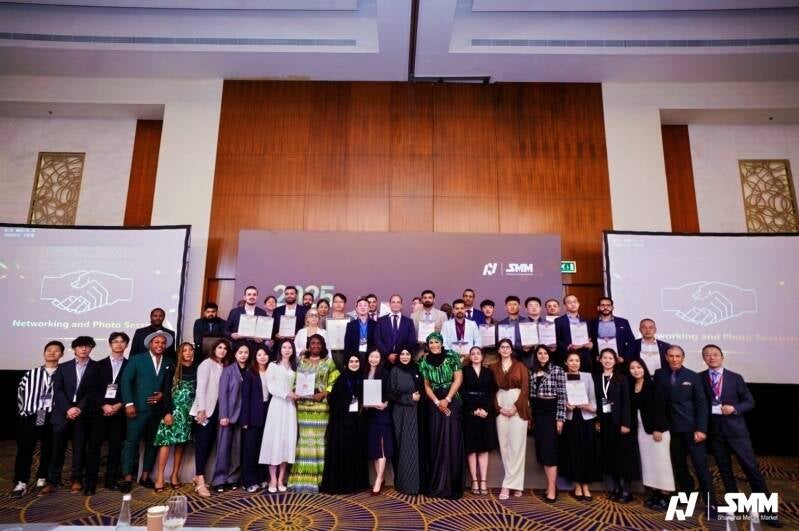


Industry leaders and watchers are looking forward to the 2026 events to see the impact of what has been done after one year .


GRACEFUL
Google and their new patents
by Graceful online team
Saturday 22/11/2025 23:25 P.m BMT 10mins
I wake up everyday to go through my works and sometimes ,I do check if the google search bar is still around and I feel happy and very relieved when I see the google logo sign still in front of me, wondering sometimes what will happen if I wake up and open my computer and does not see the bar. Call it personal technological paranoia ,there are some companies that if anything happens the entire world will stand still as we saw sometime last year with one of the technological giants.But google is waxing stronger in developing new products that help us to navigate our everyday works in browsing,getting new movies to watch or doing other every day life jobs .What has google done of recently?.
Google strives to get new patents to march the needs of the times as the whole world relies on them for different technologies,with new products being in the AI systems and hardware products. Google's new innovations are mostly in the area of artificial intelligence (AI), quantum computing, and personal computing products such as like Pixel 9.
Googles major newly patented products includes
Quantum Chip ("Willow"): Google has developed a new quantum chip called "Willow," a significant breakthrough in quantum error correction that reduces errors as it scales up. This chip was reported to have done a complex benchmark computation in less than five minutes that would have taken a standard supercomputer an estimated 10 septillion years.That is really a major breakthrough in science especially computer science .
Pixel 9 and Related Tech: Google has new patents that cover the latest Pixel devices, such as the Pixel 9 smartphone series, Pixel Watch 3, and Pixel Buds Pro 2.
AI and Machine Learning (ML)
Personalized Search: This product allows users to search their personal browsing and email history using natural language .
AI for Content Creation: Google patents a new generative AI tools for platforms like YouTube, which helps creators to write titles.
Secure ML Pipelines: A patented system uses data loss prevention (DLP) to secure machine learning training pipelines and models, identifying and stopping the wrong use of sensitive data.
Hardware and Devices: Google continues to patent innovations for its hardware devices.Tensor Processing Units (TPUs): The
company has made innovations of different types its custom AI accelerator chips, with the latest, Trillium (TPU v6), announced in May 2024, offering a 4.7 times offering a higher performance to earlier versions.
Pixel 9 and Related Tech: Google has new patents that cover the latest Pixel devices, such as the Pixel 9 smartphone series, Pixel Watch 3, and Pixel Buds Pro 2.
Smart Home Sensors: Google has patented a sensor-based tamper detection system made to be used in mounted electronic devices, like security cameras, which helps to find out illegal movements or removal.
Writing about the new sensitive sensors in home devices like smoke alarm,I am really surprised at which the latest versions of these sensors used in fire alarms pick up smoke fast alerting everyone when homes are even overheated.The smart sensors not only pick up smoke but also detects high temperature in the kitchen even when people are not cooking,making homes very safe.Google has improved the depth of its search and I believe google search is one of the mostly used search engines for research and academic works .I will be writing about other companies and the recent products they have made.

GRACEFUL
Awakening nations to innovation,excellence and hope
by Graceful Online team
Friday 21/11/2025 1.36a.m BMT 10min
Courtesy Graceful -Engineers in a car factory
In a world characterised by rapid changes and relentless challenges, the quest for innovation and excellence has become more crucial than ever. The global landscape is marked by unprecedented advancements in technology, science, and the arts, yet alongside these strides, we face significant social, economic, and environmental hurdles. The key to navigating these complexities lies in fostering a lifestyle rooted in hope, inspiring individuals and communities to rise above adversity, innovate fearlessly, and strive for excellence. This journey begins with the collective awakening of a nation's spirit, driven by a shared vision of a brighter, more prosperous future.
The Power of Hope
Hope is a powerful catalyst for change. It is the spark that ignites dreams and fuels the perseverance needed to achieve them. When a nation embraces hope as a foundational principle, it transforms the mindset of its people. Hope empowers individuals to envision possibilities beyond their current circumstances, driving them to take bold steps towards innovation and excellence. It fosters resilience, encouraging people to overcome obstacles and setbacks with renewed determination.
Hope is not a passive sentiment; it is an active force that propels us forward. It encourages us to ask, "What if?" and "Why not?" It challenges us to think creatively and explore new horizons. In a nation inspired by hope, every individual becomes a potential innovator, contributing to a collective effort to improve society.
Innovation: The Engine of Progress
Innovation is the heartbeat of progress. It is the process of turning imaginative ideas into reality, creating solutions that enhance the quality of life. Innovation is not limited to technological advancements; it encompasses breakthroughs in healthcare, education, environmental sustainability, and social equity. When a nation prioritises innovation, it fosters an environment where creativity thrives, and new ideas are valued and nurtured.
To cultivate a culture of innovation, we must first create a supportive ecosystem. This involves investing in education and research, promoting collaboration between the public and private sectors, and encouraging entrepreneurial endeavours. It also requires a willingness to take risks and embrace failure as a learning opportunity. An innovative nation is one that celebrates curiosity and empowers its citizens to explore the unknown.
One inspiring example of national innovation state is Estonia, a small Baltic nation that has transformed itself into a digital powerhouse. After gaining independence from the Soviet Union in 1991, Estonia faced significant economic challenges. However, the nation embraced a forward-thinking approach, investing heavily in digital infrastructure and education. Today, Estonia is a global leader in e-governance, cybersecurity, and digital innovation, demonstrating how a commitment to innovation can drive national success.
Excellence: The Pursuit of Perfection
Excellence is the relentless pursuit of perfection. It is the standard by which we measure the quality of our efforts and achievements. A nation that aspires to excellence sets high expectations for its citizens, encouraging them to strive for the best in every endeavour. Excellence is not an endpoint but a continuous journey of improvement and growth.
The pursuit of excellence begins with a strong work ethic and a commitment to lifelong learning. It involves setting ambitious goals and working diligently to achieve them. Excellence also requires integrity, discipline, and a willingness to go the extra mile. It is about doing the right thing, even when no one is watching, and taking pride in one's work.
Inspiring a nation to pursue excellence involves celebrating achievements and recognizing the efforts of those who go above and beyond. It requires creating opportunities for personal and professional development, fostering a culture of mentorship and support, and providing the resources needed to succeed. By nurturing a mindset of excellence, we empower individuals to reach their full potential and contribute to the greater good.
Education: The Foundation of Hope, Innovation, and Excellence
Education is the cornerstone of a hopeful, innovative, and excellent society. It equips individuals with the knowledge and skills needed to navigate an ever-changing world. An education system that prioritises critical thinking, creativity, and problem-solving prepares students to become future leaders.
To inspire a nation, we must invest in quality education for all. This means providing equal access to learning opportunities, regardless of socioeconomic background. It involves updating curricula to reflect current realities and future needs, integrating technology into the classroom, and fostering a love of learning from an early age.
Moreover, education should not be confined to formal institutions. Lifelong learning opportunities, such as vocational training, online courses, and community workshops, are essential for continuous personal and professional development. By promoting a culture of learning, we ensure that individuals are equipped to adapt and thrive in a rapidly evolving world.
Finland's education system is often cited as a model of excellence. With a focus on student well-being, personalised learning, and teacher autonomy, Finland has consistently ranked among the top education systems globally. The nation's commitment to education reflects its belief in the potential of every individual to contribute to society's progress.
Community and Collaboration: Building a Supportive Network
No nation can achieve greatness in isolation. The collective effort of individuals, communities, and institutions is essential for driving innovation and excellence. Collaboration fosters the exchange of ideas, resources, and expertise, enabling us to tackle complex challenges more effectively.Building a supportive network involves creating platforms for collaboration and dialogue. This can take the form of public-private partnerships, community organizations, and professional networks. By working together, we can leverage our collective strengths and create synergies that propel us towards common goals.
A powerful example of community-driven innovation is the "Maker Movement." Originating in the early 2000s, this grassroots initiative encourages individuals to create, invent, and learn through hands-on projects. Maker spaces—community workshops equipped with tools and resources—have sprung up around the world, providing a collaborative environment for inventors, artists, and entrepreneurs. The Maker Movement exemplifies how community support and shared resources can drive creativity and innovation.
Leadership: Guiding the Nation Towards a Brighter Future
Effective leadership is crucial for inspiring a nation. Leaders set the vision, create the framework for action, and motivate individuals to work towards common goals. They embody the values of hope, innovation, and excellence, serving as role models for others to follow.
Leaders at all levels—from government officials to community organizers to business executives—play a vital role in shaping a nation's trajectory. They must be forward-thinking, resilient, and empathetic, capable of making tough decisions while keeping the well-being of their people at heart. By fostering an inclusive and participatory approach to leadership, we ensure that diverse perspectives are considered, and everyone feels empowered to contribute.
New Zealand's former Prime Minister Jacinda Ardern has been widely praised for her compassionate and inclusive leadership. Her handling of crises, including the Christchurch mosque shootings and the COVID-19 pandemic, has demonstrated a commitment to unity, empathy, and decisive action. Ardern's leadership style has inspired many, showing how hope, innovation, and excellence can be embodied in governance.
Resilience: Overcoming Adversity with Hope
Resilience is the ability to bounce back from adversity and emerge stronger. In a rapidly changing world, resilience is essential for individuals and nations alike. It involves adapting to new circumstances, learning from failures, and maintaining a positive outlook despite challenges.Building resilience requires a proactive approach. This involves anticipating potential risks, preparing for uncertainties, and developing coping strategies. It also means fostering a supportive environment where individuals feel safe to take risks and learn from their experiences.Japan's recovery from the devastating 2011 earthquake and tsunami is a testament to national resilience. The country's rapid reconstruction efforts, driven by a strong sense of community and solidarity, have demonstrated the power of hope and collective action in overcoming adversity. Japan's ability to rebuild and innovate in the face of disaster serves as an inspiring example of resilience.
Sustainability: Innovating for a Better Future
Sustainability is the intersection of innovation and responsibility. As we strive for progress, we must ensure that our actions do not compromise the well-being of future generations. Sustainable practices involve balancing economic growth with environmental stewardship and social equity.Innovation plays a critical role in achieving sustainability. From renewable energy solutions to sustainable agriculture practices, technological advancements are key to addressing global challenges such as climate change and resource depletion. By prioritizing sustainable innovation, we can create a more resilient and equitable world.Denmark's commitment to sustainability is evident in its ambitious goals for renewable energy and green technology. The country's investments in wind energy and sustainable urban planning have positioned it as a global leader in environmental innovation. Denmark's success demonstrates how a focus on sustainability can drive both economic growth and environmental preservation.
Empowering the Next Generation:
Nurturing Future Innovators
The future belongs to the next generation, and it is our responsibility to equip them with the tools and inspiration they need to lead. Empowering young people involves providing them with quality education, mentorship, and opportunities to explore their interests and talents.
Encouraging youth participation in innovation and problem-solving initiatives can ignite their passion for creating positive change. Programs such as science fairs, coding camps, and entrepreneurship competitions provide platforms for young minds to showcase their ideas and develop their skills.One inspiring initiative is the FIRST Robotics Competition, which challenges students to design, build, and program robots to compete in a series of tasks. This global competition fosters creativity, teamwork, and technical skills, inspiring thousands of young people to pursue careers in STEM fields. By investing in the next generation, we ensure a continuous pipeline of innovators and leaders.
The Spirit of Hope: Stories of Transformation
To truly understand the power of hope in inspiring a nation, we can look to the countless stories of individuals who have overcome immense odds, driven by the belief in a better future. These stories are not just anecdotes; they are testaments to the transformative power of hope.Consider Malala Yousafzai, who, despite facing life-threatening violence, continued to advocate for girls' education. Her unwavering hope for a world where every girl has the right to learn has inspired millions and led to global movements for educational equality. Malala's story is a powerful reminder that hope can drive us to achieve the seemingly impossible.Similarly, the story of Elon Musk exemplifies how hope and vision can lead to ground breaking innovations. From facing repeated failures with SpaceX rockets to the near-bankruptcy of Tesla, Musk's resilience and unyielding hope in a sustainable future have revolutionized the space industry and electric vehicles. His journey underscores that hope is not just a feeling but a force that propels us to push boundaries and redefine possibilities.
The Ripple Effect: Hope in Everyday Life
Hope is not confined to the extraordinary; it permeates everyday life and has the power to create a ripple effect. When individuals embrace hope, it influences their actions, relationships, and communities. This ripple effect can transform a society, one person at a time.
Think of the teacher who goes the extra mile to ensure that every student feels valued and capable of achieving greatness. Their hope for their students' success can ignite a passion for learning and instil confidence in young minds. Consider the healthcare worker who, despite the challenges of their profession, remains committed to providing compassionate care. Their hope for healing and well-being brings comfort and strength to those in need.Hope is also evident in the countless volunteers who dedicate their time to helping others. From organizing food drives to mentoring at-risk youth, their actions are driven by a hope for a more just and caring society. These everyday acts of kindness and dedication create a foundation of support and solidarity, fostering a sense of community and shared purpose.
Innovation for Social Good: Beyond Technology
While technological innovation often captures headlines, some of the most profound innovations address social and humanitarian needs. These innovations are driven by a hope for a more equitable and compassionate world.
One such example is the work of Dr. Paul Farmer, co-founder of Partners in Health. Farmer's vision of bringing high-quality healthcare to the world's poorest communities has led to significant improvements in global health. His innovative approach to healthcare delivery, combining medical treatment with social support, has saved countless lives and inspired a new generation of health activists.
Another inspiring story is that of Kailash Satyarthi, a Nobel Peace Prize laureate who has dedicated his life to ending child labour and exploitation. Satyarthi's hope for a world where every child can enjoy their childhood free from abuse has driven him to rescue tens of thousands of children and advocate for their rights on the global stage. His relentless pursuit of justice and dignity for children demonstrates the transformative power of hope in addressing social injustices.
The Role of Art and Culture: Inspiring Through Creativity
Art and culture play a vital role in inspiring a nation. They reflect our hopes, dreams, and shared experiences, providing a powerful medium for expressing and cultivating hope. Through music, literature, visual arts, and performance, artists have the ability to touch hearts, provoke thought, and inspire action.
The impact of art in inspiring hope can be seen in movements such as the Harlem Renaissance, where African American artists used their creative expressions to challenge racial injustices and celebrate black culture. This cultural awakening not only showcased the talents of African American artists but also instilled a sense of pride and hope within the community.
In more recent times, initiatives like the Global Citizen Festival use music to inspire social change. By bringing together artists and activists, these events highlight global issues such as poverty, inequality, and climate change, mobilizing millions to take action. The unifying power of music creates a sense of shared hope and collective responsibility, demonstrating how art can be a catalyst for innovation and excellence.
Building a Culture of Mentorship and Support
A nation that aspires to innovation and excellence must prioritize mentorship and support systems. By nurturing the potential of individuals through guidance and encouragement, we can create a culture where everyone has the opportunity to thrive.
Mentorship programs, whether in schools, workplaces, or communities, provide invaluable support to those navigating their personal and professional journeys. Mentors offer not only knowledge and experience but also the belief in their mentees' abilities and potential. This belief can be a powerful source of hope, motivating individuals to pursue their goals with confidence.
An inspiring example of the impact of mentorship is the story of Oprah Winfrey. Growing up in poverty and facing numerous challenges, Oprah found guidance and support from her teachers and mentors who recognized her potential. Their belief in her abilities fueled her hope and determination, leading her to become one of the most influential and successful figures in media and philanthropy. Oprah's journey illustrates how mentorship and support can transform lives and inspire excellence.Inspiring a nation is not the responsibility of a select few; it is a collective endeavor. Every individual has a role to play in fostering hope, innovation, and excellence. By recognizing and embracing our collective responsibility, we can create a powerful force for positive change.Parents and caregivers shape the next generation by instilling values of curiosity, resilience, and compassion. Educators inspire and equip students with the tools to think critically and creatively. Business leaders drive economic growth and innovation by fostering inclusive and dynamic workplaces. Community leaders advocate for social justice and support initiatives that uplift marginalized groups.
Furthermore, as citizens, we can contribute to nation-building through civic engagement and active participation in our communities. Volunteering, voting, and supporting local initiatives are ways we can all make a difference. By working together towards common goals, we can create a society that reflects our shared values and aspirations.
The Role of Media: Spreading Hope and Inspiration
Media has a profound influence on shaping public perception and attitudes. By highlighting stories of hope, innovation, and excellence, media can inspire individuals and communities to strive for greatness.
Positive journalism focuses on solutions rather than problems, showcasing stories of resilience, creativity, and success. Documentaries, podcasts, and articles that explore innovative solutions to global challenges can educate and inspire audiences, demonstrating that progress is possible and within reach.
Social media platforms also provide a powerful tool for spreading hope and inspiration. Through sharing stories, ideas, and experiences, individuals can connect with like-minded people, build supportive networks, and mobilize for change. Campaigns that promote positive messages and call for collective action can harness the power of social media to drive social innovation and engagement.
A Vision for the Future:
Hope as a Legacy
As we look to the future, it is essential to envision the kind of society we aspire to create. This vision is built on the foundation of hope, guiding our actions and decisions. By setting ambitious goals and working towards them with determination, we can leave a lasting legacy of innovation and excellence.
Imagine a world where every child has access to quality education, where healthcare is a universal right, and where sustainable practices ensure the well-being of our planet. Picture a society where creativity and diversity are celebrated, where everyone has the opportunity to reach their full potential, and where collaboration and empathy drive progress.
This vision is not a distant dream but a tangible reality that we can create together. By embracing hope as a guiding principle, we can inspire a nation to rise above challenges, innovate fearlessly, and strive for excellence in all aspects of life.
Embracing the Journey
Inspiring a nation to sit up, innovate, and excel is a journey that requires collective effort, unwavering hope, and a commitment to continuous improvement. It involves recognizing the potential within ourselves and others, fostering a culture of creativity and excellence, and building supportive communities that uplift and empower.
As we embark on this journey, let us remember that every action, no matter how small, contributes to the greater good. By living a lifestyle based on hope, we can inspire those around us and create a ripple effect that transforms our society.
Together, we can build a nation that embodies the spirit of hope, innovation, and excellence. Let us embrace this vision with passion and perseverance, knowing that our collective efforts will shape a brighter, more prosperous future for generations to come.
Conclusion:
A Call to Action
Inspiring a nation to sit up, innovate, and excel requires a collective commitment to a lifestyle based on hope. It involves nurturing a culture of innovation, striving for excellence, and fostering resilience in the face of challenges. By investing in education, promoting collaboration, and prioritizing sustainability, we can create an environment where individuals and communities thrive.As we embark on this journey, let us remember that every small action contributes to a larger movement. Whether it's a teacher inspiring a student, a community leader advocating for change, or an entrepreneur developing a ground breaking solution, each effort adds to the momentum of progress.Together, we can build a nation that embodies the spirit of hope, innovation, and excellence. Let us embrace this vision with determination and courage, knowing that the future we create will be a testament to our collective potential and the enduring power of hope.
GRACEFUL
Innovations that were patented in November and shared to the world in the past
by Graceful Online team Saturday 19/11/2025 19:46 BMT 10min
Courtesy Graceful -The flying Trapeze
While many prepare for Christmas and bought new clothes ,shoes and handbags ahead of time, many engineers and scientists are still in the laboratories figuring out solutions to how things should be done.The same people are working in the factories during Christmas to produce new items for everyone.There are many people working round the clocks in factories and industries around the world,some patenting new products to make beautiful things for everyone.They are the unsung heroes of the great day and we just work into the shops to pick up our new products ,they only make life better for everyone because they are thinking deeply.The inventions introduced to the world in the month of November include the electric razor, traffic signal, and Mason jar. Other November inventions are the flying trapeze, barbed wire, and the laser printer. The first ARPANET link was introduced in the moth of November.These inventions have made life easier for others.Most of the ancient engineers who patented these products we are using now are not famous or know by many.Their innovations mean that life is easier and better for us ,with people still developing newer and better versions of what they first made.Imagine how life will look like without these inventions.
The Traffic Signals
The traffic light has kept many safe all over the world.But some people thought about how people can be kept safe and decided to invent something .The first traffic lights were invented in London, England, by J. P. Knight, while the first electric traffic lights and the modern three-color system were American inventions. The men behind the traffic light innovations are J. P. Knight of Nottingham, who installed the first gas-lit system in London in 1868, and Garrett Morgan, who patented the three-way signal in the United States in 1923.
The Mason Jars
Daily we use jars to store our jams in the refrigerators , but who actually first thought up this idea.A Mason jar is a glass jar with a screw-top lid, originally patented in 1858 by John Landis Mason, that was used mostly for home canning and preservation of food. These reusable jars are known for their airtight seals, created by a two-part lid and band system that secures a steel disc with a rubber ring to the jar's rim. They are essential containers used for storage, decorations, and various other uses.Many women like the mason jars, because they are kitchen essentials, as dried food items stored in them last for very long time.They are part of groups of products one may refer to as mom's best friends ,because they help to moms to organise the items in the food shelves.
The Flying Trapeze
Flying trapeze was firstly performed by Jules Leotard on November 12, 1859.Flying trapeze is a circus art that involves a performer jumping from a platform, swinging on a trapeze bar, and performing tricks while airborne. Most times, the performer is caught by another performer swinging on a different trapeze bar. Classes are available for beginners and experienced individuals, focusing on physical strength, coordination, and courage, often with the use of a safety harness and crash mat.The circus is an adrenaline junkie sports or entertainment that people like to watch.
Barbed Wire
The maker of the first patented barbed wire was Lucien B. Smith, an American from Kent Ohio.
But the inventor of the most commercially successful, modern day and mass-producible version was American farmer Joseph Glidden, from Dekalb Ilinois, who received a patent for his "Winner" design on November 24, 1874. Glidden is widely credited with the invention that dramatically changed the American West.Barbed wires are now used in different countries to protect homes from burglary as fences .Barbed wire, also known as barb wire or bob wire, is a type of steel fencing wire ma form of sharp edges or points arranged at intervals along the strands. Its primary use is the construction of inexpensive fences, and it is also used as a security measure on top of walls surrounding property.Most homes are protected using barbed wires around the world but most people do not think how this came about.I guess the Americans where the first to use barbed wires to protect their homes.
Arpanet
J.C.R. Licklider: An ARPA scientist who first thought up the idea of a universal "Intergalactic Computer Network" in 1962, providing the initial vision and impetus for the project.
Robert Taylor: The ARPA director who initiated the ARPANET project in 1966 to connect remote computers and appointed Larry Roberts as the program manage.
Robert Taylor, the inventor of ARPANET, was from Dallas Texas. He was born there in 1932 and later studied at the University of Austin Dallas
Laser Printers
Gary Keith Starkweather (1938–2019) was an American engineer and inventor renowned for inventing the laser printer and pioneering color management technology. His innovations had a profound impact on modern computing and printing.
The Mousetrap
Archaeological evidence shows that early rodent traps, such as clap-nets and torsion-sprung devices, were used by the ancient Egyptians and existed in Europe as early as the 15th and 16th centuries. These were ad-hoc or simple prefabricated designs, often relying on gravity (deadfall traps) or twisted cords for power
A snap-trap model was patented on November 7, 1899 by American John Mast.The mouse can be a nuisance rodent in the house and if not for him and others we would have continued carrying sticks and pursuing mice and rats in our gardens and homes.Killing rats is a very difficult thing to do and the innovators of traps made it something easy to eradicate rats.The whole world would have continued with the bubonic plague rage but the extermination of rats from this simple process means that people are safe.
The modern, flat, spring-loaded mousetrap was invented by several people who refined the design through a series of patents in the late 19th century.
Key inventors include:
James M. Keep of New York patented the first lethal, spring-loaded cast-iron jaw trap, the "Royal No. 1," on November 4, 1879. William C. Hooker of Abingdon, Illinois, patented the classic flat, spring-loaded wooden trap design on December 11, 1894, which is widely recognized as the standard model today. His design was simple and effective, and was marketed as the "Out O' Sight" trap.James Henry Atkinson, a British inventor, patented an improvement to the design in 1898, called the "Little Nipper". His version used a weight-activated treadle as the triggering mechanism, making it highly effective; it is still manufactured today.John Mast of Pennsylvania also patented a similar snap-trap in 1899, with modifications for safer setting. New mouse trap has been made by several inventors which are being used everyday to eradicate rats.
Washing Machines-Washing machines are part of those groups of inventions,that women love because owning one makes life easy for women.It is part of the essentials as weekly washing becomes a burden without them and moms love the washing machines.Imagine a world where there are no washing machines ,women won't be able to go to work as washing items of clothes for the families will take whole weeks.Imagine nursing mothers living with no washing machines.Many people have been credited with the patenting and making of the washing machines with changing designs over years.
On November 27, 1894, Mildred Lord was granted a patent for a washing machine. Mildred Lord is considered a prominent American woman inventor.James King the American is credited with inventing the first mechanical washing machine with a drum in 1851, though Jacob Christian Schäffer the German professor designed a machine in 1767 and Henry Sidgier the British inventor patented a rotating drum machine in 1782. The first commercially successful, drum-based machine was designed by American Hamilton Smith in 1858, and the first fully electric machine was the Thor, invented by Alva J. Fischer who is also an American born in 1908
Listerine
Listerine helps to stop germs from spreading in the mouth ,it is very effective in fighting mouth odours and gum diseases.Listerine was first made in 1879 by the chemist Dr. Joseph Lawrence and pharmacist Jordan Wheat Lambert. Lawrence created the formula as a surgical antiseptic and named it after Sir Joseph Lister, the British surgeon who pioneered antiseptic surgery. Lambert originally worked in the insurance business in Virginia before relocating to St. Louis in 1873. It was there, while working for a wholesale drug house, that he studied chemistry and developed the formula for what would become Listerine, based on the antiseptic research of Sir Joseph Lister. He formed the Lambert Pharmaceutical Company in 1881 to market the product.
Apple Jacks Cereal
The inventor of Apple Jacks cereal was Professor William Thilly, an American geneticist and MIT professor.
He was born and raised in the United States, Thilly was known for his groundbreaking research into human genetic mutations. He worked as a professor at the Massachusetts Institute of Technology (MIT) and developed the formula for Kellogg's Apple Jacks cereal in 1965. The cereal itself is an American product.
GRACEFUL
Why do people still like the Vintage cars?
by Graceful Online team Saturday 15/11/2025 21:10 BMT 10min
A lady in a vintage car holding a classic handbag.
The evolution of new car models and the advancement in technology means that people like to go for the latest models of cars made by different companies.Many people like to buy the newer cars to look trendy ,to enjoy new gadgets and to ride cars with more mileage .But many people still like to ride the vintage cars and people do wave at them when they pass on the streets .The latest cars are
-
Porsche 911. Rs. 2 - 3.80 Cr*
-
Audi Q3. Rs. 43.07 - 52.98 Lakh*
-
Audi Q3 Sportback. Rs. 52.98 - 53.55 Lakh*
-
Audi Q5. Rs. 64.74 - 69.86 Lakh*
-
Facelift. Hyundai Venue. Rs. 7.90 - 15.69 Lakh*
The newest car brand is Onvo, a sub-brand of Chinese company Nio, which was established in 2024 and launched its first vehicle, the L60. Another very recent brand is Afeela, a joint venture between Sony and Honda formed in 2022, which will start taking pre-orders in 2025 and expects to make first deliveries in 2026. Several other new brands are also launching, many of them Chinese, like Changan's Deepal S07, and Omoda and Jaecoo, which are expanding to new markets. What do people actually look for while buying new cars?.When I asked some car enthusiasts they told me that they want faster cars that have good radio systems with the ability to withstand every bumpy ride, with large fuel capacities and can clock mileages.Some prefer the diesel cars, while others want the newer electric cars.For me all that I want is to travel from point one to another,which is the basic work that a car does for me but I like the classic cars and will like to own one.Despite the older cars many people still prefer the classic cars.I went to see a friend of mine and was surprised that I did not see their usual car which is also classic and I was about to miss her when I saw packed beside her is a vintage Mercedes car which was so beautiful.Gen Z will call these cars outdated, but many people know that the classic vintage cars are built stronger even though they sometimes do not have better mileages or newest gadgets and they hold beautiful memories of times,seasons and events.
1. The Beauty of Classic Cars
Vintage cars are beautifully designed and the allure of their designs means that many people who had them as children like to keep them.
2. Historical Importance
Vintage vehicles make people to have a glimpse of what happened in the past and most cars used in movies that date to vintage years , give us glimpses of what happened in the past and how life used to be when the movies were made.The television shows us the vintage cars that the prime ministers , presidents ,kings , queens ,movie stars,celebrities , rode in the past and they remind us of historical events and how times have changed.They also help us to appreciate life,what we have seen ,the places we have been to,the people we met and what we have now.And that helps us to be thankful.
3. Technological Evolution
4. Looking at vintage cars helps us to understand how technology has evolved through the years.
5 . Cultural Icons
Many vintage cars like Beetle and Cadillac , are specially made cars which owning them was a symbol of class and wealth in the past but they now reflect how technology has advanced and they are iconic cars.
6. Investment Potentials
Many vintage car collectors have their fortunes tripled after keeping the cars over years.Vintage cars are good investments of which many who bought them and kept them for years saw how their values went up.
7. Legacy and Heritage
Investing in vintage vehicles is also about making the younger ones see the cars you rode as a child. Many collectors see themselves as custodians of history, responsible for keeping the values of these automobile treasures. Many people who inherited vintage cars from their grandparents like showing them to people.
8. Connection to the Road
Many people pass through the same ancient roads they used when they were toddlers.They pass through the same streets their grandpas drove them through and vintage cars become good memorabilia to remember how times were and what has happened through the years.Keeping them is keeping pieces of history and sharing tales of the valuable cars and the things that happened when they were manufactured is passing down history.Having them is a way to start discussions with ones children about what happened the year the car was made,who was the leader and some special events that made life beautiful the year the cars were made.They hold beautiful memories of growing up in an era different from ones children and grandchildren making it a worthwhile investment to make.
9. Vintage cars are posh and most elite people drive the classic designs ,they are loved , cherished and highly valued .Many people have made fortunes selling the cars they bought for nothing thirty years ago.The values of classic cars keep going up because of their uses for movie making while renting out classic cars for movies and photo shoots is good business.
10 Vintage cars help us to understand how much hard people have worked to make newer cars with better mileage for everyone.They help us to remain thankful to the engineers and businessmen working behind the clock yearly to manufacture, innovate and make excellent cars with better mileages,beautiful body designs,better energy efficiency with lesser air pollution.
GRACEFUL
HISTORY AND INNOVATIONS
How innovations helped countries after the Black Death scourge
by Graceful Online team Saturday 15/11/2025 10:20 BMT 10mins

We are in an era of high-tech. For good or for evil, the plague years gave us crossbows, new medical ideas, guns, clocks, eyeglasses, and a new craving for general knowledge. And so the rainbow at the end of this terrible storm yielded its pot of gold. The last new technology of this ghastly 150 years was the printing press. The discovery of the printing press in the past which was as a result of the ideas and innovations our ancestors built brought about by the challenges of the Black Death; we have better printing technologies and printing ideas developed by some thinking people. With the innovation handed down to us to the new better printing presses, the world is now a better place and people are not worried about the printing of books or journals or leaflets or wedding invitations as things are done efficiently and fast with the new print on demand technology . A more lasting and serious consequence of the Black Death was the drastic reduction of the amount of land under cultivation, due to the deaths of so many labourers. This proved to be the ruin of many landowners.
What were the medical developments after the plague?
Even though the Plague killed many people, it had beneficial effects on medicine, especially in Europe. Doctors began to question Galenic medicine and relied more on observations, and they paid more attention to anatomy. There were also improvements in medical ethics, public health, and hospitals. This shows that things are not so bad, now as nations think about how to live post COVID 19.We need to think about how to improve on the technologies we have in our hospitals to create better healthy lifestyles. Do we need more doctors and nurses to work in our hospitals and how do we get them?. Do we need to build more infrastructures to house and get the sick well ?.
What didn't change after the Black Death?
Although worker population decreased because of the plague, the amount of land and the tools did not change much. Some farm animals died when the people who took care of them died. Because the remaining workers had more tools and land to work, they became more productive, producing more goods and services. The plow had been in existence since the late Roman period and had made improvements but the optimization that resulted from the plague made agriculture, the engine of Europe (and culturally they must believe this is still important to them today, since 85% of the world total in agriculture subsidies are on European products)being incredibly efficient, forced by the population losses into greater knowledge and more flexibility, they maintained that attitude when the population curve started to go up again, so they became much richer than other cultures. With more wealth came greater literacy. This makes sense. Flexibility and technological improvements do not happen in illiterate societies, they happen in societies where education brings the realization that some answers are better than others. In 1348 the literacy rate for Europe and the near East was under 5% but by 1800 it was over 50% in Europe. In Turkey during that time the literacy rate remained at 5% - they didn't even get a printing press until 1726.(4)This accounts for how Europe, with only 73 million people a few decades after the plague, could eventually 'colonize' India (110 million at that time) and China (120 million) and create a New World empire some hundred plus years later. So, in wrapping up, the technological advances that led to wealth advances that led to literacy and eventually worldwide domination by European countries can be traced back to a devastating event - the Black Death - because the reduced population led to agricultural advancements in both management and efficiency; the three field system was an improvement over two but the discovery that a properly shod and harnessed horse was better than an ox and more intensive exploitation of the land resulted in a huge improvement in living standards for most people. The Black Death and resulting wealth across the population allowed for new opportunities for many workers who would have been just Serfs previously. It created what we now call a Middle Class. Having looked at how life emerged after Black Death, one can now see that our ancestors who survived the scourge thought deeply about how life can be improved and did not focus on criticizing their leaders and casting blames on them. It is our lives and our world. We might be failing by looking for who to blame but we can do better than looking for the next escape goat to blame or hounding the leaders out , with the illusion that the new leader will give us the paradise that we are all dreaming and craving for .It is all illusions and virtual reality as many are are no longer interested to look back to history to see how our ancestors stayed together in nation building around the world during world emergencies . It is the fault of the prime minister or the president , has become the new slogan for our world. Do we have to change leadership frequently to get a better country?. Everyone is leading in some ways either in their homes, schools, and hospitals or in their different societies - THINK. The problem is not in the leadership, but in all of us as , we have failed to look through history to work out our problems. It is our world and we have to work out our problems together no matter who gets the credit. It is not about who gets the credit, but about how better we will all fare at the end. We need to look at what our ancestors did for us. How do we make the younger generation to grow up as better people despite the impact of the scourge and the new war because that is what our parents did for us ?. Do the children have to look at us as the complaining adults, who are more interested in casting blames on one another for our failings rather than working at building happier stronger societies?. How do we react when people bring up new ideas and innovations to help others?. Have we come to a point where we do not look at the events of history to see the collective efforts our ancestors made to move on after the scourges and the wars, not dwelling on the failings of the leadership?. How did we get to this point, where all that we do is casting blames on one another on social media, screaming in the spotlight, with some people from other countries constantly ranting about their leaders and looking for ways to remove them, thinking that they are their problems?. Sometimes they might not be their problems as we may be thinking or maybe we are right to believe that they are failing because they are not thinking right. But we seem to be a bread and butter generation, ranting on face book, twitter and instagram hoping that while we are on our designers sofas and soft pillows, someone will hand down the morning cup of tea/coffee and remove our bedroom shoes off our feet, while we are busy browsing through our internets to see our many online friends, to know what they are saying today that is wrong with our various countries and the leadership. And you may find it very intriguing at the amount of time wasted sharing worthless ideas and thoughts which have no bearing with everyone believing every fabrications spread on social media by our visual friends, who seem to also be in the same life of make belief or the visual reality world. We can help by finding solutions as others are doing. Bringing up new ideas to help our different societies as our ancestors did after the Black Death scourge.
GRACEFUL
The Rise of Remote Work Technologies:
How Advancement in Tech is Reshaping Our Work Lives and Personal Connections
by Graceful Online team
Friday 14/11/2025 21:20 BMT 21.53 10mins
Credits Graceful -Boardroom meetings are full of discussions on AI Automation
In a world where office walls once defined our professional lives, a quiet revolution has been unfolding. The rise of remote work technologies has not only shifted where we work, but also how we live, connect, and thrive. These advancements have broken down barriers, allowing us to collaborate across continents, maintain relationships with loved ones from afar, and create new rhythms for work-life balance. As screens replace conference rooms and virtual chats bridge physical distances, our workspaces are no longer defined by a single address. Instead, they are wherever we choose to be but with this newfound freedom comes a deeper question: The way technology reshapes the way we work and bond, are we becoming more connected or drifting further apart ?.
Benefits and The Emotional challenges that Remote Work Technologies bring to our professional and personal lives, giving this article a well-rounded, heartfelt approach.
From Formal setting to House space: The New Definition of the Workplace
The workplace as we once knew it has been transformed. Offices with desks and meeting rooms have given way to digital hubs where work is done anywhere at anytime. How have cloud-based technologies and collaboration tools like Zoom, Microsoft Teams, and Slack replaced traditional workspaces and redefined what it means to "go to work"?
The days of clocking in at a physical office, navigating cubicles, and sitting in hours-long meetings are fading into the past. Today, the workplace lives in the cloud. Desks and boardrooms have been replaced by virtual spaces, and the daily grind of commuting has given way to the comfort of working from home—or wherever life takes you. Cloud-based technologies like Zoom, Microsoft Teams, and Slack have revolutionized how we connect, collaborate, and share ideas, completely reshaping what it means to "go to work."
This shift has brought a kind of freedom many never imagined possible. No longer confined to an office building, we now have the power to attend multiple meetings a day with a click, jumping from conversation to conversation ,without the need to step outside our doors. There's no rush to the airport for a flight, no train schedules to juggle, no traffic jams to battle—just the simple convenience of logging in from your laptop, at home, on the porch, or even in a different country. The once overwhelming task of coordinating across teams, locations, and time zones is now done effortlessly with digital tools that make distance feel irrelevant.
The beauty of this new reality is not just the time saved, but the comfort it brings. You can attend a critical meeting with a global team, then pause to catch your breath, all while staying in an environment you’ve carefully designed for yourself. It's the blend of productivity and peace, the ability to work smarter, not harder.
This transformation has allowed people to reclaim their time and energy, giving them more flexibility to focus on what truly matters—whether that’s being more present with loved ones, having the space to think creatively, or just experience the joy of working in an environment that feels like home. The rise of cloud-based work tools is more than just an evolution of technology; it’s a gateway to a more balanced and fulfilling professional life.
Freedom at a Cost: Balancing Flexibility:
Remote work offers the ultimate freedom — flexible hours, no commute, and the ability to work from anywhere. But with this flexibility, many are discovering an unintended side effect: a sense of isolation. How can technology foster real human connection when physical distance becomes the norm?
The allure of remote work lies in its promise of freedom—no more rigid office hours or long commutes, and the ability to work from anywhere, whether it’s your cozy living room, a café, or even a beach. This flexibility offers a sense of control over your time and environment, allowing you to weave your professional responsibilities around the rhythm of your personal life. But as liberating as this can be, it often comes with a hidden cost: the feeling of isolation.
For many, the lack of face-to-face interaction with colleagues creates a sense of disconnection. Gone are the casual hallway conversations, shared lunches, and the spontaneous collaboration that once happened in physical office spaces. Instead, we find ourselves behind screens, communicating through texts, emails, and video calls. While technology has made it possible to work remotely, it has also amplified the distances between us. Many are left craving the human connections that made the workday feel alive and more interesting. Yet, technology also holds the potential to bring us closer in this era of remote work. Video conferencing platforms like Zoom and Microsoft Teams, when used thoughtfully, can foster genuine interactions. Virtual coffee breaks, team-building activities, and even informal chat channels can recreate the social fabric of the workplace. It's not just about work—it’s about making space for the laughter, the shared frustrations, and the small moments that build trust and camaraderie.
At the same time, leveraging collaboration tools like Slack and Trello can help keep teams aligned, encouraging transparency and open communication. While digital interactions may never fully replace the warmth of in-person connections, they can bridge the gap, allowing us to create meaningful, authentic relationships even when physical distance keeps us apart.
In this new world, balancing flexibility with connection is key—learning to harness the power of technology not just for productivity, but for preserving our shared humanity.
The Rise of AI, Automation, and Human Workflows
As AI and automation become integral parts of the workplace, technology is not just enabling remote work but also transforming the workforce. How are AI-driven tools supporting and, at times, replacing traditional human tasks, and what does this mean for the future of jobs?. As artificial intelligence (AI) and automation continue to transform the workplace, we are witnessing a profound shift in how work is done. What was once the realm of humans—tasks requiring problem-solving, communication, and decision-making—is increasingly shared with AI-driven tools. These digital colleagues are no longer just assistants in many cases, they are taking over traditional human tasks, changing the very structure of the workforce.
The future lies in embracing a partnership between humans and machines. AI can’t replace the empathy, creativity, and emotional intelligence that only humans possess. By working alongside AI, we can unlock new potential, focusing on what we do best—thinking, innovating, and connecting with each other. It’s not about choosing between AI and humans, but rather about evolving together for a more balanced, efficient, and emotionally intelligent workplace.
Family and Friends in the Age of Remote Work: Strengthening or Straining Connections?
While remote work may allow more time at home, it's not always a solution for work-life balance. Has the constant presence of work — through smartphones and laptops — blurred the lines between professional duties and personal time? How do remote work technologies impact relationships with family and friends? Remote work has brought many of us closer to home—physically, at least. We can now be there for breakfast with our families, attend school events, and share more time with loved ones. But while the promise of more time at home seems like a dream come true, the reality is often more complicated. The line between work and personal life, once defined by the office door, has blurred. Now, that office follows us into every room, living inside our smartphones and laptops, always ready to pull us back into work mode. This constant accessibility can strain relationships, making it difficult to fully disconnect and be present with family and friends. The convenience of remote meet work expectations that we’re always available, whether it’s responding to a late night email or attending a last-minute meeting from the dinner table. The very technology that enables us to work from anywhere also invades the spaces that should be reserved for personal connections, creating an invisible tension.
Yet, remote work technologies also have the power to strengthen relationships—when used mindfully. By reclaiming control over our schedules, we can craft moments of genuine connections with those who matter most. The flexibility to work remotely can allow us to be present for milestones we might have missed in a traditional office setting. We just need to set boundaries, creating clear separations between work time and family time. It’s not easy to balance the demands of work and the needs for personal relationships, but by consciously managing how we use technology, we can find a middle ground. Remote work doesn’t have to strain our connections—it can become a tool that enhances our lives, giving us the freedom to work and live more fully, side by side with those we love.
The Mental Health Paradox: Increased Freedom and Heightened Stress
The promise of remote work is often sold as a stress-reliever, but the reality can be more complex. With fewer boundaries between work and home life, the pressure to always be "on" can be overwhelming. How can technology help, or hurt, mental well-being in a world where the office is everywhere?. Remote work promises the freedom to shape our days, avoid the daily commute, and design a lifestyle that fits around personal needs. But with that freedom often comes an unexpected burden: the pressure to always be available, to always do more. When the boundary between work and home fades, it becomes easy to lose sight of where work ends and life begins. The same tools that give us flexibility also tether us to the job, making it harder to disconnect. One key to preserving both mental health and productivity in this new era is by creating a dedicated workspace within your home. A space that signals, both to yourself and to others, that this is where work happens. It doesn’t need to be a lavish office with a view, just a simple, intentional setup that defines your work zone. By carving out this corner, you're drawing a line between your professional tasks and personal life, reclaiming control over the chaos that remote work can create.
Setting up this space not only fosters a healthier mental environment; it also boosts your ability to focus. When you sit down at your desk, your mind recognises it’s time to work. Your brain, craving routine amidst the ever-present distractions of home, finds clarity in this separation. A thoughtfully organised workspace—free of clutter, filled with the tools you need, and with clear goals in sight—can create the momentum needed to achieve results without the constant draining feeling of being “always on” the desk.
In a world where the office is everywhere, having your own sanctuary of productivity is essential. It's a small but powerful step towards better workflow, mental clarity, and, ultimately, a more balanced work life.
The Future of Connection: How Technology is Redefining Human Interaction
From virtual meetings to digital gatherings with friends, remote work technologies are changing how we interact with one another. Are we trading in-depth personal connections for convenient digital ones? How can we navigate this evolving landscape to preserve genuine human relationships?
In an age where the click of a button can bridge thousands of miles, we find ourselves at a crossroads of connection. From virtual meetings to digital gatherings, technology has woven itself into the fabric of our daily lives, promising convenience and accessibility. Yet, as we embrace these new modes of interaction, we must pause to ask: are we sacrificing the depth of our relationships for the ease of the digital age?
The Rise of Digital Connection
Picture this: a bustling Zoom meeting, faces flickering on screen, each person attempting to make their presence felt through pixelated smiles and hastily typed comments. In this virtual realm, we can connect with colleagues across continents, collaborate in real-time, and share ideas instantly. Digital gatherings have made it possible to maintain relationships that might otherwise wither in the absence of face-to-face interaction. But as we relish in these technological advancements, we must acknowledge a haunting truth: the warmth of human connection is often lost in translation.
The Trade-offs
In our quest for convenience, we sometimes find ourselves trading the nuances of in-person interactions for the sterile efficiency of screens. The laughter that ripples through a room, the lingering glances, the shared silences—these are the elements that breathe life into our relationships. Yet, behind the safety of our screens, conversations can feel superficial, our emotions dulled by distance. Are we losing the very essence of what it means to connect with one another?.
Navigating the New Landscape
So how do we navigate this evolving landscape while preserving genuine human relationships? It begins with intention. We must prioritise quality over quantity in our digital interactions. Instead of letting the screen become a barrier, we can use it as a bridge—one that brings us closer when physical distance separates us. Scheduling regular video calls with friends, participating in virtual game nights, or even organising watch parties can transform our digital experiences from fleeting exchanges into meaningful moments. Moreover, we can infuse our virtual interactions with authenticity. Share your thoughts, your laughter, and your vulnerabilities. Be present in the moment. Use the technology at our disposal not just to communicate, but to connect on a deeper level. It’s about bringing the richness of our emotions into the digital space, allowing our true selves to shine through.
The Power of Presence
As we move forward, let us also remember the power of presence. While technology offers incredible tools for connection, it should not replace our commitment to face-to-face interactions whenever possible. Making time for coffee dates, strolls in the park, or simple get-togethers can rekindle the warmth we crave. It’s in these shared experiences, in the spontaneous laughter and heartfelt conversations, that we truly thrive. Conclusion
The future of connection is not solely dictated by technology; it’s shaped by how we choose to engage with it. As we embrace these new ways of interacting, let’s be mindful of our emotional landscape. Let’s strive to preserve the depth of our relationships while navigating this digital terrain. In a world increasingly defined by screens, we have the power to cultivate genuine connections that enrich our lives. Let’s make sure that as we connect more than ever before, we also connect more deeply.
A Global Team at Your Fingertips: The Opportunities and Challenges of a Borderless Workforce
Remote work technologies have unlocked the potential for a truly global workforce. Teams spread across continents can collaborate effortlessly. But managing time zones, cultural differences, and communication styles requires careful attention. What are the benefits, and where are the challenges of building a cohesive, borderless team?
In today’s interconnected world, remote work technologies have opened the door to a vibrant, global workforce. Imagine a team where diverse voices come together from different corners of the planet, each contributing unique perspectives and skills. This is not just a dream; it’s a reality that many organisations are embracing. Yet, as we celebrate this borderless collaboration we must also confront the emotional and practical challenges that accompany it.
The Benefits: A Tapestry of Talent
The most profound advantage of a global team is the wealth of talent at your fingertips. You can handpick the best minds, regardless of their location. This diversity fuels creativity and innovation, driving projects in directions you might never have imagined. Each team member brings their culture, experience, and worldview, enriching discussions and problem-solving efforts. Moreover, a global workforce means that work can continue around the clock. While one team is winding down for the day ,another is just starting their day allowing project to go on continuously .This dynamic can lead to faster turnaround times and a sense of momentum that invigorates the entire team.
The Challenges: Navigating the Divide
However, the beauty of a global team comes with its own set of challenges. One of the most significant hurdles is the complexity of time zones. Scheduling meetings can feel like a puzzle with missing pieces, leaving some team members waking up early or staying late just to connect. This imbalance can lead to feelings of frustration or isolation, as those who always adjust their schedules may feel their sacrifices go unnoticed.
Cultural differences also present both opportunities and challenges. While a rich tapestry of backgrounds can lead to creativity, misunderstandings can arise. Communication styles vary—some cultures value directness, while others may prioritise harmony and subtlety. Navigating these nuances requires sensitivity and an open heart, as well as a commitment to fostering an inclusive environment where everyone feels heard and valued.
iii Building a Cohesive Team: The Heart of Connection
To transform these challenges into strengths, leaders must prioritise connection. Creating opportunities for informal interactions can bridge the emotional gap that distance often creates. Virtual coffee breaks, team-building activities, and collaborative brainstorming sessions can help foster relationships that go beyond mere tasks.
Encouraging open communication is equally vital. Establishing clear channels where team members feel safe to express their thoughts and feelings can cultivate trust and understanding. Regular check-ins can help gauge the team's emotional well-being, allowing for adjustments before small issues become larger ones.
Conclusion: Embracing the Journey
Building a borderless team is a journey filled with both rewards and obstacles. As we navigate this new landscape, it’s essential to embrace the emotional aspects of teamwork—recognising that behind every email and video call are individuals with their own stories, dreams, and challenges. By fostering a culture of empathy, respect, and collaboration, we can unlock the full potential of a global workforce, creating not just a team, but a community that transcends borders. Together, we can celebrate our differences .
We can work towards a common goal, turning the challenges of distance into
opportunities for connection.
UK Digital Economy Conference
by Graceful Online team
Mon 10/11/2025 BMT 17.10 5mins

Edingburgh Courtesy Graceful
Edinburgh will be hosting a U.K digital Economy conference on the 20th November 2025 where there will be a launching of the latest edition of our Local Digital Index.
According to Tech u.K the opening keynote address will be delivered by Scotland’s Deputy First Minister and Cabinet Secretary for Economy and Gaelic, Kate Forbes MSP.
Keynote speakers at the event will be :
-
Anna Ashton-Scott, Head of Skills, The Data Lab
-
Paul Connell, Executive Chair, The Data City
-
Professor Steven Drost, Co-Founder and Executive Vice Chairman (EVC) ,
-
Code Base Scotland Ltd
-
Michelle Ferguson, Director, CBI Scotland
-
Hollie Hodgson, Head of Account Management, Tussell
-
Paul McKean, Director of Further Education, Skills and Training, JISC
-
Jill Mckinney, Director of Delivery & Head of Skills, Sunderland Software City and DSIT Digital Skills Council
-
Andrew Purdy, Data Analyst, The Data City
-
Mark Sterritt, Senior Investment Director, British Business Bank
The event promises to be well packaged with knowledgeable speakers and stakeholders on Skills and innovation.
-
Opening Keynote will be on the future of the UK digital economy
A forward-looking address on how digital innovation, technology adoption, and data-led transformation can boost productivity and competitiveness across the UK. The session will outline what the government thinks should be done to strengthen digital growth around the country. -
Local Digital Index 2025 listing the insights and opportunities
There will be presentation of this year’s Local Digital Index results, highlighting the digital strengths and challenges across UK regions. The discussion will identify where targeted investment and collaboration will be able to close the regional gaps and unlock future economic potentials -
How the demands for digital skills could be met
There will be an examination of how the UK can respond to the growing demand for digital expertise in every sector. Speakers will discuss practical solutions for building a skilled workforce, developing local talent pipelines, and supporting lifelong learning. -
Investment and innovation | Supporting our scale-ups
The speakers will be discussing how high-growth digital businesses could be helped to thrive and expand. The panel will explore access to finance, innovation support, and the role of regional ecosystems in creating the next generation of successful UK tech firms. -
Fireside chat | Building a thriving digital nation
There will be informal conversation with leaders from government and industry on creating a resilient, inclusive, and globally competitive digital economy. The discussion will reflect on lessons learned and the partnerships needed to achieve national impact. -
Filling the digital infrastructure gaps to enable growth
There will be speeches on how stakeholders will be ensuring that every parts of the UK has the digital infrastructure required for sustainable growth. Panellists will look at connectivity, data centres, and advanced network capabilities as the foundation of an inclusive digital future. -
The Closing keynote will be addressing what is next for the UK digital economy?
The final speeches will be on the key insights and actions emerging from the day’s discussions. The tell those present what are the next steps for collaboration between policy, business, and regional stakeholders to drive the UK’s digital ambitions forward.
There will be a lot to gain for investors and stakeholders as they will get more knowledge during the event.
Policies on Global Tech and Trade Policy News
by Graceful media team
Mon 10/11/2025 18.50 BMT 10mins
TechUK’ has just returned from the first-ever delegation to the Gulf - and what a week it’s been according to them. From Dubai to Riyadh, they engaged with governments, industry, and innovation leaders across the region to explore opportunities for U.K. tech in a fast-growing Gulf markets. And no rest for them because by next next week, they will be going to Canada for their first delegation to Ottawa.
Delegation Round-Up: techUK in the Gulf
According to them the Gulf showcased the U.K. tech sector’s growing footprint across the Middle East. From AI and digital infrastructure to sustainability and smart cities, the region’s appetite for innovation is immense - and British firms are well positioned to help drive that transformation.
Highlights included meetings with the Saudi Ministry of Communications and Information Technology (MCIT), the GITEX massive show in Dubai, and leading local and global companies. The conversations underscored opportunities for greater collaboration in AI governance, digital trade, and emerging technologies.
AUKUS Review Survives it’s full steam ahead for AUKUS, as the U.S. President Donald Trump confirmed this week following his meeting with Australian Prime Minister Anthony Albanese. The trilateral defense pact between the U.S., U.K., and Australia - centered on nuclear-powered submarines and advanced defense tech - remains on course.
For the industry, this signals continuity and reassurance as Washington finalizes the Pentagon’s internal review later this autumn.
On the sidelines, Trump and Albanese also announced a critical minerals investment deal worth $1 billion over six months - bolstering joint projects across the U.S., Australia, and Japan in energy and advanced materials.
G7 Ministers Prepare a Coordinated Minerals Strategy
According to Tech news ,as the supply chain resilience moves up the global agenda, G7 ministers are preparing a collective response to recent Chinese export controls on key minerals used in green and defense technologies.
The G7 Energy and Natural Resources Ministers’ Meeting will take place in Toronto on 30–31 October, hosted by Canada, with the EU invited as a guest participant. Officials are drafting a “term sheet” of measures to boost stockpiling, accelerate partnerships, and expand sustainable mining.
While some countries urge stronger action, others - including the EU - are emphasizing coordination over confrontation, aiming to de-escalate trade tensions. U.S. Treasury Secretary Scott Bessent is due to meet Chinese Vice Premier He Lifeng in Malaysia this week, ahead of a potential Xi–Trump meeting at next month’s APEC summit in South Korea.
Lagarde on Trade Transformation
European Central Bank President Christine Lagarde warned this week that the global economy has yet to feel the full impact of tariffs and shifting trade dynamics.
Speaking on U.S. television, she highlighted how tariffs are reshaping global supply chains, squeezing corporate margins, and potentially driving future price increases for consumers. But she also pointed to technological transformation, led by AI, as the second major force redefining global trade - from logistics to data management.
Lagarde struck a measured note on current U.S.–China tensions, describing some of the rhetoric as negotiation posturing and predicting that both sides will ultimately “come to the table” in their mutual economic interest.
EU Tightens Focus on Foreign Investment Screening
The European Commission’s latest report on Foreign Direct Investment (FDI) screening, published this month, reveals a 15% rise in notifications since 2021 - reflecting growing vigilance over security risks linked to foreign capital.
In 2024, Member States screened 477 investment cases, with 92% cleared swiftly and about half of in-depth reviews concerning manufacturing, particularly around technology leakage and supply chain integrity.
As discussions continue in Brussels, a new legislative proposal aims to harmonise national screening rules and mandate screening mechanisms across all EU Member States. Negotiations between the Commission, Council, and Parliament are ongoing.
Vietnam’s General Secretary is to Visit the U.K.
In a sign of the U.K.’s expanding Indo-Pacific ties, Vietnam’s General Secretary Tô Lâm will make a state visit to the U.K. on 29–30 October - the first by a CPTPP member since Britain formally joined the trade pact last December.
The visit will include meetings with Prime Minister Keir Starmer and King Charles III and aims to deepen cooperation under the U.K.–Vietnam FTA and the CPTPP framework. Both sides are expected to explore new partnerships in science, technology, innovation, culture, and education.According to them they will be back with more updates after the delegation meetings to Canada, where they will meet with policymakers and partners in Ottawa to advance U.K.–Canada collaboration in tech, trade, and innovation.
According to them - the world of trade isn’t slowing down, but they are not.
courtesy Tech news U.K
Graceful
Innovation and the fashion industries
by Chinyere Nwakanma
Thursday 19/05/2025 23:47 P.M BST





Fashion-Dinner wears for women
Despite being in the winter season women are still wearing long gowns to parties, weddings and other occasions. Women love of glittery long gowns means that no matter the season they still show up for weddings wearing these long gowns under their winter coats.You can get these at the Finsbury Park
Women love to accessorize their clothes with necklaces and the fashion bead necklaces are popular
The long gowns women love to wear- Look !
Women love wearing beautiful clothes. Women love to be seen in long gowns especially during weddings. The new designers’ evening gowns are perfect for occasions such as weddings and no matter the time of the year summer, winter or autumn women love them. The women wear beautiful winter coats on these designers gowns on winter outings .They cannot resist the urge to wear the beautiful evening gowns, even when it is obviously cold.
Graceful
How the fashion designers have become the driving forces in the world markets
by Chinyere Nwakanma
Thursday 19 June 2025 23.45 PM BST
The fashion industries are essential in the provision of the items of clothings that we are wearing for different occasions around the world In a world where many people downgrade the importance of trade in international development and the elevation of the financial status of many people,it is important for people to have meaningful dialogue on what works for everybody .The fashion designers have become serious driving forces in the world market places, with millions spent on clothes by people trying to look trendy.It is an industry worth investing in, because of the quick turnover and the need for the products.Training to make clothes for others is a good thing as one got to wear their own clothes too The fashion industries have been seen as a place for women over decades, but times have changed the narratives of sowing and knitting for the grandmothers. In the times past,the ladies have been dominant and are mostly associated with everything fashion, but times have changed and clothes are for everyone.Whether one likes the expensive high end clothes or cheap items of clothings ,the most important thing about wearing clothes is that one covers up the bare necessities of life.The fashion industries and the fashion designers are the innovators behind the new unbelievable designs women are wearing today.While their male counterparts are still going for the simple and do not really mind about the extravagance that comes with feminine display of beauty and clothes designs, the ladies continue to be the driving forces in the fashion design world .The fashion designers are a driving force in the job markets with many having raked millions, while either supervising their staff or just sewing by themselves.For one to become a fashion designer it could take a period of three years training and all one needs to start is a sewing machine and some clothes which are not always expensive,all you need to succeed in this business,is being good at what you are doing and good customer services.In the continent of Africa most fashion designers ,take clothes from their clients and are then advised by the clients on the style they want sown for them.The creative geniuses of the fashion industries go into work and produce the magic.In the western world ,it is the job of the creative directors of the fashion houses to churn out designs , which are readily accepted by the public so they determine what we wear,how we wear them and how much we pay for what we wear and they dictate the fashion trends around the world as the fashion catalogue owners copy each others designs to create the needed competitions in the fashion market places.Globally they are the wealth creators , working on sowing machines and trading on the designs they are making and without them we will still be in the Adam and Eve's outfits,I mean going nude with no clothes.Fashion designing is a noble profession for the talented and the creative and a good fashion designer can make a worthy living from her craft. The creative directors and fashion house owners are creating jobs for the world.So for many who feel that there is nothing to be done,the fashion industries open doors of opportunities for creatives in cloth work to make a meaningful living and they do also make the most beautiful clothes for themselves.Of recently I went around London markets to watch the trends and find out the stalls that are much busy when it comes to people entering the shops to buy.The fashion market stall sellers happen to be some of the busiest and most in demand,showing that a training in fashion designing is not a bad idea at least you can employ yourself if no one employs you. Just sowing up clothes and dry washing the worn ones have been found to be a source of decent living for those who dare to try.Women add exotic accessories of beads and necklaces to the clothes they wear.
We have moved on from the 1950's when all that we wore was the exotic knitted wools which our grandma's hand washed without the washing machines as they will shrink in size.They made the clothes while lying down on the sofas and these days we mostly wear synthetic items of clothings which does not shrink or wash out easily.The fashion industries have moved up in innovations with new ideas from Marks and Spencers to Primark.When asked what they want in fashion innovation industry watchers and students told us that they want easy to care clothes beautiful colours and clothes that they can tuck in their mobile phones while walking around.Some told us zippers that can easily open and others told us that they want machine washable light clothes.One can see that major players like TU,Next,Victoria Beckham are not doing badly in churning out the beautiful pieces of fashion items and equally matching down to the banks with fat bank cheques and bank balances each year.Making clothes for people to wear is not a small or bad business depending on what someone calls little when it comes to career choices as most of the women and men doing well for themselves are the fashion designers.The world do depend on them to cloth us and pay in their own quarter to help in local and international development and they are not doing badly in helping us all.
Women Graceful spoke to told us that they think about comfort first when buying their clothes
GRACEFUL
Fashion-The Best Of London: London Finsbury Park
by Chinyere Nwakanma 22 April 2025 18.09 BST
I have been around London of recently to see the busy business areas and the shopping complexes .One of the most beautiful places that I visited is the Finsbury Park Fashion complex in North London. This complex is a not so much celebrated shopping place to buy items of very beautiful clothes,shoes and handbags and it is a place to be when it comes to buying beautiful fashion items .As part of the group of writers, encouraging others to go frugal, Finsbury park is a place where women can get very beautiful clothes at very good prices.It might sound strange for the expensive living Londoners, that I have continued to be on the look out for places where people can find cheap fashion items, even though Londoners seem to have moved on and away from the days of high cost of living. Finsbury park is one of the places I go to look at beautiful clothes ,whether I am buying or not. One beautiful thing about these shops, is their proximity to the famous Finsbury Park station and one can easily go back home after shopping, enroute the Finsbury Park Underground railway station, which has fast speed trains linking travellers to other parts of London and United Kingdom.The train station is close to St Pancras International and the Euston tube station.For those visiting London for the first time, a rail map will give you the direction to easily locate the Finsbury Park shopping complex.There are Shops like Elegancia UK,Pretty shiny shop , Diversity designs and many more others.I will be writing more about this shopping complex and what you will see there ,so while passing through London think about the London shopping complex Finsbury Park North London.
Clutch bags to match with elegant gowns are items of a must have and when visiting London, one can get them from Finsbury Park- Exquisite evening clutch bags
Stylish beaded skirts could be won below a satin top
Fashion-Dinner wears for women
Despite being in the winter season women are still wearing long gowns to parties, weddings and other occasions. Women love of glittery long gowns means that no matter the season they still show up for weddings wearing these long gowns under their winter coats.You can get these at the Finsbury Park
The long gowns women love to wear- Look !
Women love wearing beautiful clothes. Women love to be seen in long gowns especially during weddings. The new designers’ evening gowns are perfect for occasions such as weddings and no matter the time of the year summer, winter or autumn women love them. The women wear beautiful winter coats on these designers gowns on winter outings .They cannot resist the urge to wear the beautiful evening gowns, even when it is obviously cold.
Lace Beaded Purple Evening Dresses Sequins High Neck Prom FOR THE LADIES.
Evening Dresses with Sequins High Neck Prom is hit FOR THE LADIES.
The luxurious red long gowns and the sequined purple, red and pink long gowns are loved by the ladies…….
Elegant Turquoise beaded long gown
GRACEFUL
How London Universities are leading in Science and Technological Innovations
by Chinyere Nwakanma
Sat 14 June 2025 at 23:36 am BST·2-min read
Let us explore the latest developments in Science and Technology from London, a city at the forefront of innovation and ground-breaking discoveries. We are going to explore the exciting world of scientific advancements and technological breakthroughs that are shaping the future of our society. The London Quantum Technology Cluster aims to position the capital as a global hub for quantum by uniting leading universities with businesses, communities, government and investors. Imperial is working with partner universities like UCL a Kings College London on the initiative. According to the deputy mayor of London, supporting the development of London’s first Quantum Technology Cluster is an exciting moment as it brings together London’s leading universities, businesses, communities and investors to lay the groundwork for the quantum technology sector to thrive in London.The cluster is being seeded with an investment from the Mayor of London through the UK Shared Prosperity Fund as part of the city’s long-term economic growth strategy. It aims to create a thriving ecosystem that will accelerate the commercialisation of quantum research, support start-ups, and deliver tangible benefits for Londoners. This is the future of innovations and the creation of new products that will be brought about through cutting edge technologies and this is what London is doing right now to be able to produce newer products for the future. Projecting into the future meant that Forbes magazine recently identified thrity Forbes best intellectuals from Imperial college London. To build its lists, Forbes magazine collected nominations from Under 30 alumni and the public, conducts its own research and gathers insight from a panel of independent judges. “The result: 300 young leaders steering the future of Europe, harnessing a moment of global uncertainty to build the future’s next great companies,” the magazine says.And that is a future with newer innovations for London, Europe and the rest of the world.
What are the new Science and innovations that are helping everyone?
Artificial Intelligence (AI):
-
Generative AI:
There has been new AI models that do generate new content, like text, images, and code, and are rapidly evolving and finding new applications.
-
AI in various sectors:
AI is being integrated into healthcare, finance, education, and many other fields, enhancing efficiency and creating new possibilities.
Quantum Computing:
-
Breakthroughs in quantum computing:
Quantum computing is moving closer to practical applications, potentially revolutionizing fields like drug discovery, materials science, and cryptography.
-
Quantum cryptography:
The development of quantum-resistant cryptography is very important as quantum computers are becoming more powerful.
5G and Connectivity: -
5G expansion:
The deployment of 5G networks continues, enables faster speeds, lower latency, and the connection of a vast number of devices.
-
IoT and Edge Computing:
5G is a key enabler for the Internet of Things (IoT) and edge computing, which brings computing power closer to data sources for faster processing and reduced latency
Sustainable Technology:
-
Green energy technologies:
Innovations in renewable energy sources (solar, wind, etc.) and energy storage are crucial for addressing climate change.
-
Sustainable materials:
Developing eco-friendly materials for electronics and other products is becoming increasingly important.
-
Personalized medicine:
Advances in genomics and data analysis are leading to treatments tailored to individual patients.
Biotechnology:
Biotechnology is making strides in agriculture, medicine, and other fields, including the development of new materials.
Metaverse and Immersive Tech:
Extended reality (XR) technologies like virtual and augmented reality are finding new applications in entertainment, education, and training.
Autonomous Vehicles:
Self-driving cars and other autonomous vehicles continue to be developed and improved, with ongoing advancements in sensors, AI, and navigation systems.
-
Robotics:
Robotics is seeing advancements in areas like warehouse automation and collaborative robots (cobots) that work alongside humans. This will help in restoring strength in work places and tackle the issue of lack of work force that has been a problem in many factories around the world.
GRACEFUL
What people are expecting from London as a Powerhouse of creative inventions and medical innovations
by Chinyere Nwakanma
Monday 06/10/2025 12.03 Pm BST
London has always been at the forefront of creativity,researches, innovations and inventions.Through years London has always been admired for churning out world best engineers,food innovators, doctors,nurses,scientists,pharmacists ,top builders and architects ,top class bankers and lawyers.But there are things the world is still looking that the London scientists could still do like being able to find cures for ailments like cancers and Human immune deficiency Virus.Britain's universities are world class and they house the best top brains in research from around the world.They churn out the best creatives and people are amazed at what these Universities have done through ages.But it still baffles many that some of these diseases like the cancers have defied human understanding.I wonder sometimes if the researchers studying these human defying ailments have enough funds to do the researches because we know that they have the brains to get everyone that eureka moment they are waiting for to get relieved that people can be cured to live healthy lives.I can remember when COVID 19 came with anger to wipe the planet out.And people were anxious waiting for the great news that have led to human survival and some peace over the stress caused by COVID 19 and disruption to normalcy of life during the period.So we are still keeping hope alive that the able researchers at British research Universities will some day end every speculation on when the world will have cures for these ailments.These ailments mean that countries are loosing the needed manpower at the workplaces as many people who are sickly hardly turn up to work and they hardly live meaningful lives due to the barriers caused by these ailments.Some of them have no reasonable social lives .Healthy people most times do not see that they have good things going for them.
Infectious diseases constitute difficult and major public-health problem all over the planet. Although some, such as smallpox and poliomyelitis, have been removed from nature or almost been eradicated, many diseases persist with little or no hope of getting them under control. In addition, new infectious diseases are ravaging the world and more need to be done to eradicate them.More money needs to be put into research to tackle to tackle the world most difficult diseases.The richest nations can actually contribute more to the medical and pharmaceutical research universities to help them to do more.Their philanthrope could help to eradicate such cruel diseases as they have the human resources with the brain to find out the cures.I believe that we are not far away from the days of Edward Jenner and Louis Pasture is not yet over but more needs to be done by the academics doing these researches ,because the world is running out of time to get help for so many .The economic costs of infectious diseases—especially HIV/AIDS and malaria—are significant. Their increasing toll on productivity owing to deaths and chronic debilitating illnesses, reduced profitability and decreased foreign investment, has had a serious effect on the economic growth of some poor countries.Poverty means that infectious diseases are spread faster in the poorer countries ,with many succumbing to using unscientific means to cure themselves.Researches being done in the areas of technology is very fast and many new innovations are being brought out to help the world.Medical researchers have upped their games,but everybody who saw what happened during the COVID 19,will always be thankful that the researchers are helping everybody.We expect to hear some good news from researchers working from Harvard University,Stanford University,Oxford University,Imperial University,John Hopkins University, Cambridge University and Karolinska institute Sweden.Many people who were aware of what happened when a cure was being looked for COVID 19 are very grateful to the researchers at Oxford University who found the ingredients for the vaccine.It was a time of great fear when everyone thought that half of the world will be wiped out .But many were saved through their efforts.We are reminding our readers that two billion doses of the COVID-19 vaccine developed by the University of Oxford and AstraZeneca have been released to more than 170 countries. This marks a significant milestone in the global pandemic response.I was actually surprised when the COVID vaccine was rolled out and a disease which was so fearful that many people stayed away from visiting friends because it was found to be so contagious became nothing to fear so much about.We are reminding our readers that Katalin Karikó and Drew Weissman were jointly awarded the 2023 Nobel Prize in Physiology or Medicine for their discoveries concerning nucleoside base modifications that enabled the development of effective mRNA (messenger ribonucleic acid) vaccines against COVID-19.We hope that the brilliant medical researchers around the world will be given the grace to get more cures for these other diseases gulping monies and driving the fortunes of nations down.All hands remain on deck as the world watches to celebrate the researchers and the good new ,hoping that respite will be given to the world.It is easy to actually forget that many brilliant men and women are in the laboratories around the world working on our behalf to get everyone healthy.Many people simply wake up and be going without giving a thought about the people making the medications that we get from our chemist shops.They are the unsung people ,who work out of love for others and their chosen professions and we are grateful that they are there for everyone.People remain hopeful that they will do more and many do hope that they will have the eureka /hurray moment as it happened during the COVID 19
GRACEFUL
Innovation and excellence
The Rise of Remote Work Technologies
How Advancement in Tech is Reshaping Our Work Lives and Personal Connections
In a world where office walls once defined our professional lives, a quiet revolution has been unfolding. The rise of remote work technologies has not only shifted how we work, but also how we live, connect, and thrive. These advancements have broken down barriers, allowing us to collaborate across continents, maintain relationships with loved ones from afar and create new rhythms for work-life balance. As screens replace conference rooms and virtual chats bridge physical distances, our workspaces are no longer defined by a single address. Instead, they are wherever we choose to be but with this newfound freedom comes a deeper question: The way technology reshapes the way we work and bond, are we becoming more connected or drifting further apart?
Benefits and The Emotional challenges that Remote Work Technologies bring to our professional and personal lives, giving this article a well-rounded, heartfelt approach.
From Formal setting to House spaces: The New Definition of the Workplace
The workplace as we once knew it has been transformed. Offices with desks and meeting rooms have given way to digital hubs where work is done anywhere at any time. How have cloud-based technologies and collaboration tools like Zoom, Microsoft Teams, and Slack replaced traditional workspaces and redefined what it means to "go to work"? The days of clocking in at a physical office, navigating cubicles, and sitting in hours-long meetings are fading into the past. Today, the workplace lives in the cloud. Desks and boardrooms have been replaced by virtual spaces, and the daily grind of commuting has given way to the comfort of working from home—or wherever life takes you. Cloud-based technologies like
Zoom, Microsoft Teams, and Slack have revolutionized how we connect, collaborate, and share ideas, completely reshaping what it means to "go to work. "This shift has brought a kind of freedom many never imagined possible. No longer confined to an office building, we now have the power to attend multiple meetings day with a click, jumping from conversation to conversation, without the need to step outside our doors. There's no rush to the airport for a flight, no train schedules to juggle, no traffic jams to battle—just the simple convenience of logging in from your laptop and at home .The once overwhelming task of coordinating across teams, locations, and time zones is now done effortlessly with digital tools that make distance feel irrelevant. The beauty of this new reality is not just the time saved, but the comfort it brings. You can attend a critical meeting with a global team, then pause to catch your breath, for a while.It's the blend of productivity and peace, the ability to work smarter, not harder.
This transformation has allowed people to reclaim their time and energy, giving them more flexibility to focus on what truly matters—whether that’s being more present with loved ones, having the space to think creatively, or just experience the joy of working in an environment that feels like home. The rise of cloud-based work tools is more than just an evolution of technology; it’s a gateway to a more balanced and fulfilling professional lifestyle.
Freedom at a Cost: Balancing Flexibility:
Remote work offers the ultimate freedom — flexible hours, no commute, and the ability to work from anywhere. But with this flexibility, many are discovering an unintended side effect: a sense of isolation. How can technology foster real human connection when physical distance becomes the norm? The allure of remote work lies in its promise of freedom—no more rigid office hours or long commutes, and the ability to work from anywhere, whether it’s your cosy living room, a café, or even at a beach life. But as liberating as this can be, it often comes with a hidden cost: the feeling of isolation. For many, the lack of face-to-face interaction with colleagues creates a sense of disconnection. Gone are the casual hallway conversations, shared lunches, and the spontaneous collaboration that once happened in physical office spaces. Instead, we find ourselves behind screens, communicating through texts, emails, and video calls.
While technology has made it possible to work remotely, it has also amplified the distances between us. Many are left craving the human connections that made the workday feel alive and more interesting. Yet, technology also holds the potential to bring us closer in this era of remote work. Video conferencing platforms like Zoom and Microsoft Teams, when used thoughtfully, can foster genuine interactions. Virtual coffee breaks, team-building activities, and even informal chat channels can recreate the social fabric of the workplace. It's not just about work—it’s about making space for the laughter, the shared frustrations, and the small moments that build trust and normal relationships in a work environment.At the same time, leveraging collaboration tools like Slack and Trello can help keep teams aligned, encouraging transparency and open communication. While digital interactions may never fully replace the warmth of in-person connections, they can bridge the gap, allowing us to create meaningful, authentic relationships even when physical distance keeps us apart.In this new world, balancing flexibility with connection is the key—learning to harness the power of technology not just for productivity, but for preserving our shared humanity.
GRACEFUL
Reset connect London-The Award winning sustainability and net zero event for businesses investors and innovators- Excel London June 2025-Images from the exhibitions
by Graceful media
Wednesday 05/11/2025 15:45 P.M BMT
Matt Rooney of Senergy solar thermal, spoke to me about how Christine their CEO and their entire workforce are making innovative products that are energy efficient for the homes-The solar pane for heating water in the home -a very unique product driving down costs for its users.


GRACEFUL
Innovation and Excellence
The Retail innovation helping people to cope with loneliness
by Graceful media team
Graceful July 2024 Issue 10
Saturday 25/10/2025 18: 15 P.M 5min read
Less hustle and loneliness: A Supermarket that has “chatting checkouts”
Less hustle and loneliness is a new innovation in supermarket retail in the Netherlands .You can chat with someone at the supermarket checkout. Since the outbreak of COVID 19, many people have been conditioned to the lifestyle of staying alone and they need to be encouraged to make friends again. This new social innovation means that while buying your groceries, you can have a quick friendly chat with someone. This means unburdening your heartaches to the grocer and she might be your contact point to getting the help you need during lonely times. The Dutch supermarket chain Jumbo has introduced slower checkouts for the first time in 2019. The idea is to give customers more time not only to pay and pack, but also to talk to the cashiers. The aim is to counteract the rampant loneliness, especially at old age. In the meantime, 200 of the 700 “Jumbo” stores in the Netherlands have such chatting checkouts. One problem faced by older people worldwide is loneliness. Family members have moved away, friends have died or fallen ill. In addition, hectic schedules and unfamiliar techniques and processes make everyday life more difficult. In urban areas, this is compounded by anonymity. Going to the supermarket means getting out of one’s own four walls. At the same time, everything has to happen quickly at the checkout. A quick greeting, then you has to quickly throw all the groceries into the shopping bag and pay – that’s stress. Jumbo stores have “chatting Checkouts to fight loneliness in the Netherlands. In 2019, the Dutch grocery chain “Jumbo” tried something new. As part of a campaign against loneliness by the Dutch government, they installed slower checkouts. According to a survey, one in ten people in the Netherlands feel lonely. Of the 1.3 million adults over 75, as many as one in three say so.The government’s campaign addressed older people on one hand, encouraging them to get out and do something. On the other hand, it appealed to everyone in the population to take a look at their own elderly relatives and neighbours in the house. The supermarket chain has addressed the issue in its own way. The chain has over 700 stores in the country and has set up a “Kletskassa,” or “chit-chat checkout,” to take the stress out of paying and give people a chance to talk. The first of these cash registers was installed in the town of Vlijmen. The idea was so well received that the company has introduced chattering tills in 200 stores nationwide. In addition, chatting corners have been set up where customers can meet for coffee. The supermarket chain’s employees are also trained to recognize when someone is not feeling well – and to talk to them.
GRAVITAS-The loneliness chatting checkout supermarket is an innovation to help the old after the pandemic.
GRACEFUL
How innovation in product packaging is a driving force behind product marketing
by Graceful media team
Saturday 25/10/2025 23: 40 P.m 5min read
In a world where competition is the watchword in the market places.Traders in the world market places know that what matters to them is that the buyers like the product and that a product is fast selling.For a product to stand out in the supermarket the product owners must make a product that have good and appealing packaging.The consumers are not only interested in what is inside a container, but how it is labeled,the designs,what was used in wrapping the product can make a product to sell fast in the supermarkets.The visibility of the words on the product , matters to the consumers.Not everyone has the ability to see products on the shelves clearly.A product designer has to make the descriptions very visible for the aging populations.Most elderly people have no stamina to walk around shop shelves.Sometimes they tend to just buy what is reachable fast.The product designer needs consider to consider the age of those buying a product and make sure that the needs of the consumers are met.This is the reason why innovation in product packaging designs really matter to consumers.Sometimes people are more drawn to a well packaged product on the shelf than its content,because the eyes are drawn to beautiful things.Business leaders know that the ability to innovate has become a survival concept for every business.This means to provide something different in the market as the world markets are daily flooded with goods but a products has to stand out to attract buyers. . In our experiences, it’s not just what you produce that matters to consumers but how you present the product that matters. Innovation should be about generating great ideas, using them to solve strategic consumer needs and executing them brilliantly to deliver superior quality and value for money to the consumer.Most consumers like to try out new designs on old products.There is always that curiosity to buy a product when the packaging has been changed to find out if any changes has been made in the tastes.It might still be the same item,but many consumers have this sense of satisfaction in a change in product packaging designs especially if the old ones are boring.This becomes a driving force to the sell of the product and it can actually improve the sell of an otherwise slow product.Innovation in product packaging do help marketers to present a product to the consumers in a new light.And there is always that curiosity when a new packaging for a product is seen on the television advertisement and many people do actually want to know more about the product.A change in product packaging can help a company to retain old buyers and bring in a fresh generation of buyers ,as sometimes entrants into a market for certain products are drawn by the product designs.A case scenario is sanitary towels in women,which attracts newer generations of buyers.The packaging do bring fresh curiosity as younger people have what they like in a packaging different from their parents.And these are some of the reasons why product designers are the driving forces behind the market success of a product ,no matter how good a product is.The e commerce labelling expo Excel London which will be held on the 13 - 15 November,will bring industry leaders in product designs and packaging to showcase the latest designs in the marketplaces.
The E-Commerce, Packaging & Labelling Expo is the UK’s leading event dedicated to innovative packaging, labelling, and fulfilment solutions for E-Commerce businesses.
-
There will be 100+ exhibitors showcasing cutting-edge packaging designs and labelling solutions.
-
Attendees will gain insights from 50+ expert speakers on packaging innovation, automation, and sustainability.
-
Attendees will be taught how to use eco-friendly and cost-effective packaging solutions to elevate their brands.
-
There will be networking opportunities to network with e-commerce sellers, retailers, and logistics professionals looking to streamline their operations.
Courtesy Graceful A factory production line
NET ZERO MEA - SOLAR & ENERGY STORAGE
APRIL 9 - 10, 2025
by Chinyere Nwakanma
The Net Zero conference was held at MARRIOTT HOTEL AL JADDAF, DUBAI, and is the leadership summit for the solar, energy storage, and renewable energy sectors in the Middle East. This exclusive event will bring together over 500 senior decision-makers, including top-tier developers, financiers, EPCs, government officials, and innovators from over 50 countries. Additionally, NET ZERO MEA 2025 proudly featured the SMM Tier-1 Awards and FIN-FORBES BEST OF AFRICA Awards, both designed to recognize outstanding leadership and innovation in the renewable energy, solar, and energy storage sectors. With an agenda and networking opportunities, NET ZERO MEA 2025 offers a platform for actionable insights and meaningful collaborations.